









Georgian Rummer
A georgian rummer is a substantial drinking vessel made for ale, wine, or spirits during the eighteenth and nineteenth centuries.
Georgian Rummer
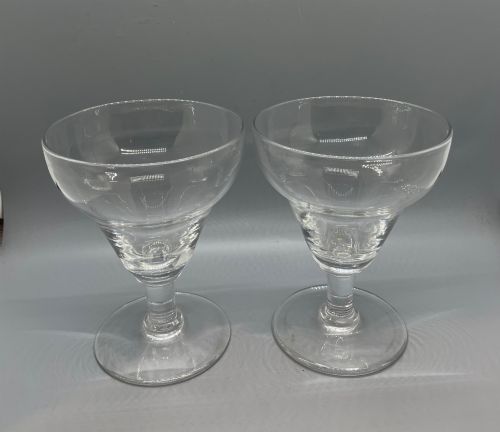
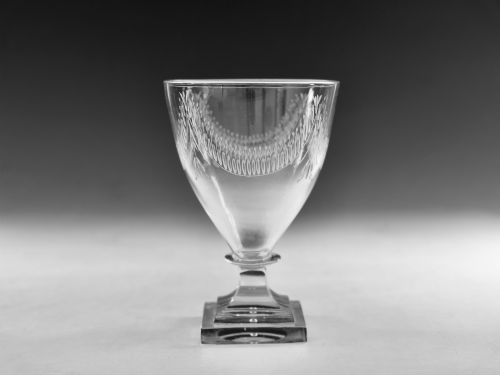
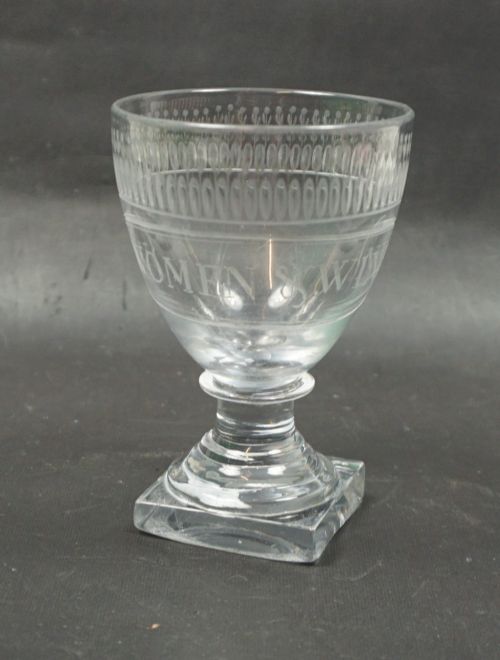
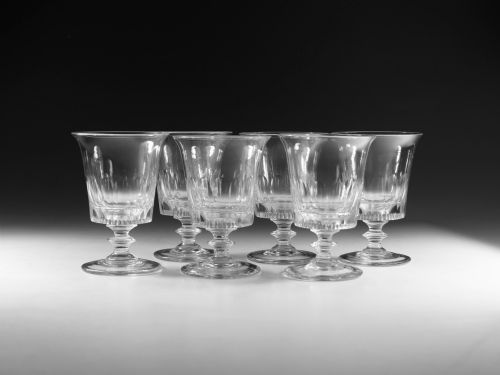
A georgian rummer is a sturdy drinking glass designed for heavy daily use or tavern service during the Georgian and Regency periods. The forms include ovoid bowls, bucket shapes, and pan top profiles mounted on plain stems, knopped stems, or square lemon squeezer bases.
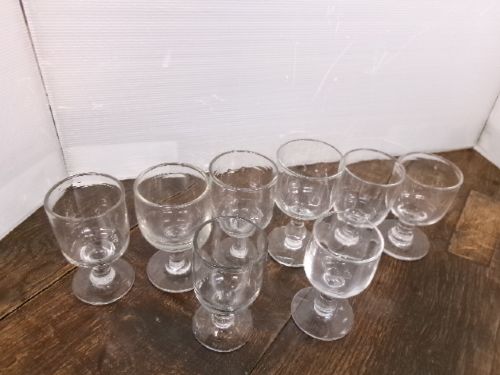
Most examples found on this page date from the late eighteenth century through the early nineteenth century, alongside later Victorian interpretations. Buyers encounter single vessels, matched pairs, and larger assembled sets of drinking glasses.
Originating primarily in England and Ireland, these glasses often display engraved or cut decoration such as hops, barley, armorials, or shipping scenes. Their capacity makes them distinct from smaller contemporary wine glasses.
How they were made
These vessels are formed from lead glass, flint glass, or standard clear and coloured glass, shaped through hand-blowing techniques. The heavier pieces utilise thick lead crystal that provides weight and clarity to the body.
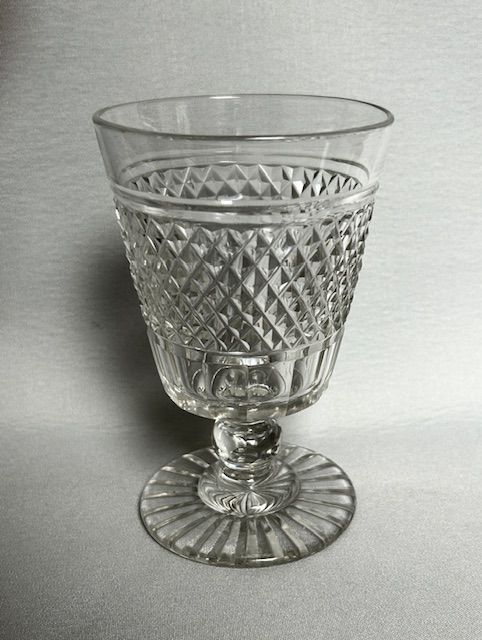
Surface ornamentation is achieved through wheel-cutting, brilliant cutting, hobnail patterns, or hand-etching. Bases are frequently moulded into square lemon squeezer forms or finished with a smooth pontil mark beneath.
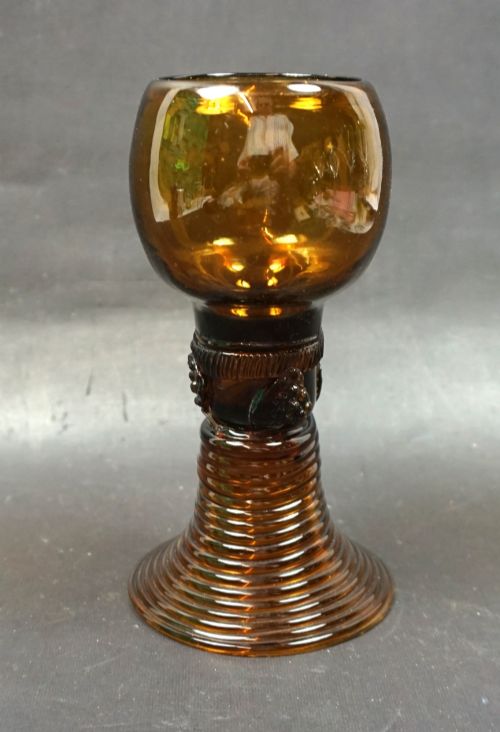
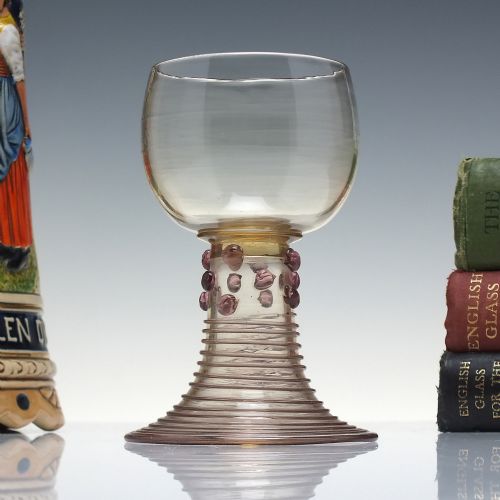
Coloured glass variations involve green, amber, turquoise, and amethyst hues produced by adding metallic oxides to the molten batch.
Georgian Rummer Retail Price Guide 2026
Typical asking prices for georgian rummer among the pieces listed under this phrase on Sellingantiques today, from the lower quarter to the upper quarter. They describe what is for sale here now, not the wider market.
Listings feature lead crystal, flint glass, and coloured glass in green, amber, and turquoise across Georgian and Victorian periods.
What varies in quality
Quality rests upon the weight of the metal and the precision of the glassblower in achieving balanced proportions across the bowl and stem. Heavy, thick-walled lead glass exhibits superior light refraction compared to lighter, simpler tavern metal.
Engraving depth and artistry separate standard production items from masterwork pieces. Crisp wheel-cut hops and barley motifs or detailed armorial commissions require advanced skill compared to basic etched monograms.
The integrity of the foot and rim affects desirability, where sharp moulding on square bases and undisturbed wear patterns indicate a well-preserved survivor.
The Georgian Rummer Glossary
- Rummer
- A large drinking glass used for ale, wine, or spirits. The name likely derives from the continental roemer.
- Lemon squeezer base
- A square, moulded glass foot with indented corners resembling a citrus juicer. This form is typical of the Regency period.
- Pontil mark
- A rough scar on the underside of a glass where the holding rod was snapped away after blowing. Its presence confirms hand-finished manufacture.
- Hobnail cut
- A raised, diamond-faceted surface pattern resembling the decorative hobnails on heavy boots. It creates intense sparkle under candle or gas light.
- Ogee
- An S-shaped profile curve that swells outward and flares at the rim. This silhouette aids in releasing aromas from the drink.
Georgian Rummer: Frequently Asked Questions
What were georgian rummer glasses used for?
These vessels served patrons in homes and taverns for consuming ale, beer, punch, or wine. Their large capacity suited hearty toasts and social drinking.
Over time, their sturdy build ensured they survived the rigours of daily dining tables and public houses alike.
How do you date a georgian rummer?
Dating relies on combining the bowl shape, the style of the stem, and the foot configuration with any engraved motifs. Early examples often feature ovoid bowls and plain stems.
Later Regency and Victorian pieces frequently introduce square lemon squeezer bases or heavier cut glass bodies that reflect shifting manufacturing capabilities.
Are these glasses safe to use today?
While historic lead glass is chemically stable for brief contact with liquids, antique vessels demand careful handling and hand washing.
Thermal shock from hot liquids or modern dishwashers can fracture the aged metal, so collectors generally limit them to display or gentle occasional use.
What is the difference between a rummer and a roemer?
A roemer is a continental Germanic drinking glass traditionally featuring a spherical bowl set on a hollow, prunt-decorated stem. A rummer is typically an Anglo-Irish heavy glass form with a solid foot.
English glassmakers adapted the continental style into the heavier, sturdier rummer format found across British tables.