

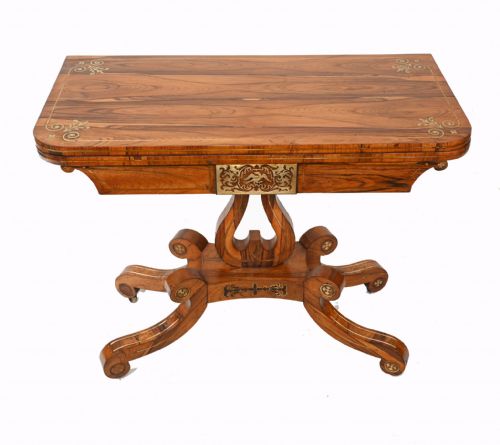
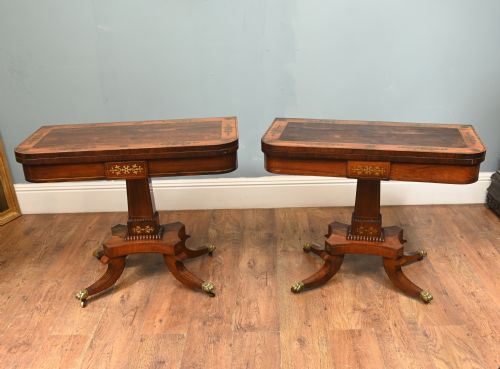


Georgian Rosewood Tea Table
A georgian rosewood tea table brings rich timber and clever pivoting tops to a sitting room, offering a versatile surface for cards or tea.
Georgian Rosewood Tea Table
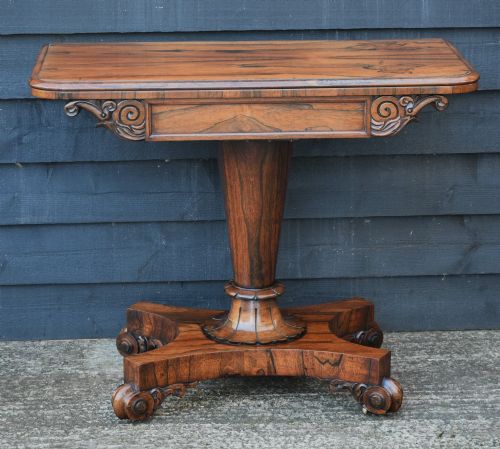
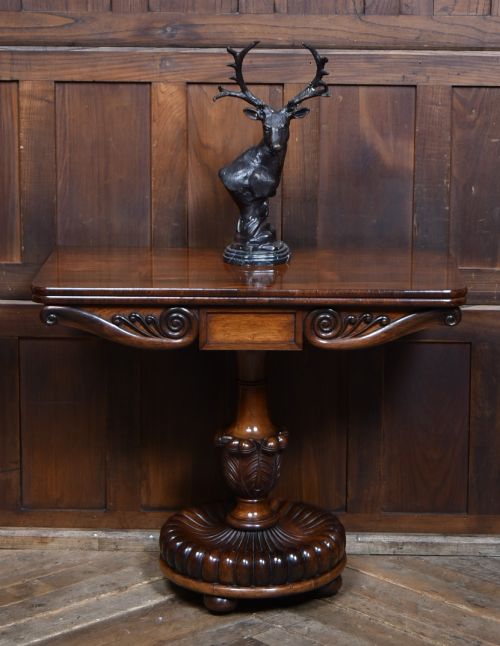
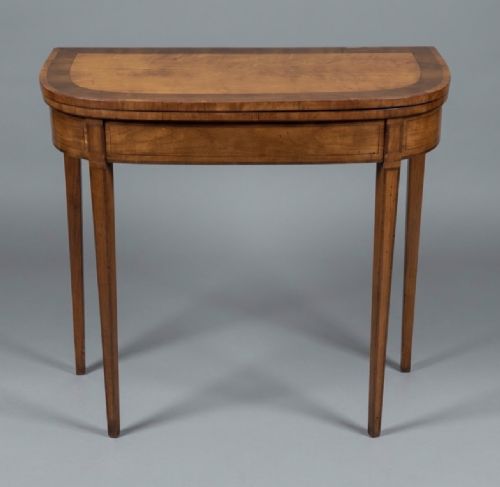
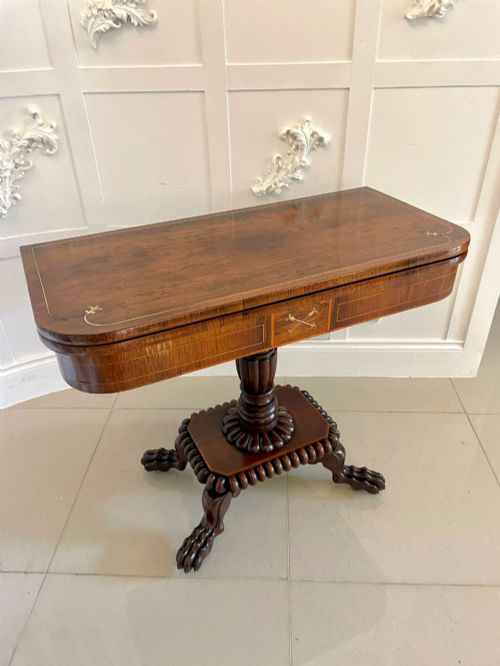
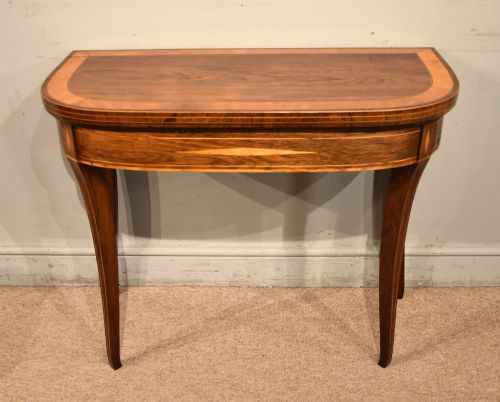
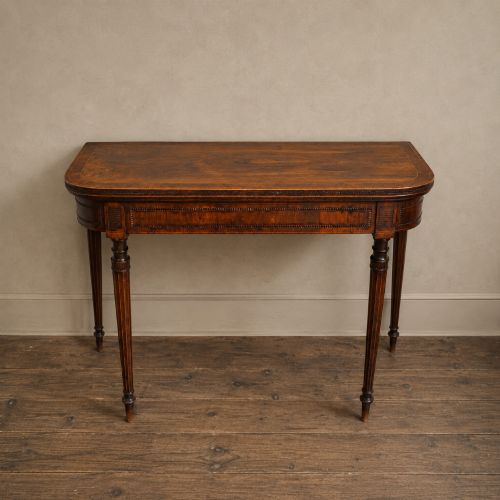
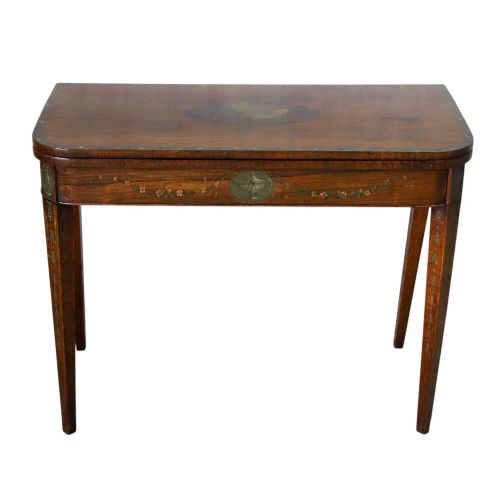
A georgian rosewood tea table generally takes the form of a fold-over card table or a dual-purpose tea and games table, designed to sit against a wall until needed. The listings here span the Regency, George III, George IV, and William IV eras, capturing the shift from late eighteenth-century refinement to the bolder forms of the nineteenth century.
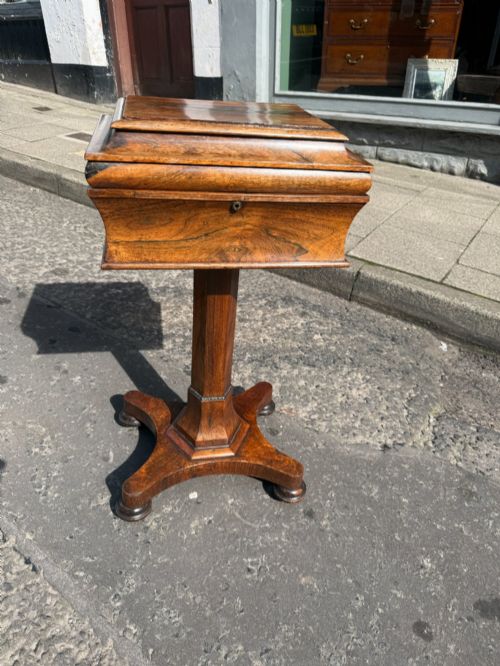
Most examples rely on a fold-over mechanism, revealing a baize-lined interior surface intended for card games or social assembly. Alongside traditional tables, the selection includes teapoys and occasional pieces that share the same dark timber vocabulary.
How they were made
Cabinet makers utilised dense rosewood veneers laid over secondary timbers, often framing the primary surfaces with contrasting satinwood or boxwood crossbanding. This technique created striking geometric borders while stabilising the underlying structure against warping.
Many Regency examples incorporate precise brass inlay set directly into the rosewood grain, occasionally complemented by gilding or carved wooden supports. Internal compartments within associated teapoys demonstrate the same meticulous joinery found in the larger folding tables.
Georgian Rosewood Tea Table Retail Price Guide 2026
Typical asking prices for georgian rosewood tea table among the pieces listed under this phrase on Sellingantiques today, from the lower quarter to the upper quarter. They describe what is for sale here now, not the wider market.
The archive reveals frequent stylistic overlap between late Georgian production, Sheraton influence, and the bolder forms of William IV.
What varies in quality
The distinction between ordinary and superior pieces rests on the depth of the rosewood grain and the crispness of any brass inlay. Untidy alignment in crossbanding or heavy replacement surfaces immediately lowers the standing of a table.
Proportion and the stability of the folding mechanism dictate the architectural success of the piece. Tables that retain their original baize linings and smooth pivot actions represent the upper echelon of surviving stock.
The Georgian Rosewood Tea Table Glossary
- Crossbanding
- A narrow strip of veneer laid perpendicular to the main grain, typically framing the edge of a tabletop. This border technique highlights the natural figure of contrasting timbers like satinwood or rosewood.
- Baize
- A coarse woollen fabric traditionally used to line the playing surface of card and games tables. It provides a soft texture that protects counters and dampens the sound of play.
- Teapoy
- A small box or chest supported on a central pillar and feet, designed to store loose tea leaves. They frequently appear alongside tea tables in the same dark woods.
- Demilune
- A half-moon shape utilised for furniture designed to stand flush against a wall. These semicircular tables open or fold out to form a full circle for use.
- Fold-over
- A hinged top design that doubles the surface area when opened and supported. It allows a compact console to transform into a full games table.
Georgian Rosewood Tea Table: Frequently Asked Questions
How were these tables used originally?
These pieces stood against parlour walls holding decorative objects until required for evening entertainment. Owners unfolded the tops to accommodate card games or tea service.
Once the evening concluded, the surfaces folded back down to save floor space in the drawing room.
What distinguishes Regency from George III examples?
George III pieces tend to show restrained classical proportions with subtle satinwood banding and straight or tapered legs. Regency variants lean into bolder architectural forms, frequently incorporating brass inlay and heavy pillar supports.
Makers working in the Regency style also utilised richer contrasts of timber grain and more elaborate pedestal bases.
Can I use a tea table for daily dining?
These tables are built for lighter social duties such as holding books, lamps, or card games rather than heavy daily dining. The folding mechanisms and veneer surfaces require gentle treatment to prevent structural strain.
Placing them away from direct heat sources helps preserve the delicate rosewood and internal hinges.
Why do some tables feature baize linings?
Baize provided a durable, non-slip surface specifically suited for card playing and social gaming. The textile protected both the playing pieces and the underlying timber from scratches during use.
Many surviving examples retain their original woollen lining or feature period-appropriate replacements.