


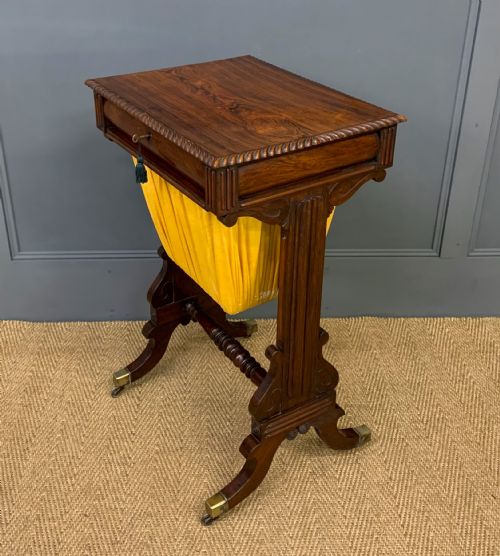


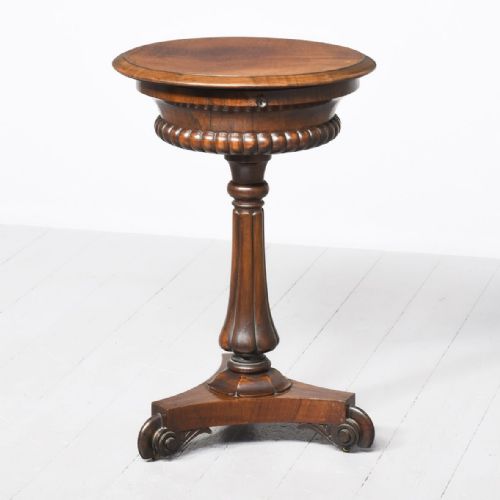


Georgian Rosewood Sewing Table
A georgian rosewood sewing table brings refined domestic utility into a room, offering compartments for needlework alongside a handsome surface.
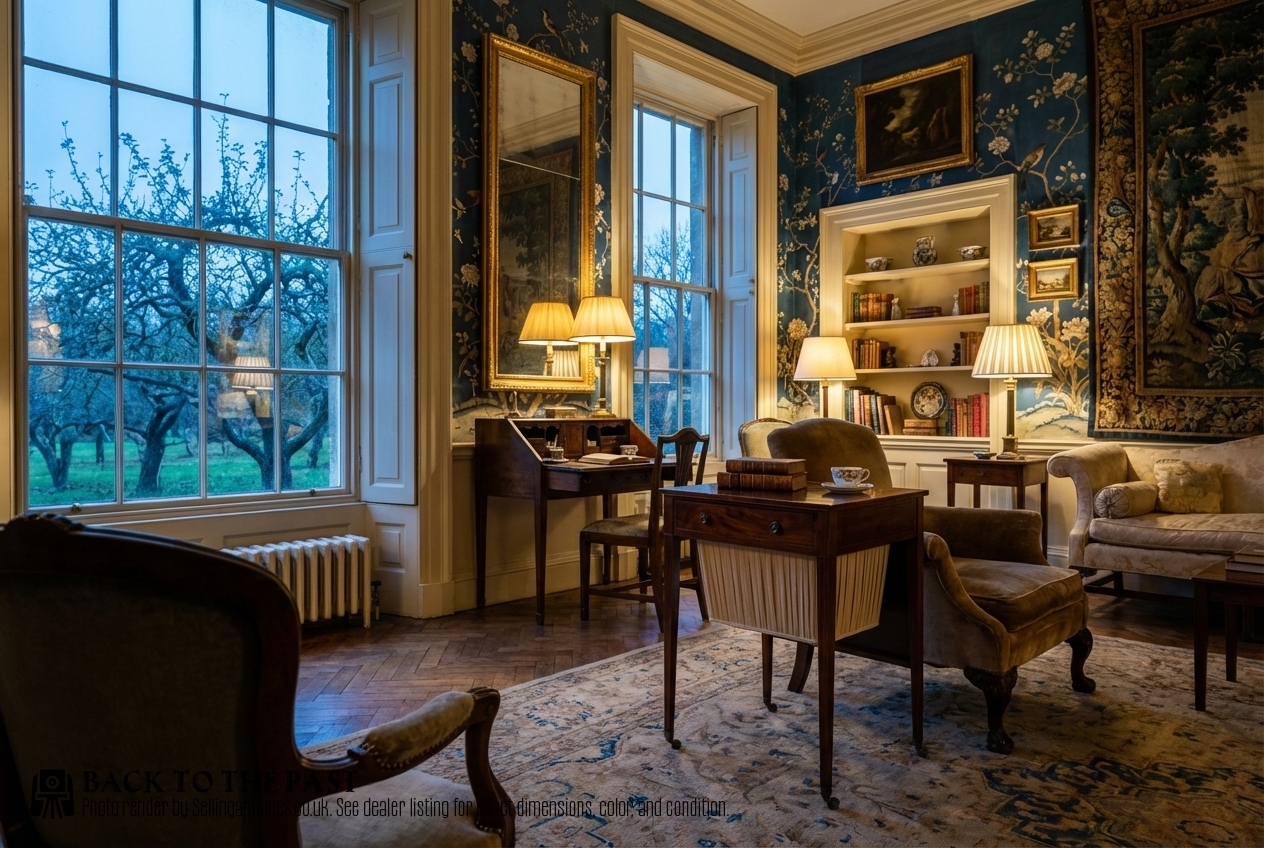
Georgian Rosewood Sewing Table
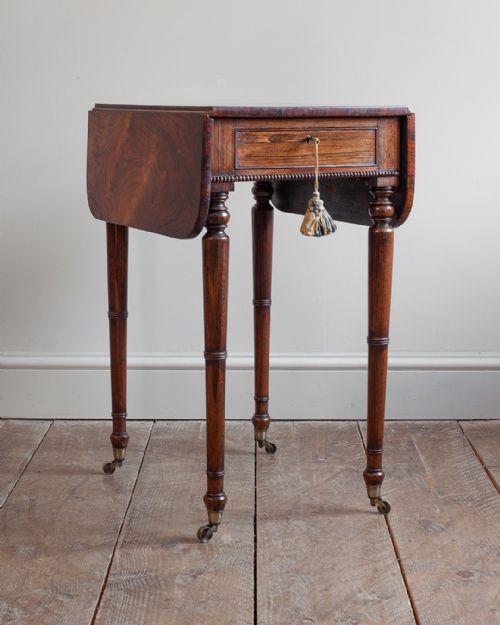
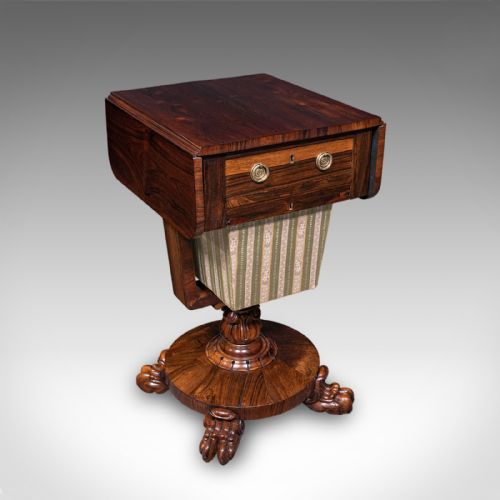
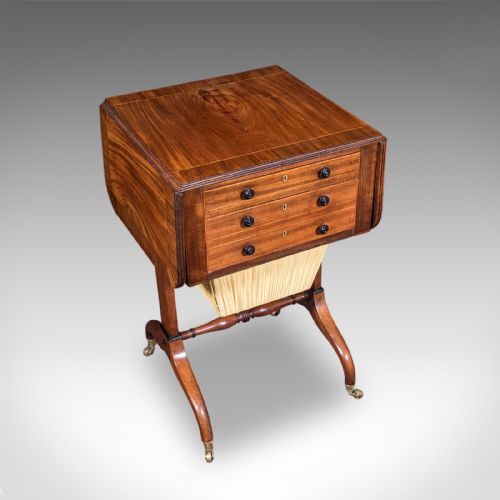
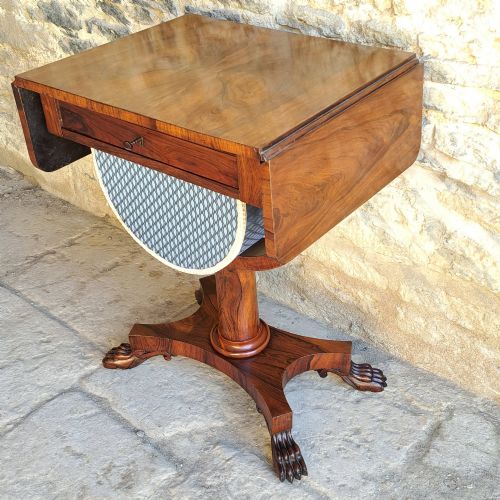
When you search for a georgian rosewood sewing table, you look for a compact piece of furniture designed for needlework and domestic crafts. These tables date primarily from the Regency period, the early nineteenth century, and the William IV era, taking forms such as work tables, drop leaf tables, and occasional tables.
You are most likely to meet pieces featuring drop leaves, lower fabric bags or compartments, and slender supports. English examples dominate the selection, often combining utility with elegant proportions suitable for a parlour or sitting room.
How they were made
Cabinet makers utilised rosewood as the primary timber, frequently selecting figured grain for the main surfaces. Workshops integrated contrasting materials such as brass inlay, boxwood stringing, and wood inlay to accentuate the crisp geometric lines.
Structural elements incorporated mahogany and other secondary woods, while fitted drawers often contained silk or fabric components for holding sewing implements. Brass mounts, castors, and bronze details appeared on finer legs and pedestals.
Listings feature rosewood, mahogany, boxwood, and brass inlay across Regency and William IV work tables.
What varies in quality
The sophistication of the timber selection separates standard examples from exceptional ones, particularly the depth of figure in the rosewood veneer. Finer pieces display meticulous attention in the precision of brass inlay and wood stringing.
Construction methods, such as the execution of drop leaf mechanisms and the stability of pedestal or pillar supports, determine the overall craftsmanship. The integrity of the original fabric sewing bags and internal compartments also influences the character of the piece.
Gillows of Lancaster·John MaClean
The Georgian Rosewood Sewing Table Glossary
- Drop leaf
- A table with hinged flaps on either side that can be raised or lowered to save space. This mechanism allowed these tables to sit compactly against a wall when not in use for sewing.
- Work table
- A nineteenth century term for a small table fitted with drawers and a fabric bag for needlework or textiles. These pieces served dual purposes for writing and handcrafts.
- Rosewood
- A dense, heavily grained timber prized for its rich dark colour and decorative figuring. Cabinet makers used it extensively for high-status Regency furniture.
- Stringing
- Thin lines of contrasting wood or light-coloured inlay used to outline drawers and panels. This technique highlights the borders and geometric shapes of the cabinet work.
- Regency
- An English design period spanning the early nineteenth century, characterised by classical restraint and neoclassical motifs. Furniture from this era often incorporates rosewood, brass inlay, and sabre legs.
Georgian Rosewood Sewing Table: Frequently Asked Questions
What is a georgian rosewood sewing table used for?
These tables served primarily for needlework, sewing, and light writing tasks in domestic parlours during the early nineteenth century. The enclosed drawers and hanging fabric bags kept threads, needles, and textiles organised.
Today, collectors use them as lamp tables, side tables, or occasional tables in living spaces. Their compact dimensions allow them to fit easily beside chairs or sofas while retaining practical surface space.
Are all these tables made of solid rosewood?
Most tables utilise rosewood as a fine veneer applied over secondary woods like mahogany or pine. This technique allowed cabinet makers to display highly figured grain patterns across large surfaces without warping.
Solid rosewood was generally reserved for smaller structural elements, edgings, and moulded details. Secondary timbers remain visible inside drawer linings and secondary framing.
Where should I place a sewing table at home?
A sewing table fits well beside a sofa, armchair, or in a hallway as a lamp table. The narrow footprint and drop leaf options make them adaptable to rooms with limited floor space.
Keep them away from direct sunlight and strong heat sources to protect the rosewood veneer and antique finishes. Regular gentle dusting preserves the natural lustre of the timber.