

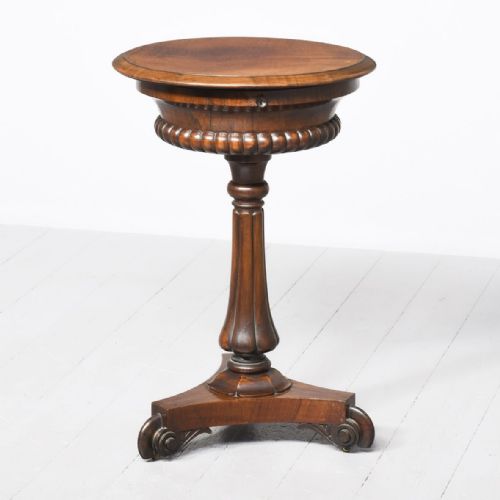


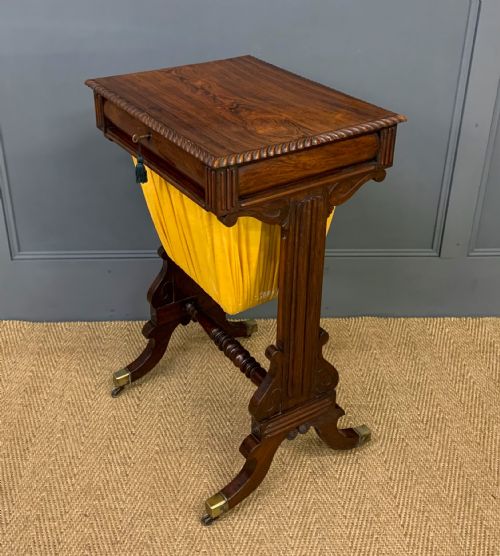
Georgian Rosewood Sewing Box
A georgian rosewood sewing box brings refined timber and intricate interior fitted compartments into any interior as a practical tabletop piece.
Georgian Rosewood Sewing Box
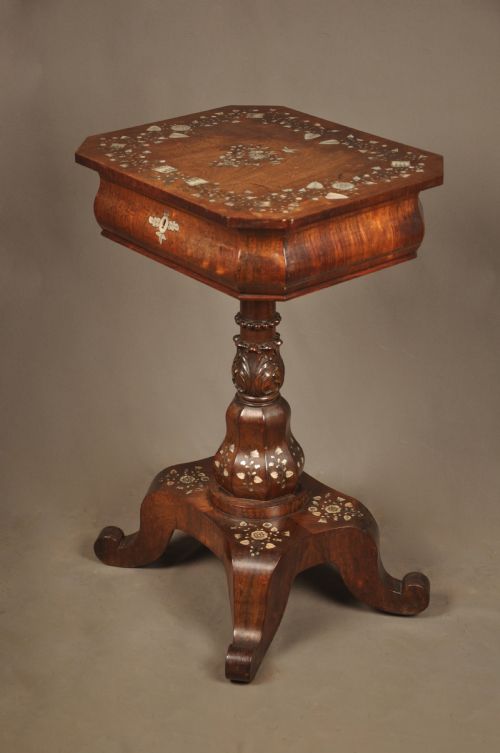
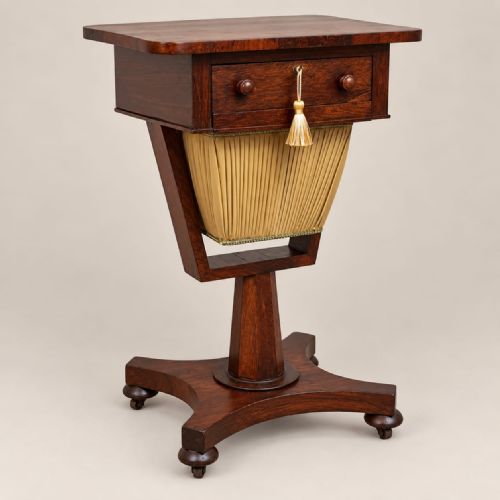
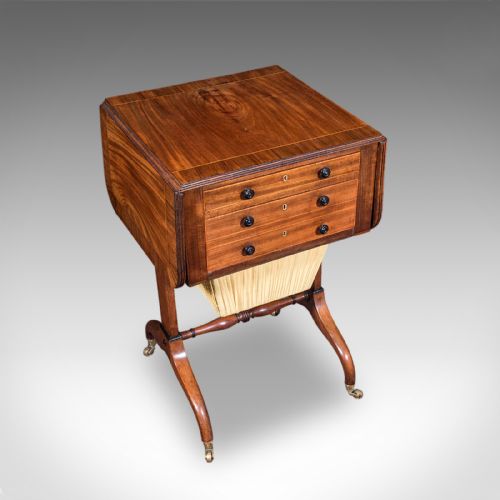
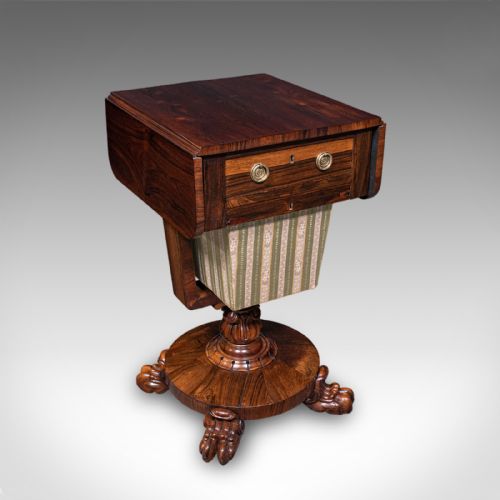
When searching for a georgian rosewood sewing box, collectors encounter a focused selection of tabletop cases, larger work tables, and occasional furniture designed for domestic needlework and personal storage. These pieces span the Georgian, Regency, William IV, and Victorian periods, showcasing how cabinetmakers adapted compact forms for daily use.
Originating primarily from English workshops, these items reflect the tastes of the early nineteenth century. They combine exterior decorative appeal with internal divisions intended for threads, needles, and personal trinkets.
Factors of quality and execution
The distinction between standard examples and the finest pieces lies in the precision of the cabinetwork and the complexity of the interior fittings. Superior items display meticulous wood inlay, intact silk or velvet linings, and well-executed brass mounts.
Proportion and structural integrity also separate fine examples from simpler utilitarian boxes. Pieces associated with notable workshops demonstrate superior joinery and thoughtful retention of original internal compartments.
Georgian Rosewood Sewing Box Retail Price Guide 2026
Typical asking prices for georgian rosewood sewing box among the pieces listed under this phrase on Sellingantiques today, from the lower quarter to the upper quarter. They describe what is for sale here now, not the wider market.
Objects range from small pincushion workboxes and sarcophagus containers to substantial drop leaf parlour work tables.
Gillows of Lancaster
The Georgian Rosewood Sewing Box Glossary
- Rosewood
- A dense, dark timber featuring pronounced grain patterns, frequently utilised for fine nineteenth-century cabinet furniture and small decorative boxes.
- Tunbridge Ware
- A type of decorative woodwork characterised by tiny coloured wood mosaic tiles forming geometric or pictorial patterns on boxes and baskets.
- Sarcophagus
- A box or chest shape featuring a sloping lid and flared base, reminiscent of ancient stone coffins, popular for grand sewing boxes of the period.
- Work Table
- A freestanding table incorporating a fabric bag or wooden box beneath the top for holding sewing materials and needlework.
- Inlay
- The technique of inserting pieces of contrasting materials, such as boxwood or mother of pearl, flush into the surface to form decorative motifs.
Georgian Rosewood Sewing Box: Frequently Asked Questions
What fits inside a sewing box?
These boxes contain fitted compartments designed for small needlework tools, threads, and personal trinkets. Many feature trays and pin cushions to keep accessories organised.
Interior layouts vary by piece, often including small lidded compartments and spaces tailored for specific sewing implements of the period.
How are different periods told apart?
Periods are identified through specific stylistic traits, structural proportions, and decorative details present in the timber and hardware. Regency and George IV pieces often lean towards classical motifs and bold rosewood grains.
Later Victorian examples introduce different lining materials and varied inlay techniques, while retaining the fundamental compact form of the sewing box.
Where should a work table sit?
Work tables function well as side tables or occasional tables in living spaces, holding lamps or small decorative objects. Their compact footprints allow them to fit easily beside seating.
Placing them away from direct sunlight and heat sources protects the rosewood timber and delicate interior fabrics from fading or drying out.
Are these boxes still usable today?
The compartments remain useful for storing jewellery, letters, or modern sewing supplies while serving as decorative tabletop items. Their solid construction suits gentle daily handling.
Care should be taken with original silk or velvet linings, which benefit from gentle treatment to preserve their historic character.