


Georgian Revival Bureau
A georgian revival bureau brings the refined proportions of eighteenth-century writing furniture into twentieth-century rooms with practical elegance.
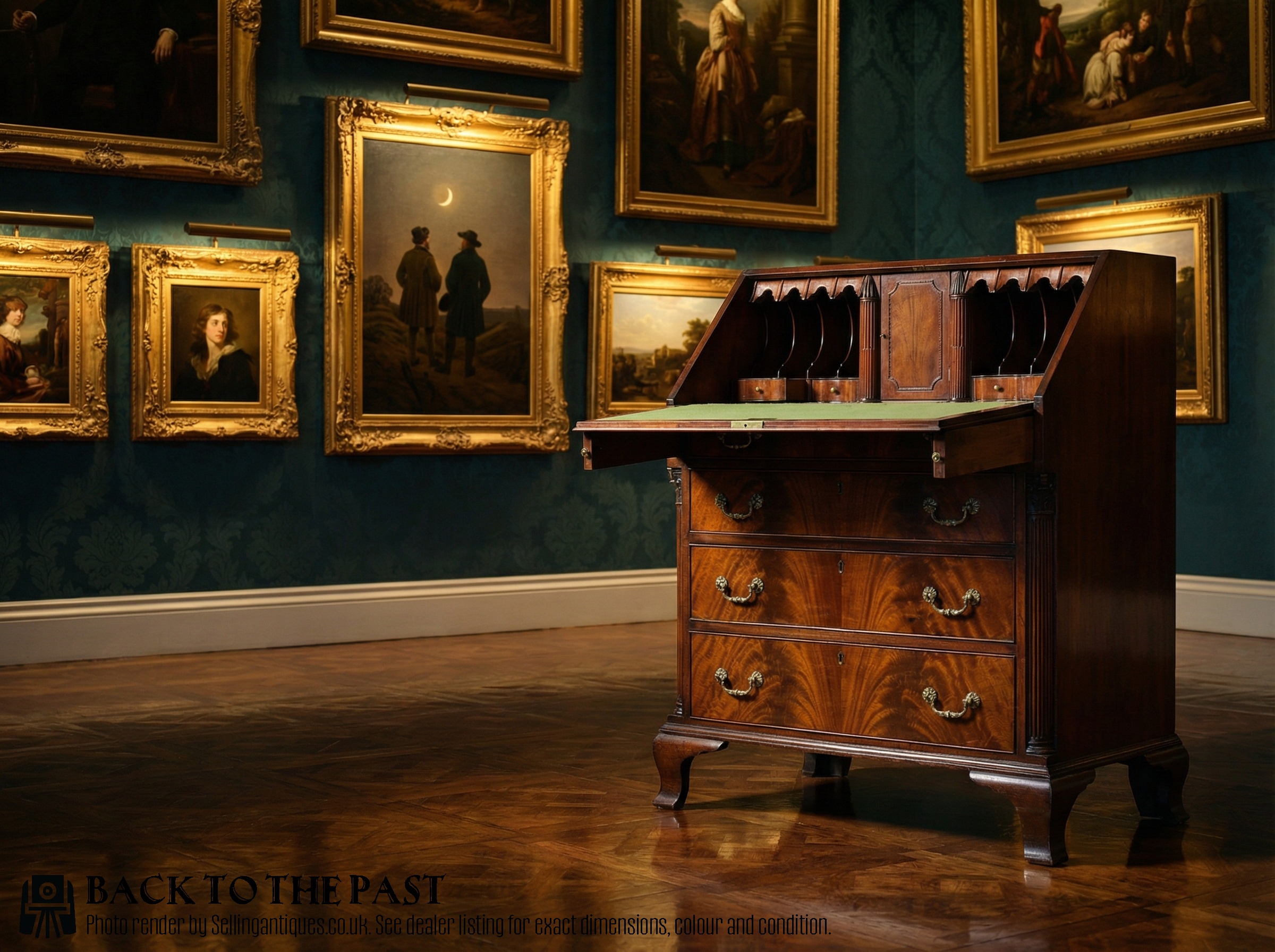
Georgian Revival Bureau
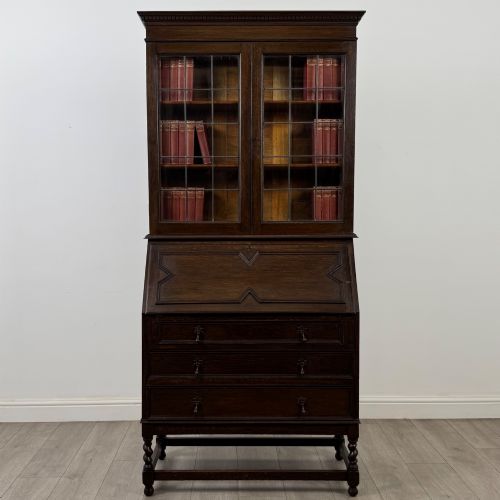
A georgian revival bureau typically presents as a fall-front writing desk or a taller bureau bookcase, channeling earlier cabinet-making traditions into Edwardian and early twentieth-century interiors. These pieces draw heavily on Sheraton and Chippendale design idioms, reinterpreting historical forms for homes that required compact yet formal writing spaces.
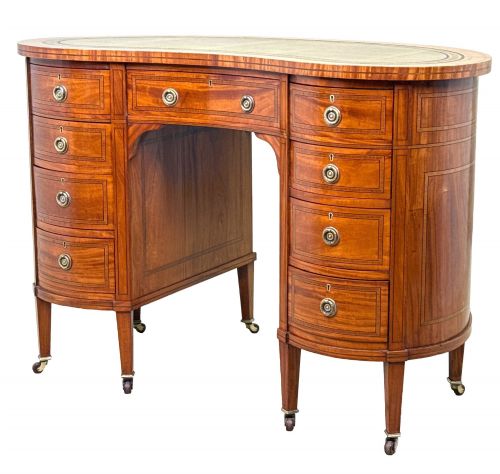
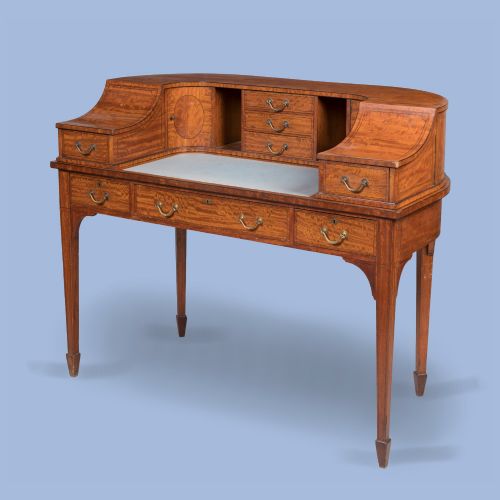
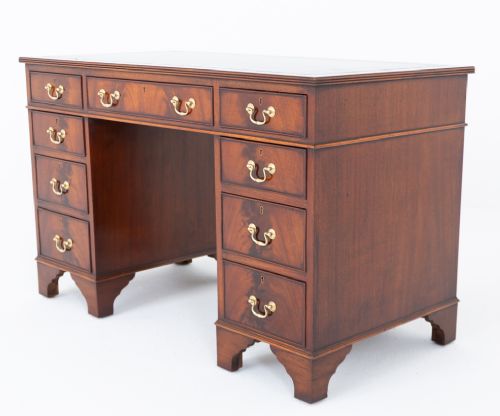
The pieces listed on this page span several decades around the turn of the twentieth century, alongside occasional nineteenth-century examples and earlier historical references. Alongside standard slant-front desks, the selection includes bureau bookcases, cylinder bureaux, and writing tables fashioned in mahogany, satinwood, and walnut.
Materials and Technique
Cabinet-makers working in these revival styles relied upon solid timbers and choice veneers, frequently employing mahogany, burr walnut, and satinwood to achieve striking surface figures. Marquetry and delicate string-inlaid details often decorate the exterior surfaces, reflecting the meticulous hand-work characteristic of the period.
Functional hardware such as brass handles, escutcheons, and leather writing inserts complement the internal pigeonholes and small drawers of the fitted desk interiors. Structural integrity is maintained through traditional joinery, ensuring the fall-fronts and cabinet doors operate smoothly over decades of daily use.
The archive shows bureau bookcases pairing writing desks with upper shelving units across multiple revival styles.
Judging Quality
Quality in these desks is immediately apparent in the selection of veneer and the crispness of any inlay work, where superior examples exhibit seamless matching and precise geometric stringing. Lesser pieces rely on printed or heavily stained surfaces that lack the depth and natural variation seen in better timber selections.
The interior arrangement of small drawers and pigeonholes often reveals the maker's hand, with finer items featuring dovetailed drawer construction and secondary woods of consistent character. Attention to detail in the brass mounts and the smooth articulation of the fall-front hinge mechanism further distinguish superior examples from ordinary production.
Edwards and Roberts·Maples of London
The Georgian Revival Bureau Glossary
- Bureau
- A desk featuring a sloping hinged lid that drops down to form a writing surface, typically concealing a fitted interior of small drawers and pigeonholes. This form has evolved across several centuries of British cabinet-making.
- Fall-front
- The sloping or vertical hinged panel on a bureau that lowers to create a flat desk surface. It is often lined with leather or felt for writing.
- Marquetry
- Decorative patterns formed by the insertion of small pieces of coloured wood, veneer, or shell into a solid timber background. It demands high precision from the artisan.
- Secretaire
- A piece of furniture containing a concealed writing drawer or drop-front desk compartment. These often disguise themselves as standard chests of drawers or bookcases.
- Stringing
- Thin, linear inlay of contrasting wood used to outline panels, drawer fronts, and borders. This technique highlights the structural geometry of the piece.
Georgian Revival Bureau: Frequently Asked Questions
What is a georgian revival bureau?
A georgian revival bureau is a writing desk produced primarily during the late nineteenth and early twentieth centuries, copying the aesthetic of eighteenth-century furniture. These pieces combine antique styling with the practical requirements of Edwardian homes.
They typically feature a sloping fall-front lid that opens to reveal internal compartments, standing either on bracket feet or slender legs depending on the specific revival style employed.
How do I use a bureau desk?
The fall-front lid lowers to a horizontal position supported by automatic wooden slides or hinges, creating a dedicated writing platform. Inside, small drawers and pigeonholes organise correspondence and stationery.
When writing is finished, the lid lifts back up to conceal papers and clutter, returning the furniture to a tidy cabinet facade that occupies minimal floor space in a study or living room.
How can I tell the age of the bureau?
Dating relies on examining construction methods, secondary timbers, and characteristic design revivals such as Edwardian Sheraton or Jacobean styles. Hardware types, drawer linings, and the style of the veneers also provide strong chronological indicators.
While inspired by the eighteenth century, the construction details, machinery marks, and overall wear patterns usually point directly to the late Victorian or early twentieth-century manufacturing period.
Which woods are most common?
Mahogany remains the most frequent timber found in these revival pieces, offering a sturdy structure and a rich reddish-brown tone. Satinwood and burr walnut also appear frequently, particularly on pieces featuring decorative marquetry.
These decorative hardwoods were selected for their striking grain patterns, allowing cabinet-makers to create visually captivating surfaces on both the exterior panels and interior fittings.