



Georgian Reverse Painted Print
A georgian reverse painted print brings intense depth to interior walls through delicate pigments applied directly behind clear glass.
Georgian Reverse Painted Print
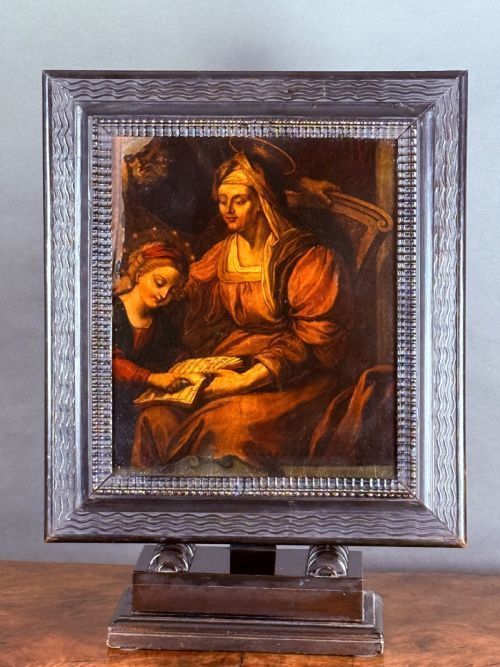
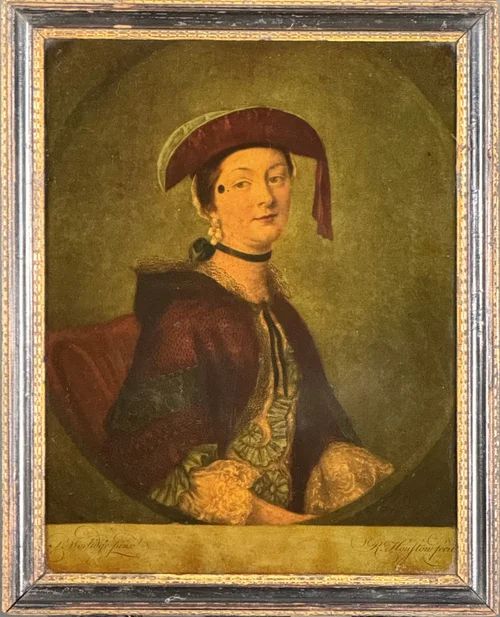
A georgian reverse painted print combines printmaking techniques with meticulous hand application, placing pigment, oil paint, and gold leaf onto the underside of glass so the final image is viewed clearly through the surface.
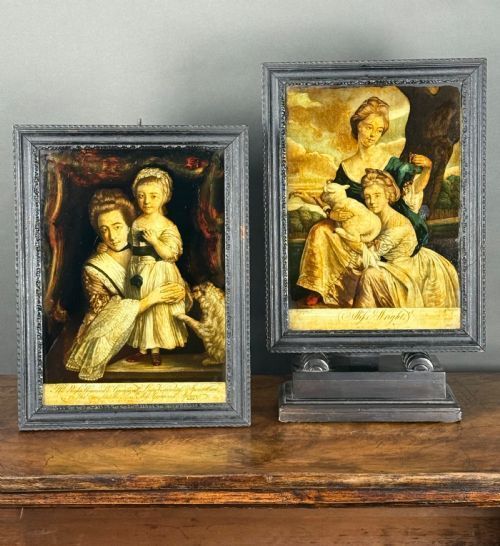
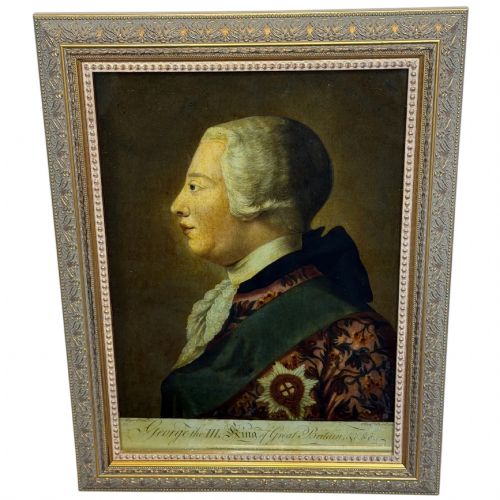
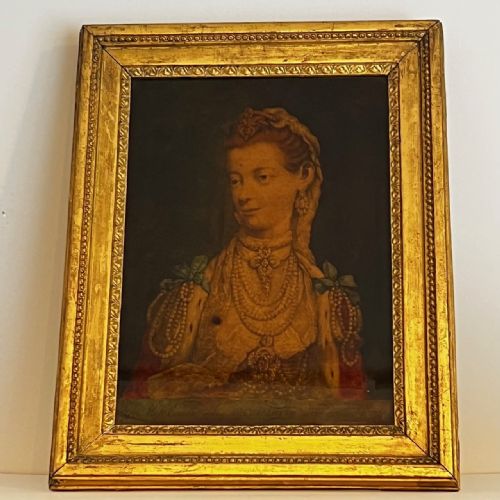
The subjects seen across these pieces range from classical religious scenes and historical royal portraits of figures like King George III and Queen Charlotte to pastoral allegories such as the seasons and domestic employment.
Buyers frequently encounter framed wall art originating from the eighteenth century and the regency period, often housed in original wood surrounds that protect the delicate glass plate.
Materials and Techniques
Craftsmen applied paper engravings face down onto glass plates using adhesive mediums, carefully rubbing away the paper backing before hand-colouring the remaining ink with oil paint and pigments.
Makers utilised gold leaf to catch the light behind translucent pigment layers, creating luminous details within uniforms, robes, and architectural borders.
The finished glass panel was secured into timber frames, sometimes paired directly with mirrors or divided sections to form multifunctional wall furniture.
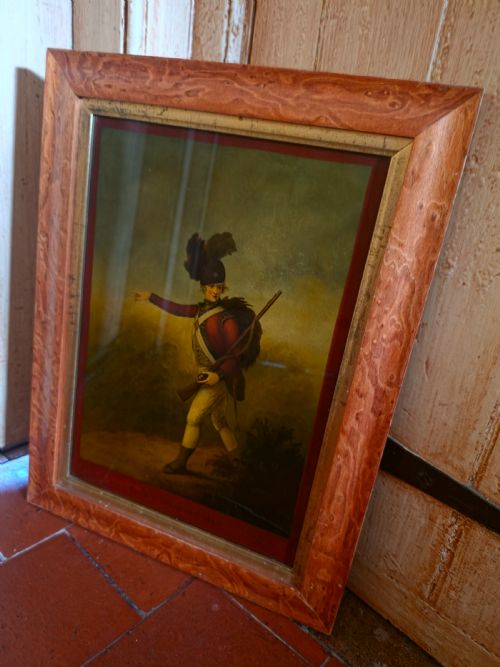
Light infantrymen and matching seasonal maidens share wall space with naval engagements and royal personages.
Distinctions in Quality
The finesse of the brushwork and the precision of the underlying mezzotint engraving dictate the visual impact of each piece, distinguishing fine portraiture from simpler decorative works.
The preservation of the original pigment layer beneath the glass determines the clarity of the composition, as loss or fading of oil paint alters the intended colour balance.
The integrity of the early wood framing and the retention of original glass plates provide historical weight that elevates certain examples above later reproductions.
Sebastiaan Vrancx·Fletcher·Charles Spooner·Richard Purcell·Frye·Abraham Cooper·W Bishop·Richard Phillips
The Georgian Reverse Painted Print Glossary
- Reverse glass painting
- An artwork created by applying paint directly to the back of a glass pane so the finished image appears through the front. This technique protects the pigments from atmospheric dust and surface damage.
- Mezzotint
- A printmaking process of the tonal category that allows smooth gradations between light and dark. It provides a rich tonal foundation before pigments are applied.
- Eglomise
- A method of applying cold painting and gold leaf to the rear face of glass. It produces a reflective, mirror-like finish common in decorative borders.
- Regency
- A British historical style period spanning the early nineteenth century. Pieces from this era often feature classical motifs and military themes.
Georgian Reverse Painted Print: Frequently Asked Questions
How do I hang a reverse glass print safely?
These pieces require secure wall fixings distributed evenly across the timber frame to support the weight of the glass plate safely.
Keep them away from direct sunlight and damp environments to protect the underlying pigments and paper from degradation.
Why are some prints paired as sets?
Makers frequently produced seasonal allegories, such as spring, summer, autumn, and winter, as matching series to decorate domestic interiors symmetrically.
Pairs and sets often depict complementary historical figures or narrative scenes designed for balanced wall display.
What subjects were popular in these prints?
Portraiture of reigning monarchs, literary characters, and military heroes dominated the production of these framed works.
Allegorical themes representing domestic employment or pastoral narratives also appeared frequently on domestic walls.