

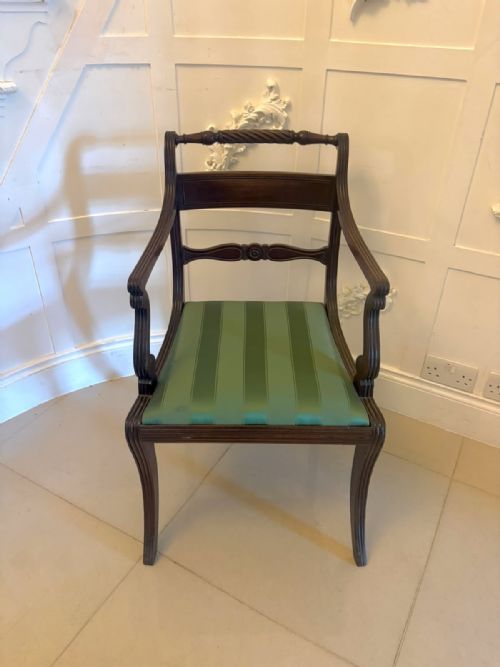


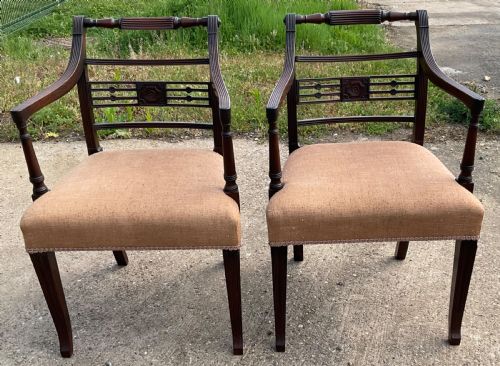
Georgian Reeded Dining Chairs
Georgian reeded dining chairs bring structural lightness and crisp linear carving to the table, uniting solid timber with refined domestic seating.
Georgian Reeded Dining Chairs
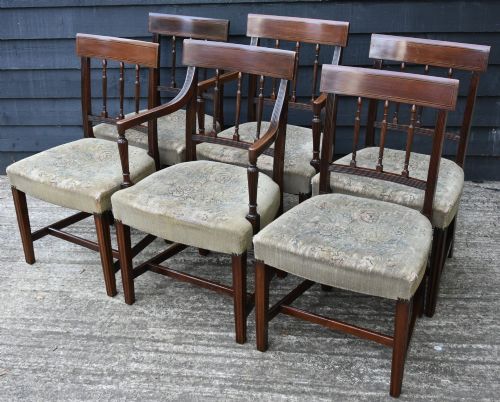
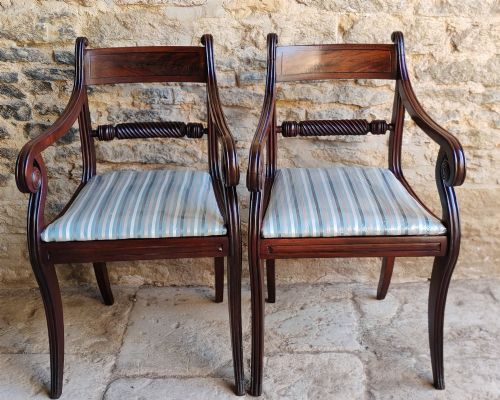
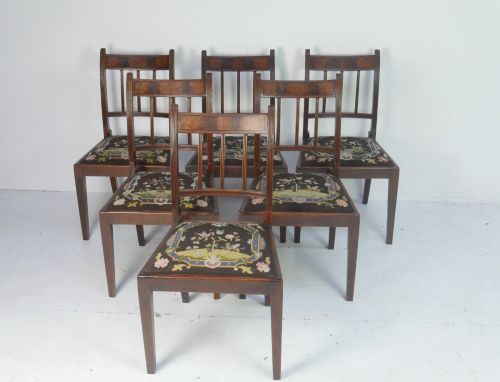
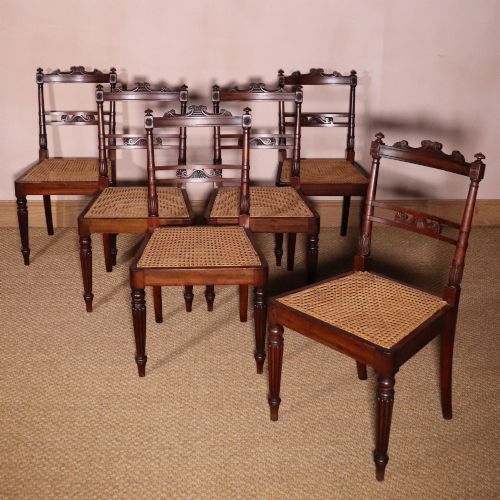
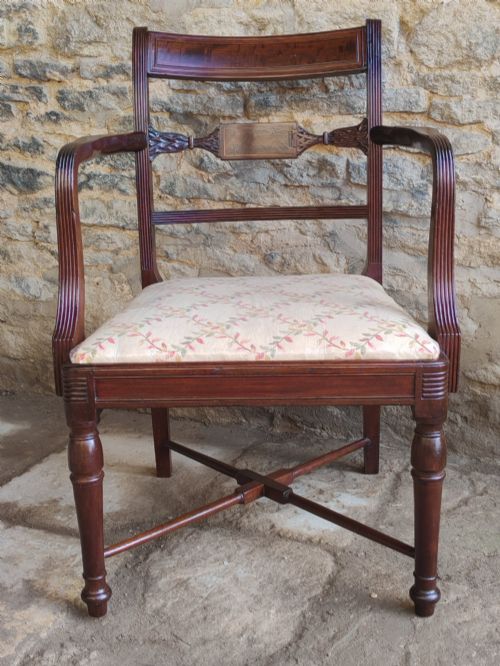
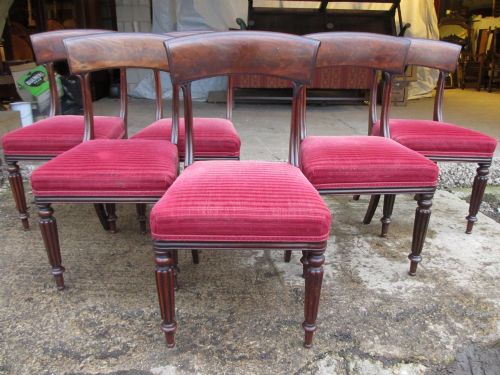
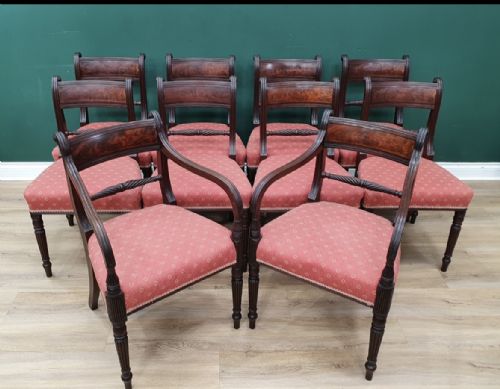
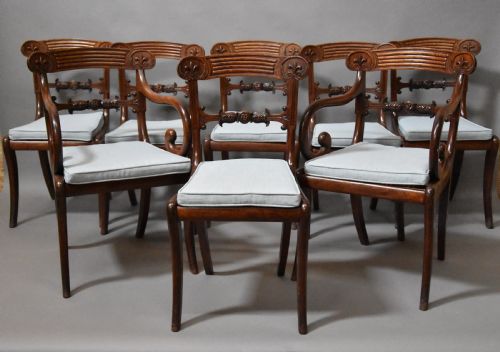
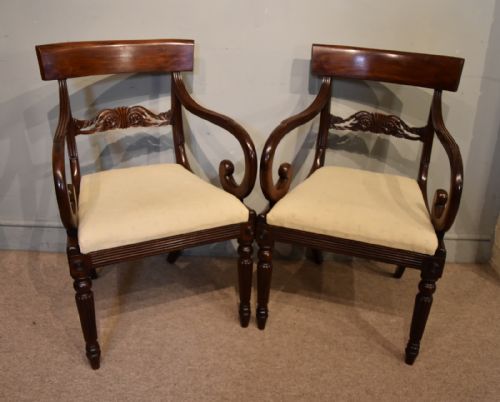
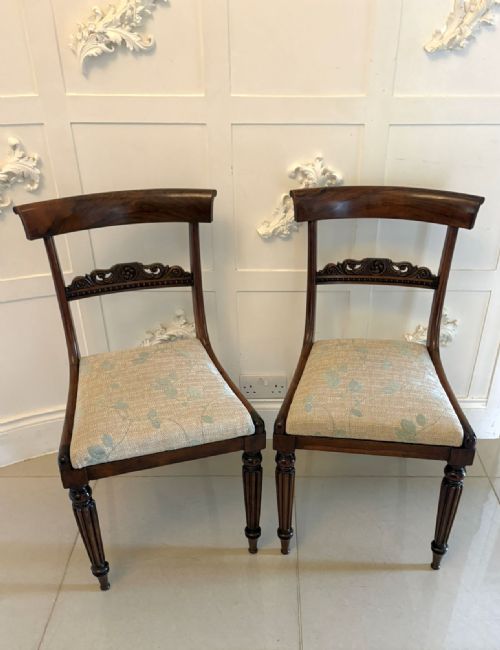
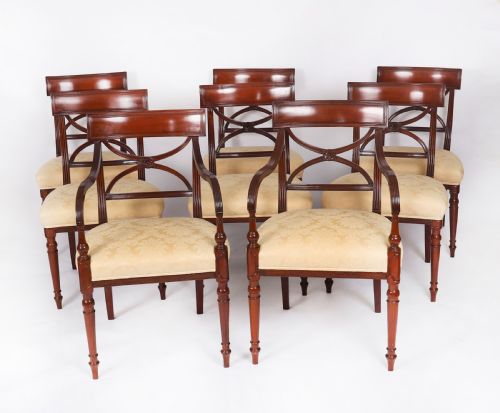
Georgian reeded dining chairs encompass side chairs, armchairs, carvers and desk chairs originating primarily from the Georgian, Regency and William IV periods, alongside later nineteenth and twentieth-century interpretations. These seats appear in matched sets of various sizes or as pairs, utilised around the dining table for formal meals and daily gatherings.
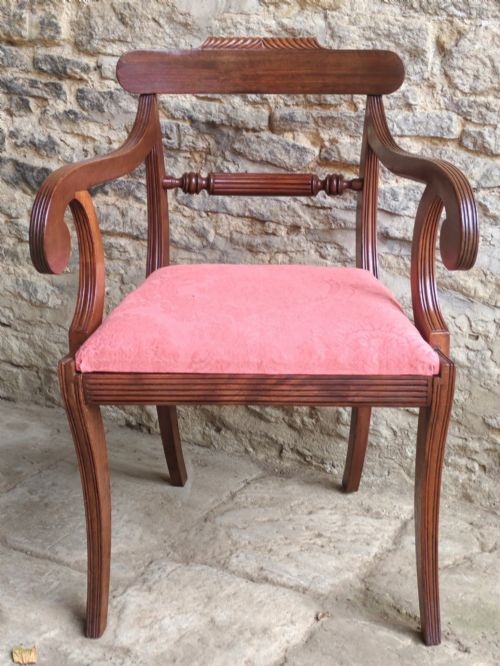
The form relies on architectural turnings and linear surface enrichment, where parallel concave grooves run down table legs, arm supports and top rails. Mahogany and rosewood form the primary body timber, while seats frequently feature leather, velvet, fabric or needlepoint upholstery.
How they were made
Cabinetmakers constructed these frames using dense hardwoods like mahogany and rosewood, shaped with hand-chiselled joinery and turned components. Specialised moulding planes cut the signature parallel reeding into the timber before assembly and polishing.
Drop-in or fixed seats utilised traditional webbing and stuffing, finished with leather, fabric, velvet or brass studding to secure the edges. Workshops often incorporated brass details, sabre legs or scroll arms to complete the design.
Georgian Reeded Dining Chairs Retail Price Guide 2026
Typical asking prices for georgian reeded dining chairs among the pieces listed under this phrase on Sellingantiques today, from the lower quarter to the upper quarter. They describe what is for sale here now, not the wider market.
Listings feature mahogany and rosewood dining chairs spanning the Georgian, Regency, and William IV eras, alongside later revival styles.
What varies in quality
The depth and crispness of the hand-carved reeding separate standard production from superior examples, as well as the choice of dense, highly figured mahogany or Cuban mahogany. Timber selection dictates the weight and stability of the frame over centuries of use.
The integrity of the original joinery and the presence of matching sets rather than assembled groupings determine the desirability of the chairs. Subtle proportions in the curve of a bar back or the sweep of a sabre leg distinguish master workshops.
Gillows
The Georgian Reeded Dining Chairs Glossary
- Reeding
- Parallel convex mouldings carved into wood, resembling inverted fluting. This decorative technique appears frequently on the legs and back rails of these seats.
- Carver
- An armchair designed for the head of the table, featuring supportive armrests. These pieces usually match the smaller side chairs in a dining set.
- Sabre leg
- A concave curved leg that tapers toward the foot, typical of Regency seating. This form provides structural strength while maintaining a light profile.
- Bar back
- A horizontal wooden splat across the upper chair frame, often shaped to fit the spine. It provides ergonomic support in dining chairs.
- Drop-in seat
- A removable upholstered wooden frame that fits into the seat rails of a chair. This design allows for straightforward reupholstering without dismantling the main structure.
Georgian Reeded Dining Chairs: Frequently Asked Questions
How do I clean the wood?
Dust the timber regularly with a soft, dry cloth to prevent dirt buildup in the carved reeded channels. Apply a quality beeswax periodically to nourish the mahogany and preserve the finish.
Avoid liquid cleaners or silicone polishes, which can penetrate open grain and degrade the historic patina over time.
Can I mix singles and armchairs?
Mixing armchairs and single side chairs is historically correct for dining sets of this period. Sets often paired six or eight single chairs with two matching carvers for the heads of the table.
Ensure the timber tone, leg style and reeding match closely to maintain a cohesive appearance across the arrangement.
How do I care for leather seats?
Wipe leather surfaces gently with a damp cloth to remove surface dust. Treat the material with a specialised leather conditioner to prevent drying and cracking.
Keep upholstered chairs away from direct heat sources and strong sunlight to protect both the leather and the underlying wooden frame.
Are these chairs suitable for daily use?
Solid mahogany frames and robust joinery make these pieces durable for everyday dining. Regular inspection of the joints ensures stability over years of use.
Consider the seat height and arm clearance relative to modern dining tables before placing them into daily service.