



Georgian Reading Stand
A georgian reading stand brings hands-free focus to a room, offering adjustable timber surfaces for books and folios.
Georgian Reading Stand
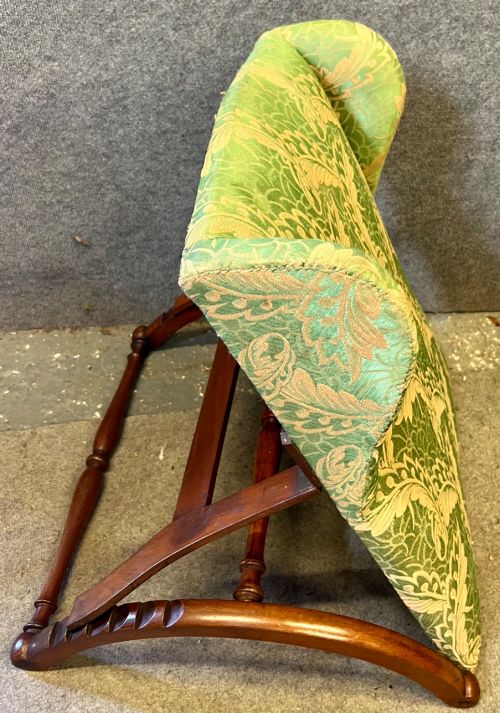
A georgian reading stand serves as a dedicated support for texts and folios, appearing in forms from table-top bookrests to complex adjustable desks and reading tables.
The pieces seen here span the Georgian era through the Regency period and into later revivals, utilising mahogany as the predominant timber alongside walnut and brass fittings.
Buyers meet variations that include two-tier tables, music stands, architects' desks, and occasional tables fitted with adjustable mechanisms.
How they were made
Cabinetmakers constructed these pieces primarily in solid and figured mahogany, sometimes incorporating walnut, boxwood, and gilt details.
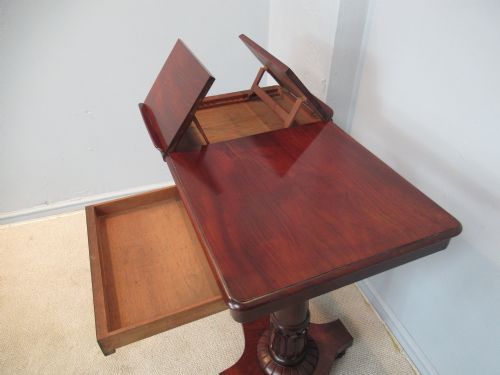
Makers integrated brass ratchets, screws, and metal fittings to enable the adjustable height and tilting angles required for reading and drawing.
Structural forms rely on tripod bases, pillars, and multiple tiers, combining joinery with articulated mechanical parts.
Some reading stands doubled as music racks, quietly holding both a heavy sermon and a Mozart sonata.
What varies in quality
The calibre of a piece rests on the figure of the mahogany, the smoothness of the adjustable mechanism, and the integrity of the original brass hardware.
Simpler table-top reading stands contrast with elaborate metamorphic architects' desks and double-sided reading tables that demand sophisticated internal engineering.
Gillows
The Georgian Reading Stand Glossary
- Metamorphic
- Describing furniture designed to transform from one form or function to another, such as a table turning into a desk.
- Ratchet
- A mechanical device with teeth and a pawl that holds an adjustable reading surface at a chosen angle.
- Tripod base
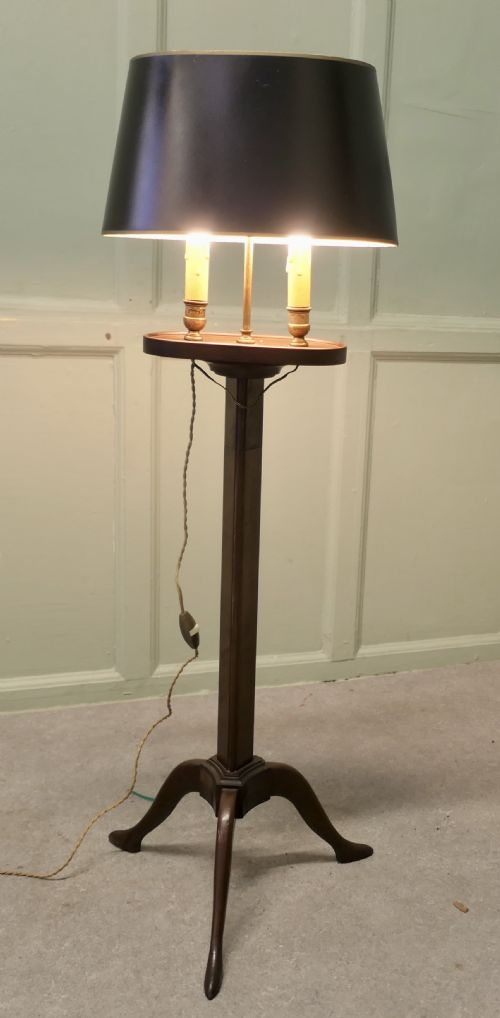
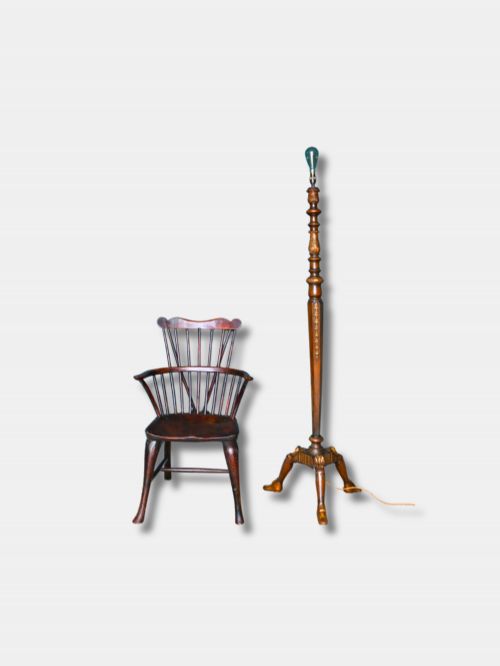
- A three-legged support structure commonly found beneath standard lamps, reading tables, and torchieres.
- Whatnot
- A piece of furniture consisting of multiple open shelves used for displaying or storing books and objects.
- Canterbury
- A low stand with partitioned sections designed for holding sheet music, newspapers, or magazines.
Georgian Reading Stand: Frequently Asked Questions
What is a reading stand used for?
These stands support books, folios, and sheet music at a comfortable viewing angle. They allow readers to study texts hands-free.
Many examples feature adjustable mechanisms to alter the height and slant of the surface. This adaptability suited scholars, architects, and musicians.
How do I spot a genuine period piece?
Examine the timber figure, construction joints, and the wear on moving brass parts. Period stands display the hand-working methods of their era.
Hardware like ratchets and screws provide clues to the manufacturing date. Later revivals often mimic earlier Georgian styles closely.
Can I adjust the height easily?
Most pieces include mechanical ratchets or screw adjustments designed for this purpose. The mechanism holds the reading slope securely in position.
Careful handling ensures the antique brass components continue to function properly. Metal and wood parts work together to alter the stance.
Where should I place a reading stand?
These stands fit well beside armchairs, desks, or in studies where books are frequently used. Table-top versions sit neatly on larger pieces of furniture.
Freestanding reading tables and floor lamps occupy corners or open spaces. Their compact footprints allow flexible placement in a room.