


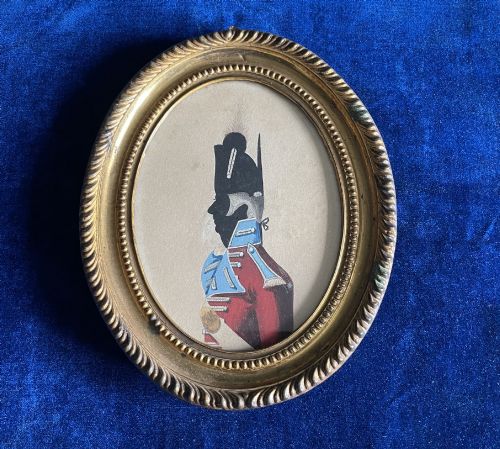
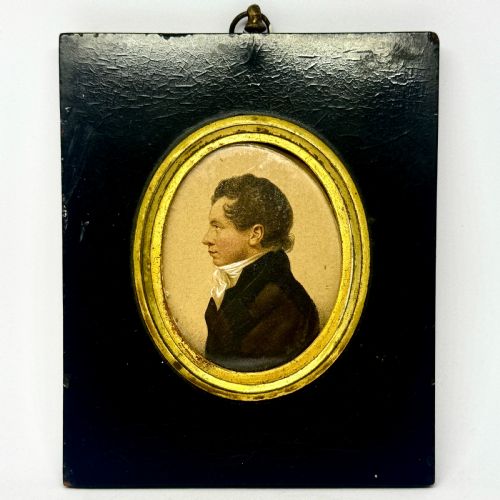
Georgian Profile Miniature
A georgian profile miniature distills an entire persona into a few inches of paper, glass, or metal.
Georgian Profile Miniature
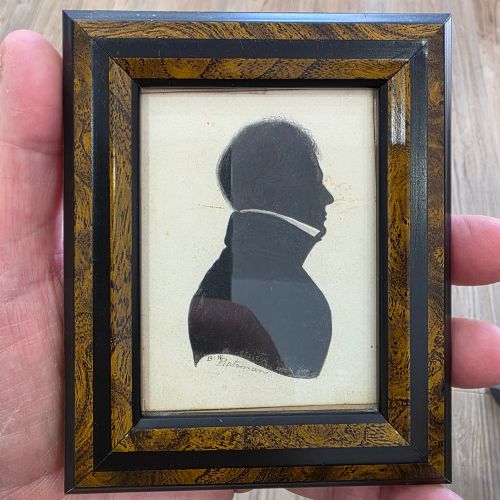
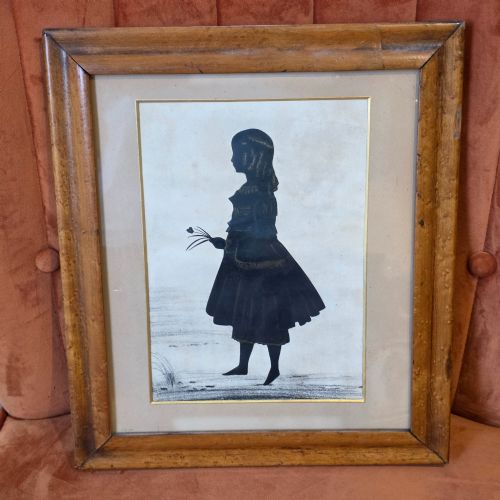
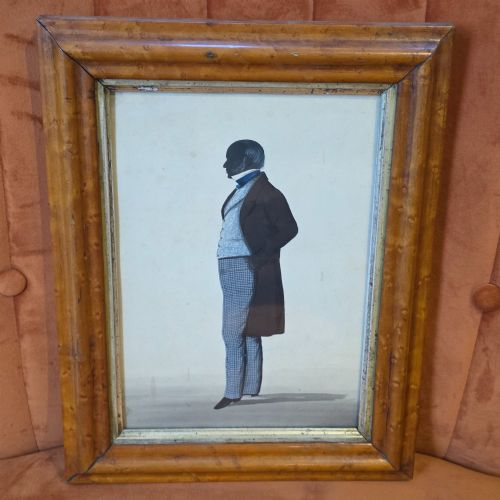
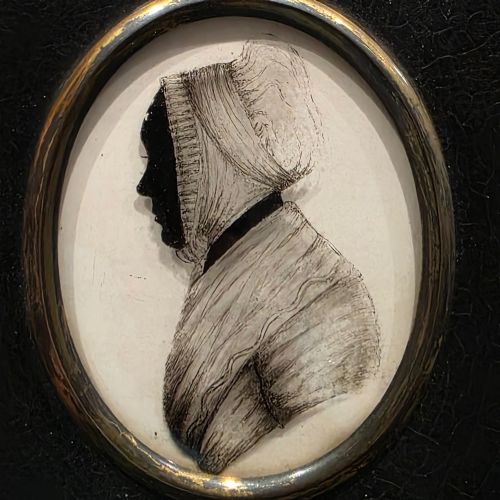
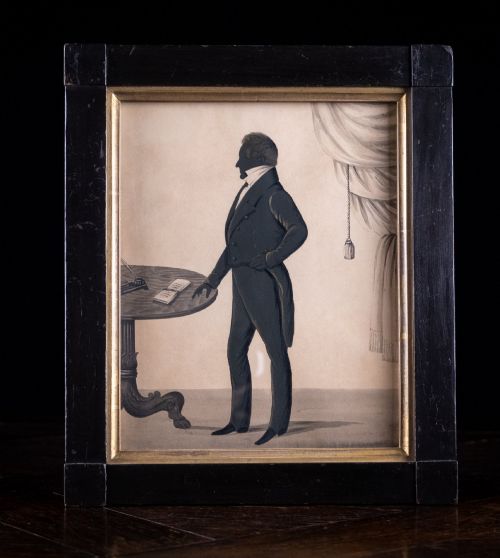
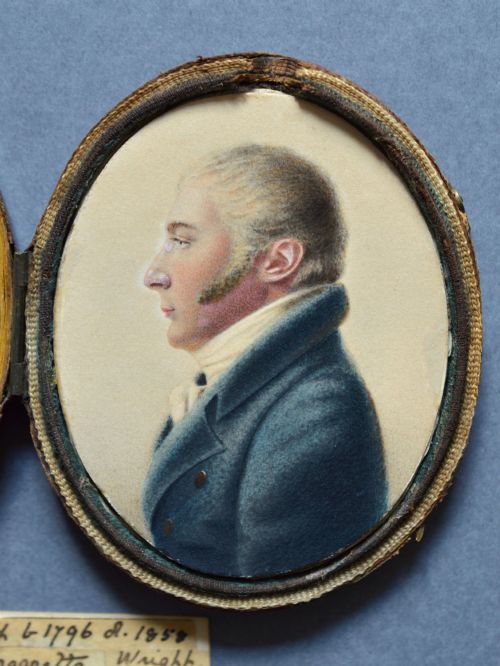
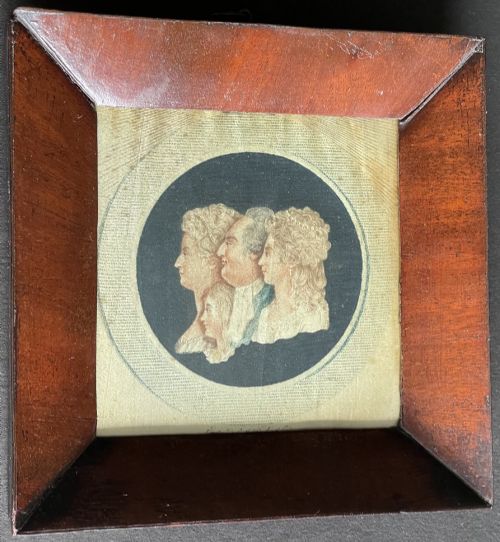
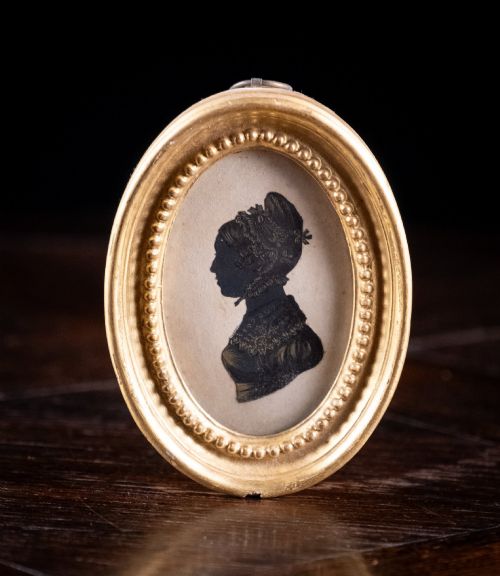
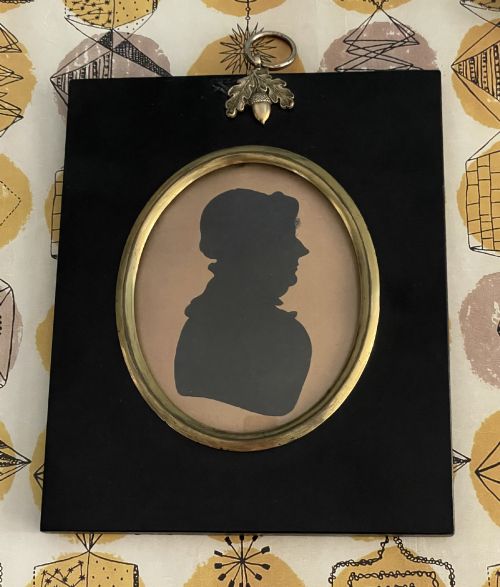
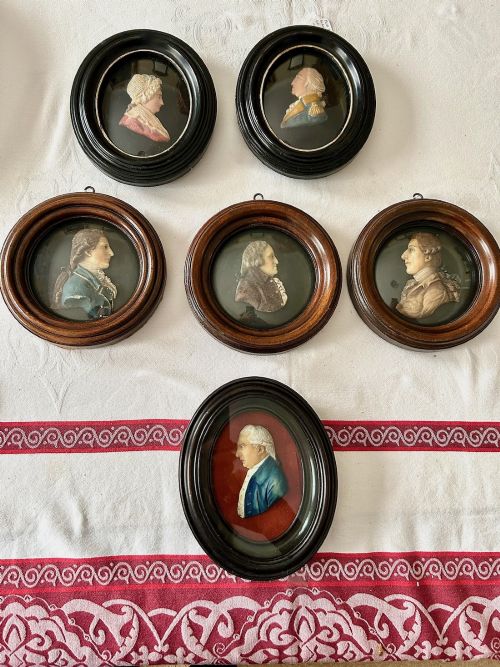
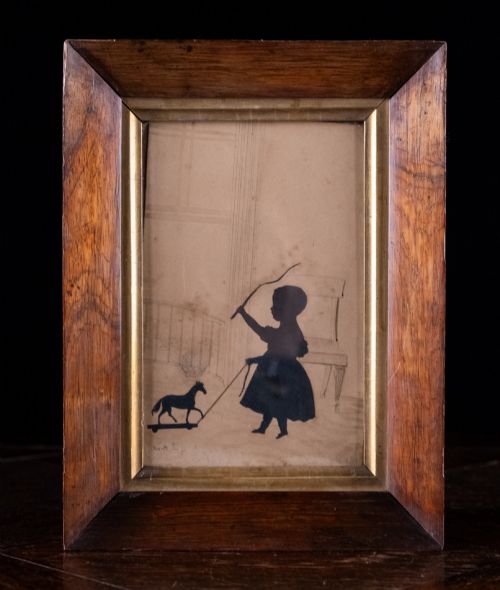
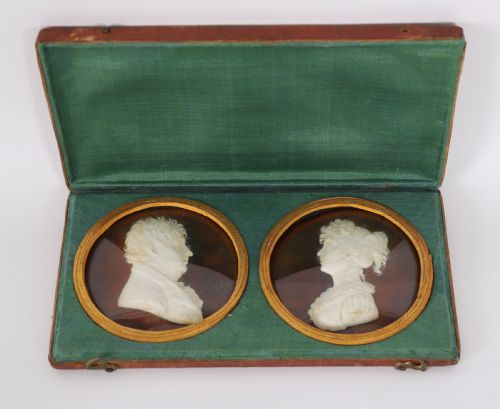
A georgian profile miniature captures the likeness of a sitter from the side, rendered in miniature scale to be worn, carried, or hung upon a wall. The pieces meeting this description span the eighteenth and nineteenth centuries, taking the form of silhouettes, watercolour paintings, wax reliefs, and delicate jewellery pieces.
Cut-paper silhouettes and reverse-painted glass pieces dominate the selections, alongside painted works on plaster and paper. Framed artwork and pendant forms appear frequently, often retaining their original ebonised wood or brass frames.
Materials and construction
Many examples employ glass or crystal protection, with reverse-painted silhouettes applied directly to the underside of the glass. Frames of ebonised wood, brass, or coquilla nut house the works, occasionally incorporating precious metals for jewellery and rings.
Listings feature works from the eighteenth and nineteenth centuries, utilising glass, paper, brass, wood, ink, watercolour, ebonised wood, and gold leaf.
Assessing quality and execution
The precision of the cutting or brushwork dictates the merit of the piece, separating rapid commercial output from master portraiture. Skilled artists captured recognisable bone structure and expression with minimal strokes, while lesser examples rely on generic outlines.
Condition of the delicate ground materials and original framing elements heavily influence the integrity of the piece. Intact paper without foxing, secure glass without scratching, and original bezels or frames preserve the historical context.
John Miers·Augustin Edouart·James Sharples·George Atkinson·James Tassie
The Georgian Profile Miniature Glossary
- Silhouette
- A solid profile portrait, typically filled with dark pigment or cut from paper, named after the French finance minister Étienne de Silhouette.
- Plumbago
- A fine drawing executed in graphite, taking its name from the Latin word for lead ore.
- Reverse painting
- A technique where the artist paints directly onto the underside of a glass sheet, viewing the finished portrait through the polished front.
- Wax relief
- A three-dimensional profile modelled in tinted wax, often mounted against a contrasting dark background and framed behind glass.
- Coquilla nut
- The hard, mottled brown seed of a South American palm, frequently turned on a lathe into small boxes and frames.
Georgian Profile Miniature: Frequently Asked Questions
How were these miniature portraits originally worn or displayed?
Many profile miniatures functioned as personal jewellery, set into rings, brooches, or pendants so that wearers could keep family members close to their hearts. Others were framed in pairs or small groups for intimate domestic display on parlour walls.
Larger wall-hanging versions sat in heavy ebonised wood or brass frames, whilst small patch boxes and trinket cases incorporated miniature profiles into their lids for daily use.
What is the difference between a silhouette and a painted miniature?
Silhouettes rely entirely on outline and shadow, rendered through cut paper, ink, or painted fill to capture the distinct profile of a sitter. They focus strictly on the contour of the nose, brow, and chin.
Painted miniatures incorporate colour, shading, and fine details using watercolour, ink, or plumbago on paper, plaster, or ivory, offering a more nuanced representation of skin tones and clothing.
How can I tell if a frame is original to the piece?
Original frames generally show the correct period construction methods, such as turned ebonised wood profiles, small brass hangers, and old backboards secured with old fixings. The sizing and mounting inside the rebate should fit the miniature without modern spacers or adhesives.
Signs of alteration include modern backing tape, mismatched proportions between the artwork and the surrounding mount, or synthetic materials in the rebate.
Did these portraits always depict family members?
While most commissions recorded beloved spouses, children, or parents, some pieces portrayed public figures, monarchs, or fictional dignitaries. The Grand Tour also prompted travellers to purchase ready-made profile reliefs of classical figures or notable people.
Commemorative pieces sometimes marked specific life events or noted a sitter's status, but the primary motivation remained personal remembrance and affection.