

Georgian Press Armoire
A georgian press armoire brings heavy timber storage into a room, offering deep linen presses and hanging spaces rooted in eighteenth and nineteenth-century domestic life.
Georgian Press Armoire
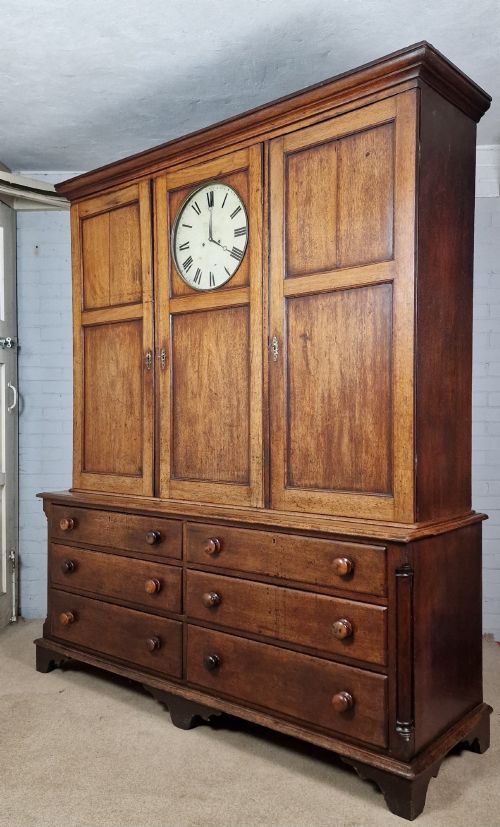
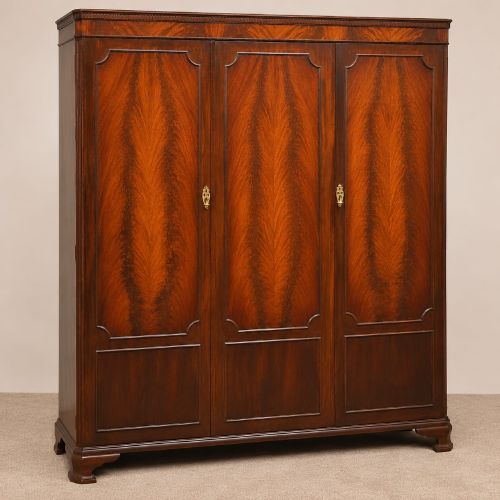
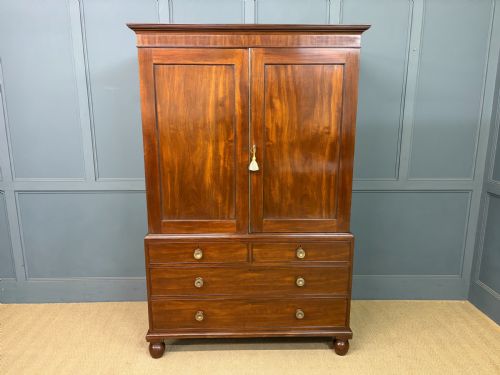
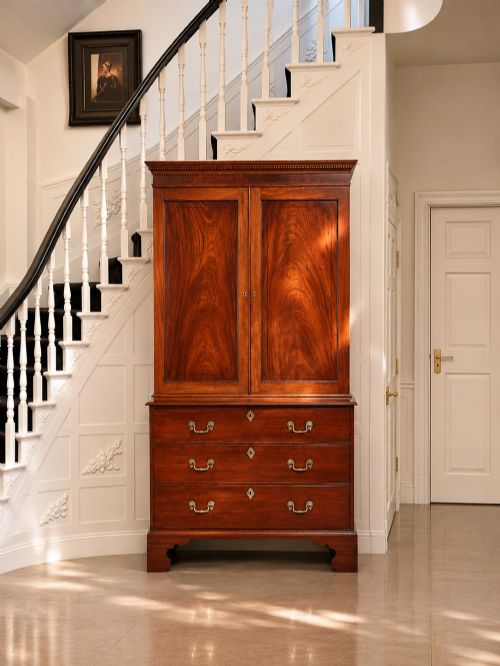
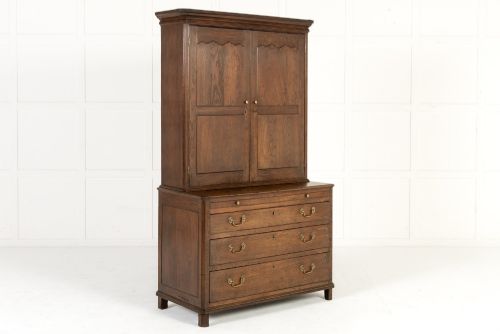
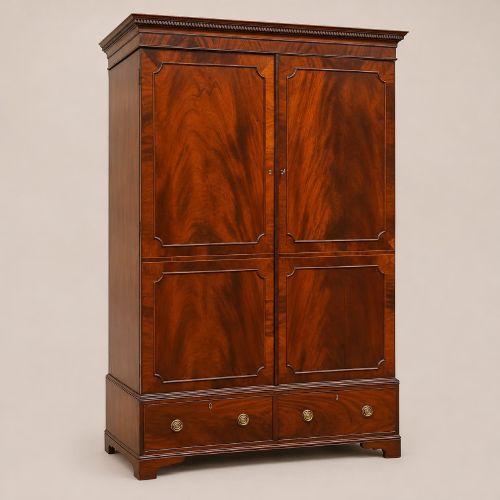
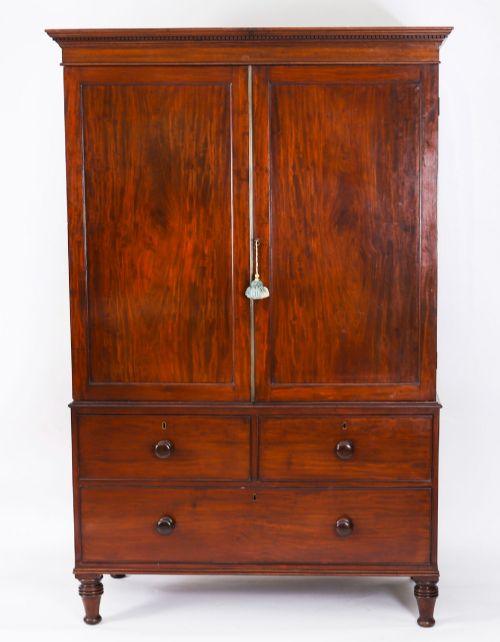
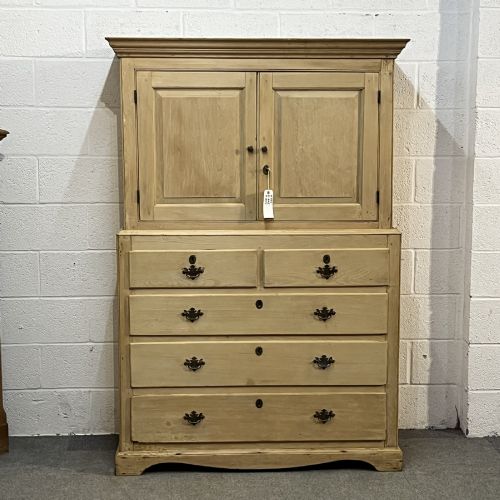
A georgian press armoire encompasses traditional linen presses, housekeepers cupboards, and gentlemen's wardrobes originating primarily from the Georgian, Regency, and nineteenth-century periods.
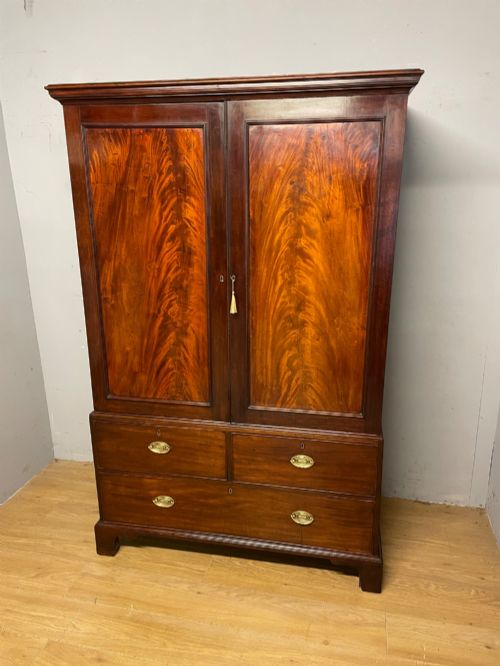
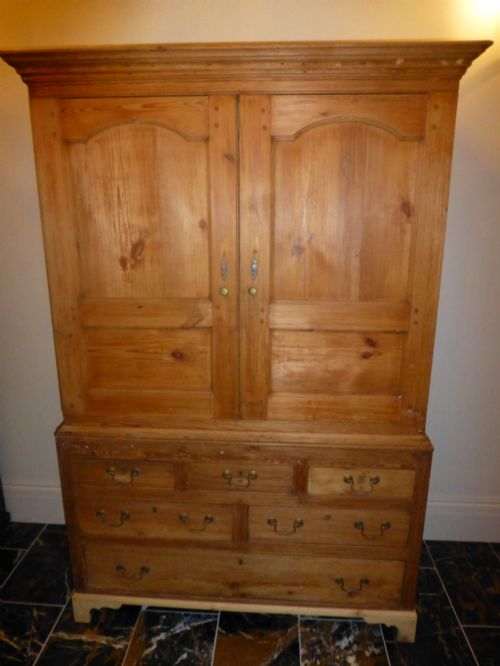
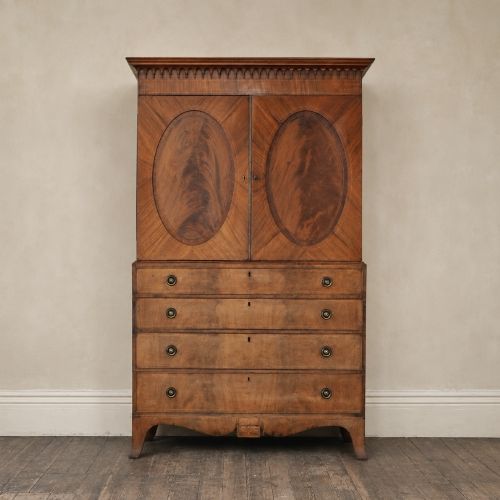
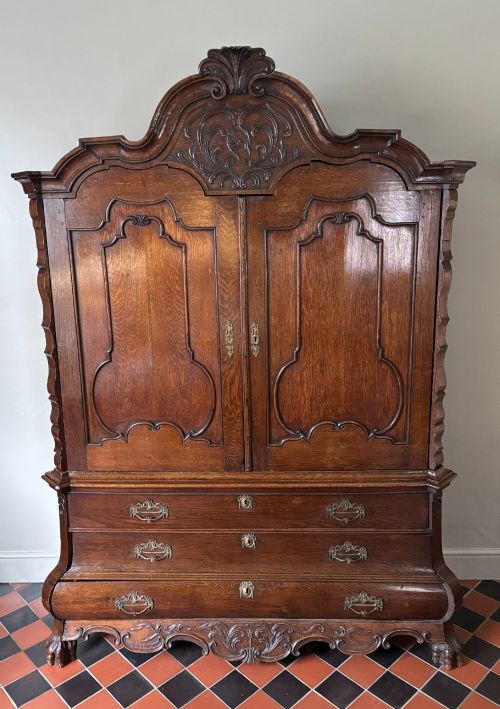
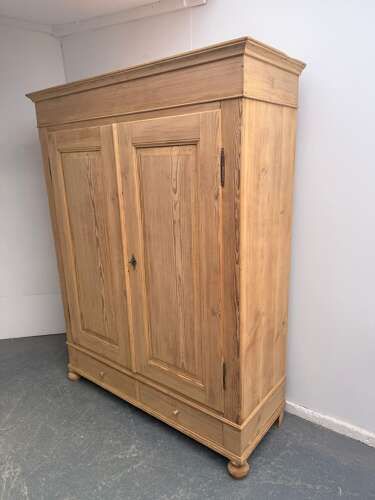
Buyers encounter solid pine, oak, and mahogany examples, frequently featuring upper cupboard doors concealing sliding trays or hanging space above banks of drawers.
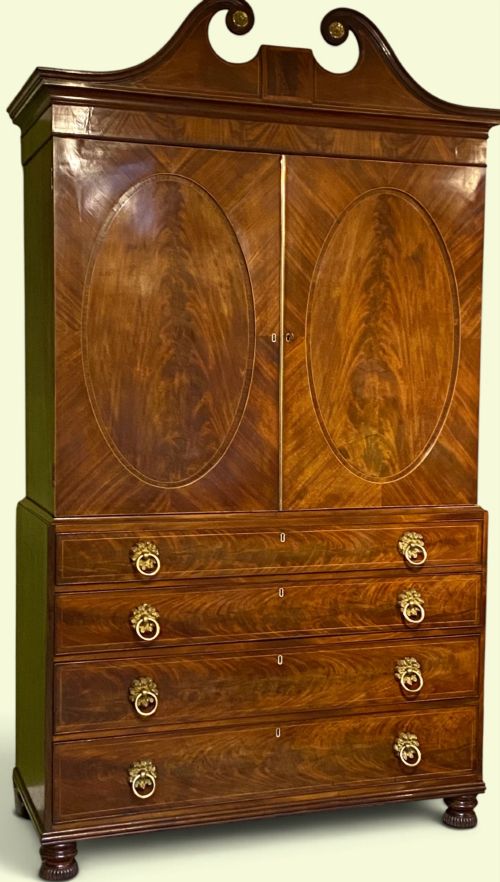
The selection ranges from small dwarf cupboards and country pine presses to large, formally styled mahogany pieces with inlaid satinwood or blind fretwork cornices.
Materials and Technique
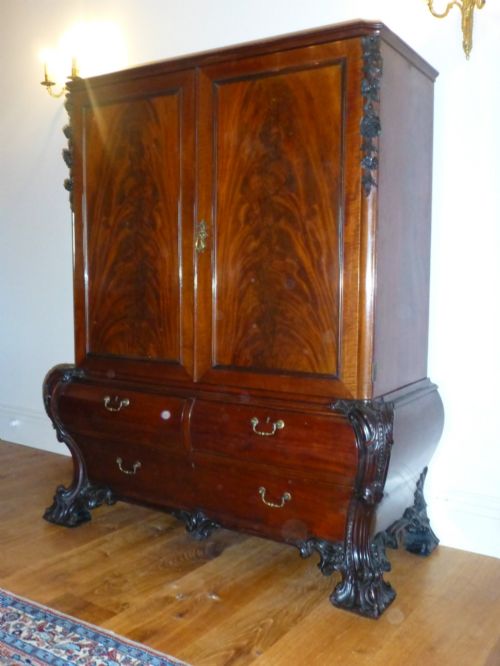
Cabinet makers utilised dense hardwoods like mahogany and oak alongside durable domestic pine, often applying flame mahogany veneers or satinwood stringing to principal surfaces.
Construction techniques combine solid timber framing with panelled doors, dovetailed drawer construction, and turned brass hardware or iron fittings.
Some country pieces retain early painted finishes or wax treatments, while formal urban examples showcase detailed cornices, ebonised accents, and intricate inlaid decoration.
Georgian Press Armoire Retail Price Guide 2026
Typical asking prices for georgian press armoire among the pieces listed under this phrase on Sellingantiques today, from the lower quarter to the upper quarter. They describe what is for sale here now, not the wider market.
Listings feature extensive examples in mahogany, oak, and pine, spanning the Georgian, Regency, William IV, and Victorian eras.
Distinctions in Execution
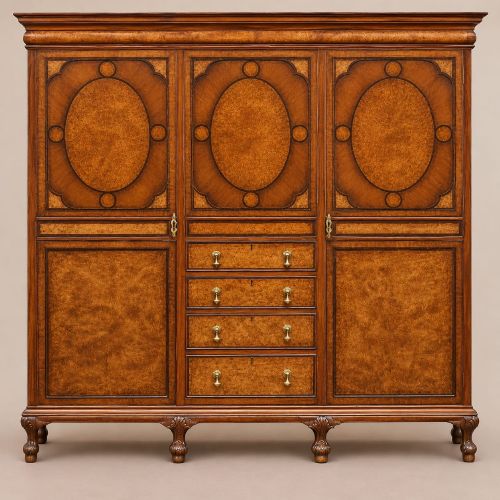
Quality rests in the selection of timbers, from plain country pine to figured flame mahogany veneer and burr walnut, matched with the precision of the cabinet work.
Finer examples display careful proportions, sophisticated inlay, balanced grain patterns across panelled doors, and intact internal sliding trays or original hanging arrangements.
The Georgian Press Armoire Glossary
- Linen Press
- A large piece of case furniture with upper doors enclosing shelves or sliding trays for textile storage, placed above a base section fitted with drawers.
- Gentleman's Wardrobe
- A tall storage cupboard historically designed for men's garments, typically combining hanging space with internal drawers or sliding trays.
- Cornice
- The ornamental moulding running around the top edge of a cabinet or press, which sometimes incorporates blind fretwork carving.
- Blind Fretwork
- Carved decorative openwork glued onto a solid wooden background without piercing right through to the surface beneath.
- Flame Mahogany
- Timber cut from the fork of the mahogany tree to produce a distinctive, flamy or feather-like grain pattern.
Georgian Press Armoire: Frequently Asked Questions
What is inside a linen press?
Most linen presses contain wooden sliding trays or shelves behind the upper doors, designed for storing folded textiles before modern hanging wardrobes became standard.
The lower section typically incorporates a chest of drawers, ranging from two small drawers over two large ones to a deep single drawer base.
How do I tell Georgian from Victorian pieces?
Georgian pieces tend to display simpler architectural proportions, classical mouldings, and solid timber construction such as oak or early mahogany.
Victorian items often introduce heavier proportions, darker finishes, varied wood veneers, or machine-sawn elements within the internal framing.
Can these wardrobes hold modern clothes hangers?
Many older presses and wardrobes feature shallow internal depths or fixed sliding trays originally built for folded linen rather than modern coat hangers.
Buyers often check the internal hanging depth and configuration before purchase to ensure modern garments fit comfortably inside.
Are these cupboards easy to move?
Larger press cupboards and wardrobes are heavy multi-part pieces of furniture constructed from dense hardwoods like oak or mahogany.
Some regional examples, such as knockdown wardrobes, were constructed to dismantle into sections for easier transport through narrow doorways.