


Georgian Portrait Sketch
A georgian portrait sketch captures individual likeness through intimate hand-drawn lines on paper, offering a direct window into historical character.
Georgian Portrait Sketch
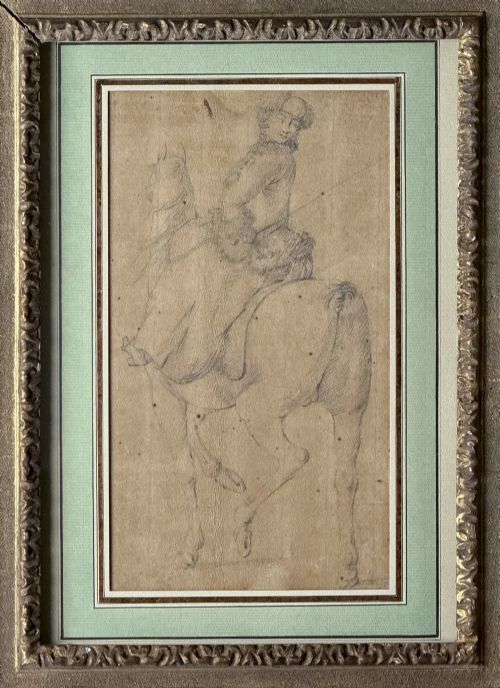
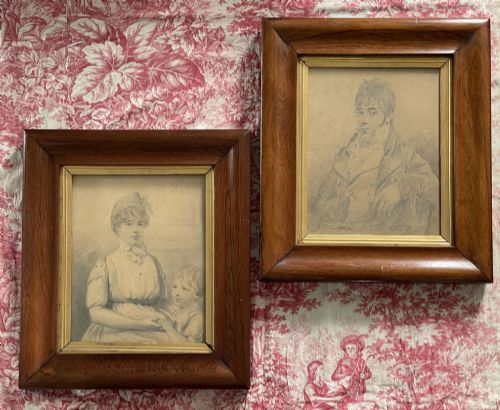
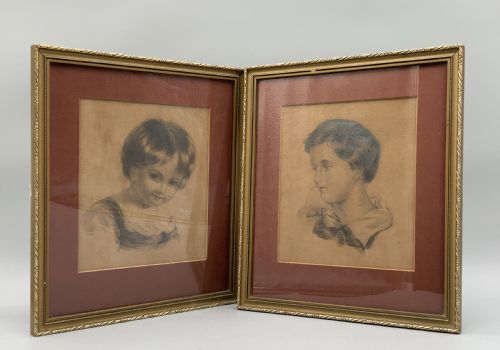
A georgian portrait sketch comprises original works on paper executed in media such as graphite, pencil, charcoal, and ink, often preserved in period frames of wood or glass. These works document sitters ranging from Regency couples and young children to notable historical figures and nobility.
The selections encountered span the eighteenth century and the Regency era, extending occasionally into Victorian revivals and later nineteenth-century interpretations. Common formats include single framed drawings, companion pairs, and sets that reveal both informal domestic studies and finished preparatory works.
Materials and execution
Artists relied primarily on paper supports, applying graphite, charcoal, plumbago, and pen and ink to build form, tone, and expression. Many pieces incorporate subtle washes of watercolour to add life and colour to the monochrome linework.
Framing forms an integral part of the survival of these works, with surviving pieces mounted in carved Florentine frames, original maple mouldings, or gilt scroll-mounted frames.
The listings span the eighteenth century, the Regency period, and the nineteenth century, utilising paper, graphite, ink, watercolour, and wood.
Factors of distinction
Quality rests upon the sureness of the draughtsmanship and the psychological depth captured by the artist, distinguishing rapid domestic exercises from accomplished master drawings. The retention of the original mount and frame further enhances the historical integrity of the piece.
James Ferguson·John Hoppner R.A.·Ozias Humphry·George Richmond·Sir Nathaniel Dance-Holland·Sir William Charles Ross
The Georgian Portrait Sketch Glossary
- Plumbago
- A drawing executed in graphite, taking its name from the Latin for lead ore. These detailed monochrome works were particularly popular for portraiture in the seventeenth and eighteenth centuries.
- Graphite
- A form of carbon used as a drawing medium to achieve fine lines and varied tonal shading. It provides the foundational structure for many preparatory portrait sketches.
- Manner of
- A term indicating that a work is executed in the style of a specific master without being an autograph piece by that hand. It reflects the pervasive influence of prominent portraitists on contemporary draughtsmen.
Georgian Portrait Sketch: Frequently Asked Questions
How do I care for a paper portrait?
Keep drawings away from direct sunlight to prevent the fading of ink, graphite, and watercolour pigments on the paper.
Maintain stable indoor humidity levels to protect both the fragile paper support and the antique wooden or gilt frames.
Are these drawings original works?
The selection consists of hand-drawn works created directly by artists using media such as pencil, charcoal, and ink on paper.
Each piece represents an individual primary creation rather than a mechanical reproduction or modern print.
How are periods identified?
Dating relies on stylistic markers within the draughtsmanship, costume details of the sitters, and the construction methods of the accompanying frames.
Signatures, inscriptions, and artist attributions further clarify the historical context of the execution.
Where should I hang these sketches?
Display them in interior spaces with subdued lighting to preserve the delicate paper and water-soluble pigments over time.
Group companion pieces or smaller framed drawings together to create a focused gallery wall reminiscent of period domestic displays.