


Georgian Porcelain Tea Service
A georgian porcelain tea service brings eighteenth and nineteenth-century parlours to life through delicate handles, painted enamels, and gilt-edged saucers.
Georgian Porcelain Tea Service
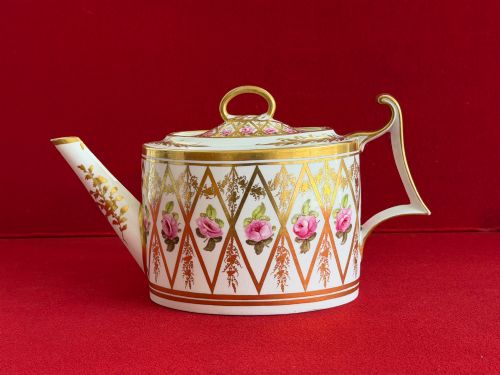
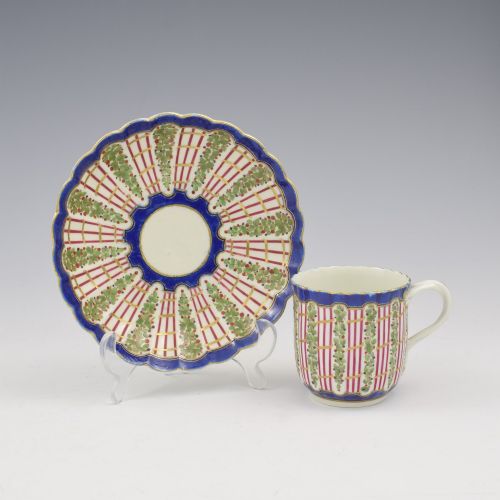
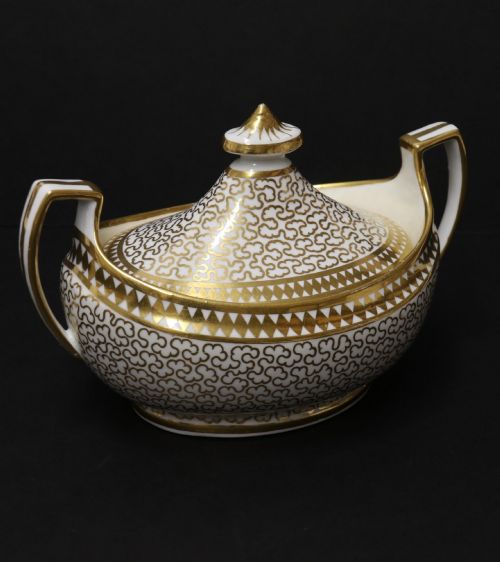
A georgian porcelain tea service gathers the essential vessels of the period's ritual, including teapots, sucriers, and matching cups and saucers, alongside occasional slop bowls and child's sets.
The pieces on this page span the eighteenth and nineteenth centuries, taking in the Georgian, Regency, and 1800 periods, with origins recorded in workshops from Worcester to Derby.
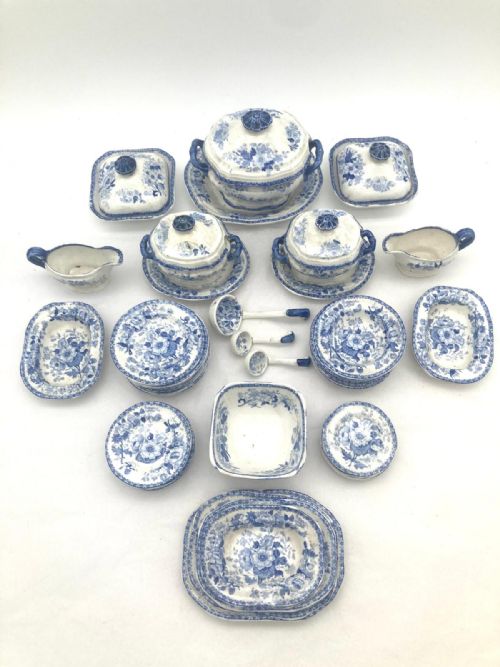
Forms vary from standard tableware to miniature dinnerware and specialised sugar boxes, reflecting the domestic habits and social standing of the households they served.
How they were made
Potters shaped these services using porcelain and soft-paste porcelain, sometimes employing earthenware alongside standard ceramic bodies.
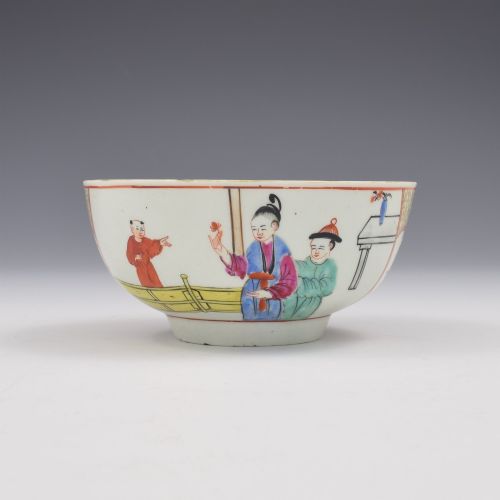
Decoration relied on enamel painting, transfer printing in blue and white, and the application of gold leaf and gilding to accentuate handles and rims.
Children of the period learned host-craft early, practising pouring tiny drops from miniature tea services onto minuscule saucers.
What varies in quality
Quality rests in the precision of the potting, the clarity of the porcelain body, and the crispness of painted enamel or transfer-printed floral and figurative patterns.
The finesse of the gilding and the retention of delicate details, such as flower head knops on teapots, distinguish standard production from exceptional factory output.
Derby Porcelain·Worcester·Chamberlains Worcester·Minton·Spode·Flight, Barr and Barr·Thomas Wolfe·Coalport
The Georgian Porcelain Tea Service Glossary
- Sucrier
- A covered sugar bowl designed to hold loose sugar for tea service. These vessels often feature matching lids and decorative handles.
- Soft-paste porcelain
- An artificial ceramic composition fired at lower temperatures than hard paste. It produces a warm, slightly creamy body favoured by eighteenth-century English factories.
- Gilding
- The application of gold leaf or gold paint to ceramic surfaces. It highlights rims, handles, and painted motifs on fine tableware.
- Slop bowl
- A bowl used during tea service to discard cold dregs or leftover leaves before pouring a fresh cup. They frequently match the pattern of the accompanying cups and saucers.
Georgian Porcelain Tea Service: Frequently Asked Questions
What pieces belong in a service?
A service typically comprises a teapot, a sucrier or sugar box, and several cups and saucers. Slop bowls and child's sets also appear among the tableware.
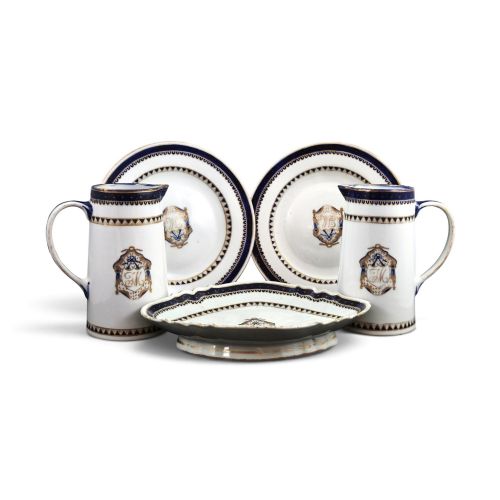
Individual pieces often share matching patterns, hand-painted floral motifs, or monogrammed designs produced by the same factory.
How do I care for antique porcelain?
These fragile ceramics require gentle hand washing in lukewarm water with mild soap. Avoid dishwashers and harsh scrubbers entirely.
Keep pieces away from sudden temperature changes to protect the glaze, enamel decoration, and gold leaf.
How are periods identified?
Periods are determined through factory marks, paste composition, and stylistic changes in shape and decoration. Early pieces often feature soft-paste bodies and hand-painted Chinese export influences.
Later Regency and nineteenth-century examples display refined felspar porcelain bodies and transfer-printed sheet patterns.
Were these services used daily?
Many sets served wealthy households during formal afternoon tea rituals. Finer services with extensive gilding were often reserved for guests.
Smaller child's sets and miniature dinnerware indicate that porcelain was also adapted for juvenile education and domestic play.