
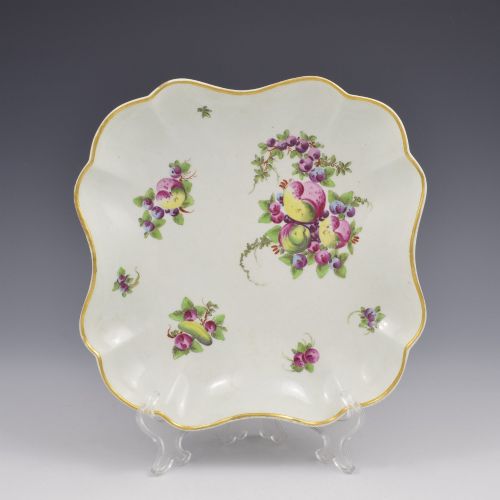
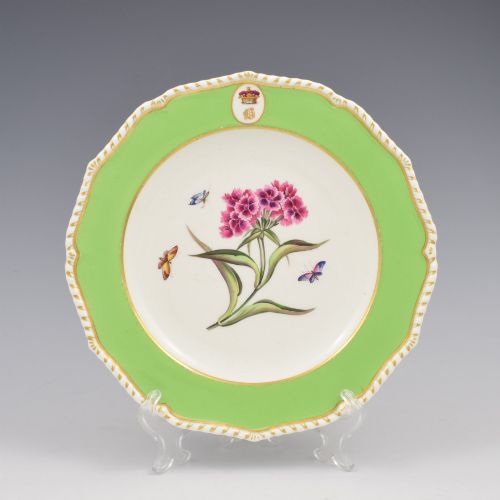


Georgian Porcelain Dessert Plate
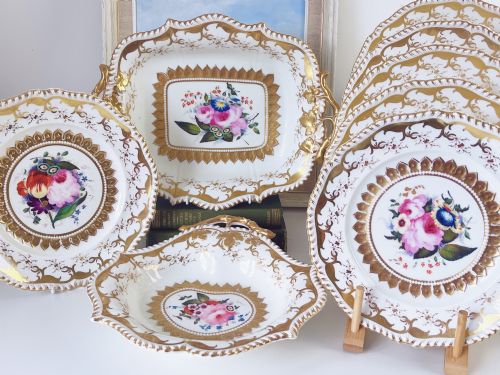
A georgian porcelain dessert plate brings hand-painted botanicals and armorial crests to the table, marking an era of refined dining.
Georgian Porcelain Dessert Plate
A georgian porcelain dessert plate forms part of larger dining services created to serve fruit, sweetmeats and confectionery at the conclusion of a formal meal. These pieces span the eighteenth and nineteenth centuries, including the Regency period and the year eighteen hundred.
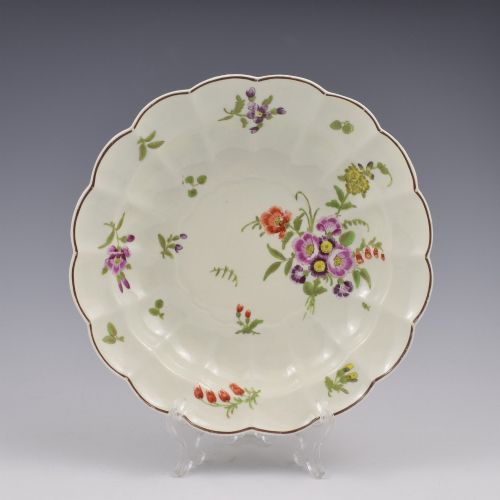
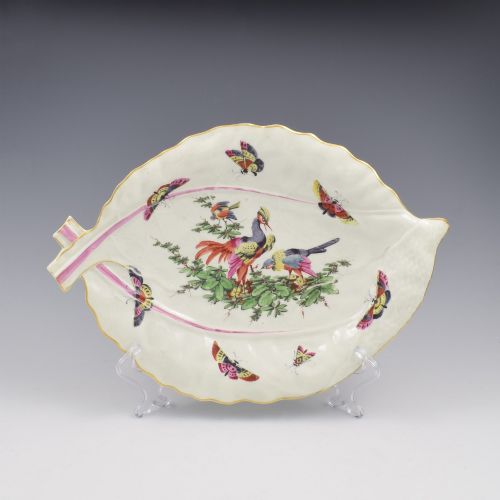
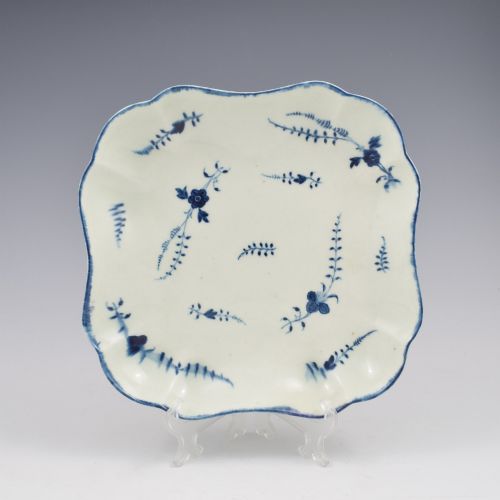
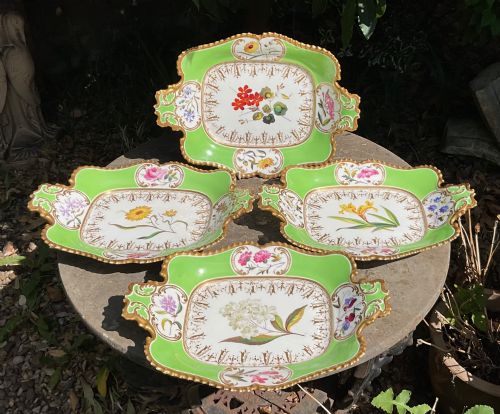
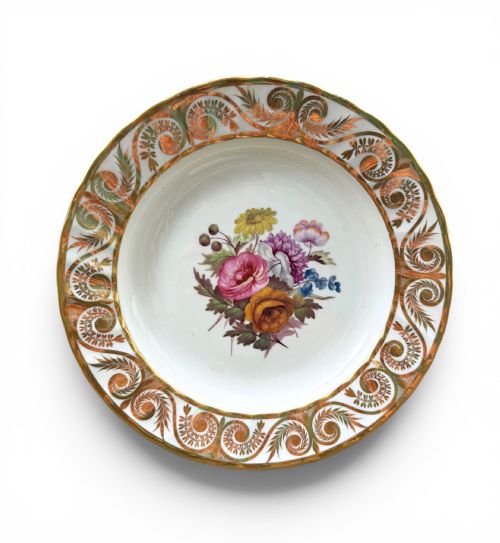
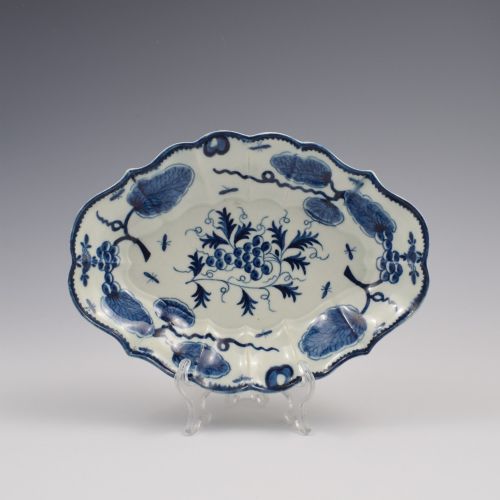
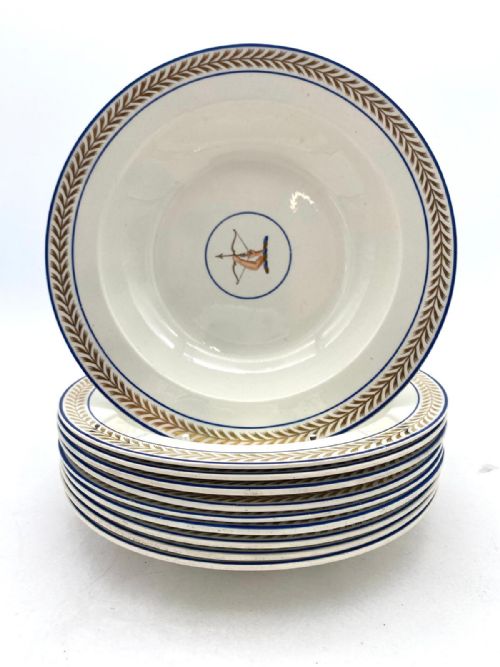
The objects on this page appear as individual plates, pairs or parts of services, taking the form of circular dessert plates, lobed dishes, square dishes and leaf-shaped serving dishes. Factories such as Worcester, Derby, Coalport and Spode dominate the forms found here.
Buyers seeking a georgian porcelain dessert plate encounter everything from delicate Dr Wall Worcester porcelain painted with fancy birds to robust armorial plates by Bloor Derby and Chamberlain Worcester.
How They Were Made
Makers utilised soft-paste porcelain, hard-paste porcelain and ceramic bodies, shaping them on the potter's wheel or pressing them into moulds to create lobed, scalloped and square profiles. Early examples rely on soft-paste porcelain, while later nineteenth-century pieces incorporate ironstone and refined body compositions.
Decoration combines underglaze painting, hand-painted enamel colours and meticulous gilding with gold leaf. Specialised artists applied botanical studies, topographical views and armorial bearings before the plates underwent final kiln firing.
Materials recorded across the inventory include enamel, gold leaf, soft-paste porcelain, gilt and ceramic.
What Varies in Quality
The skill of the painting sets individual pieces apart, distinguishing factory work of standard output from plates painted by named artists like Moses Webster or Thomas Steele. Botanical subjects and topographical scenes demand precise brushwork and botanical accuracy.
The ambition of the form and the richness of the palette dictate the standing of a piece. Armorial commissions bearing heraldic crests and dishes utilising intricate enamel patterns such as Kakiemon or Jabberwocky represent the upper tier of production.
Grainger Lee And Co·Chamberlains Worcester·Moses Webster·Wedgwood·Bloor Derby·Spode·Thomas Steele·Minton·Coalport·Flight Barr And Barr·James Giles·Masons Patent Ironstone·New Hall
The Georgian Porcelain Dessert Plate Glossary
- Armorial
- Bearing the coat of arms or crest of a specific family. These plates were commissioned by landed families to display lineage on the dining table.
- Soft-paste porcelain
- An artificial porcelain compound fired at lower temperatures than hard paste. It possesses a warm, creamy glaze favoured by eighteenth-century factories.
- Gilding
- The application of gold leaf or powdered gold to the rims and borders of ceramics. High-quality pieces feature heavy, burnished gilding that catches the light.
- Enamel
- Opaque glass fused to the ceramic surface during firing to create bright colours. Enamel painting allowed factories to produce vivid botanical and landscape motifs.
- Imari
- A decorative style inspired by Japanese export wares featuring iron red, cobalt blue and gold. Regency makers adapted these vibrant patterns for dessert services.
Georgian Porcelain Dessert Plate: Frequently Asked Questions
How were these plates used?
These dishes served dessert courses, presenting fruit, nuts and sweet confections at the end of elite dinners. They sat on the table as part of matched or composite dessert services.
Guests admired the painted botanical or armorial designs while partaking in the final course before the table was cleared.
Are these plates safe to use?
Historic porcelain requires careful handling and modern dining use is generally discouraged. Thermal shock and modern dishwashing detergents can damage the soft glazes and gold leaf.
Displaying them on plate stands or storing them carefully preserves the hand-painted enamels for the future.
How do I date a piece?
Makers marks, paste composition and painting styles help narrow the period of manufacture. Early pieces utilise soft-paste bodies and simple sprig patterns, while Regency examples lean towards bright armorials and botanical studies.
Comparing pattern numbers and factory marks against known historical timelines clarifies the decade of production.
What is First Period Worcester?
First Period Worcester refers to porcelain produced at the Worcester factory under the direction of Dr John Wall between 1751 and 1783. These pieces are celebrated for their fine potting and delicate transfer-printed or hand-painted decoration.
Collectors prize them for their translucent bodies and sophisticated oriental or European motifs.