





Georgian Period Corner Cupboard
A georgian period corner cupboard puts dead room to work, turning awkward angles into handsome storage.
Georgian Period Corner Cupboard
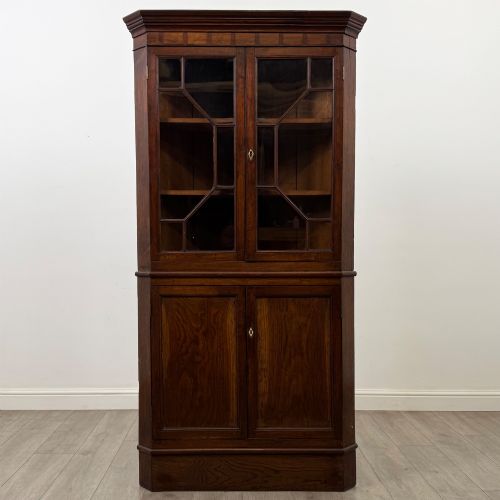
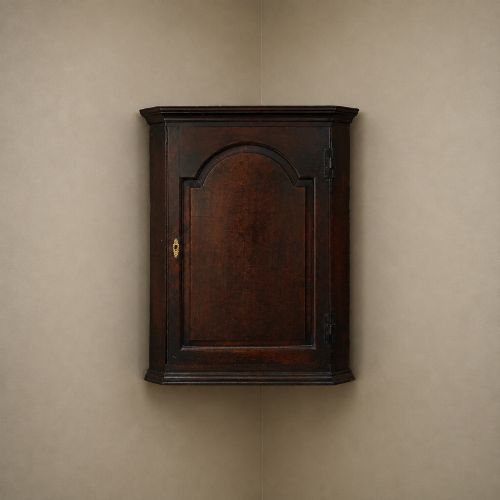
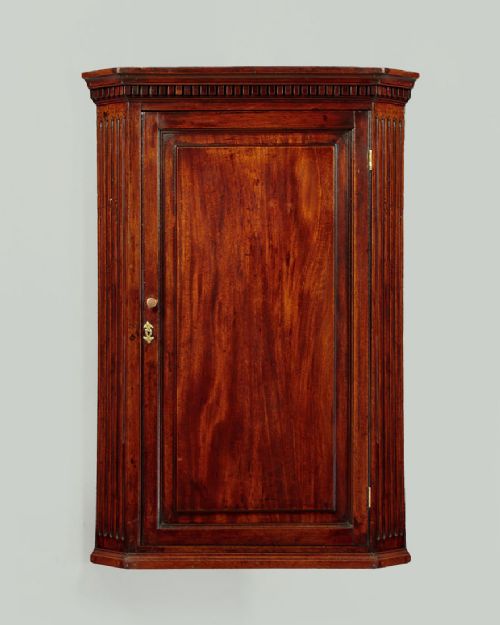
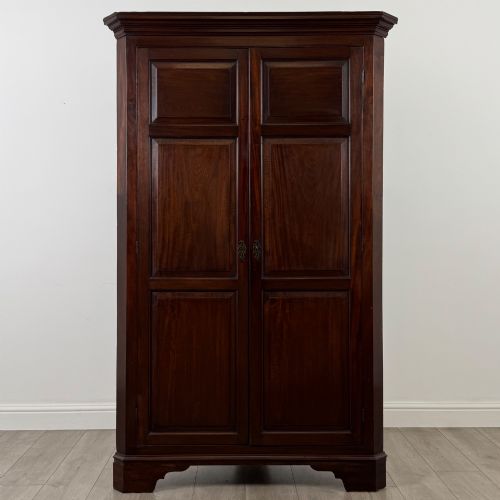
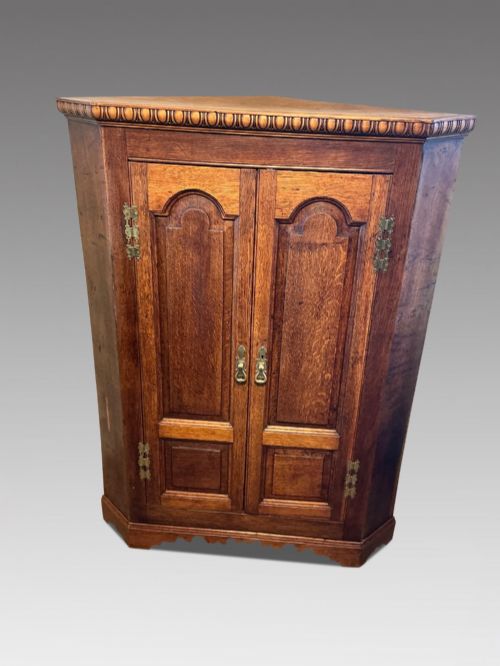
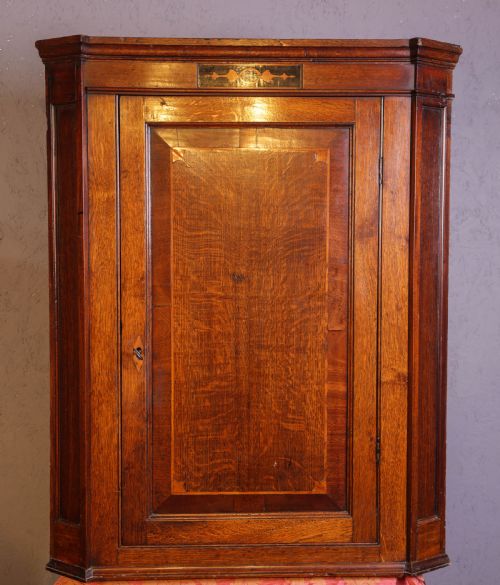
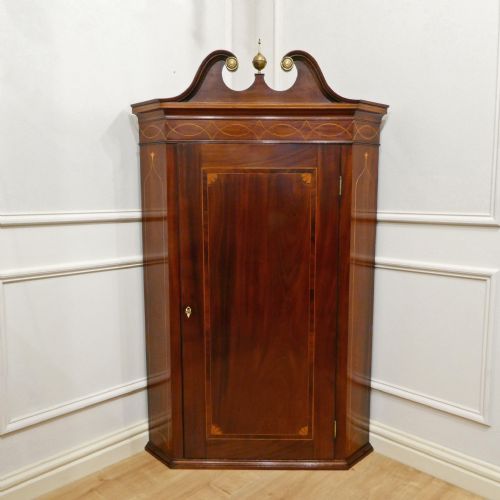
A georgian period corner cupboard turns empty room junctions into display space, built to tuck neatly into ninety-degree angles. Most examples met here are oak or mahogany, constructed as single hanging wall units or taller two-part standing furniture.
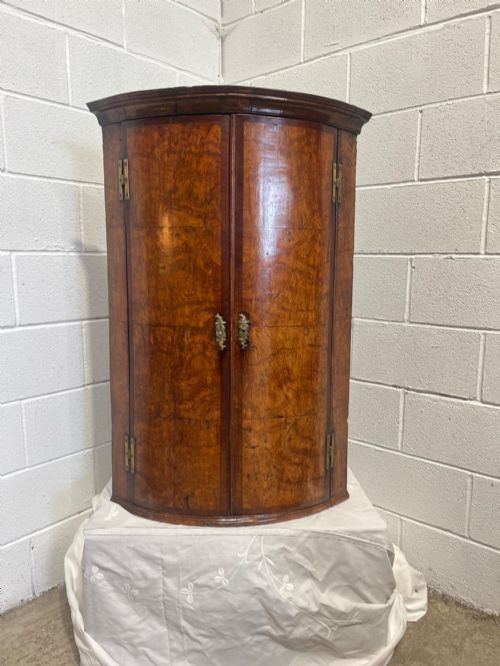
Makers designed these cabinets with single doors or double doors, sometimes curving the front into a bow shape to soften the hard geometry of a room. Many feature raised panels, glass display panes, or internal shelving shaped specifically for porcelain and glassware.
Timber and construction
Cabinet makers relied heavily on native oak and imported mahogany, often employing burr oak or walnut for select surfaces alongside fine veneer work. Structural elements frequently utilised sturdy joinery techniques such as mortise and tenon frames to keep doors true over centuries.
Decorative touches included subtle satinwood inlay, brass H-hinges, and moulded cornices. Glazed doors used timber glazing bars to secure individual glass panes within the upper cabinet section.
Georgian Period Corner Cupboard Retail Price Guide 2026
Typical asking prices for georgian period corner cupboard among the pieces listed under this phrase on Sellingantiques today, from the lower quarter to the upper quarter. They describe what is for sale here now, not the wider market.
Curved bow front doors trick the eye into thinking the wall straightened out just to host a tidy stash of old teacups.
Evaluating craftsmanship
Quality rests primarily in the choice of timber figure, the crispness of moulded details, and the integrity of the original joints. Pieces utilising highly figured mahogany or well-selected quarter-sawn oak demonstrate superior initial investment by the maker.
Proportion and scale dictate visual success, where well-balanced cornices and harmonious door panels elevate a utility piece into a composed focal point. Alterations to stands or replaced hardware naturally shift the balance away from factory-original condition.
The Georgian Period Corner Cupboard Glossary
- Bow front
- A convex curved cabinet front that projects outward from the corner. This curved form requires advanced woodworking skill to shape timbers accurately.
- Hanging corner cupboard
- A wall-mounted cabinet secured directly to wall studs via internal fixing points. These units often feature lower drawers or shaped aprons.
- Standing corner cupboard
- A floor-resting cabinet built either as a single tall piece or as a two-part combination. They offer substantial storage capacity from floor to cornice.
- Raised panel
- A central wood panel with bevelled edges fitted into a grooved frame. This technique allows timber to expand and contract safely with humidity changes.
- Satinwood inlay
- Contrasting pale exotic wood inserted into recesses cut into darker primary timber. It creates fine decorative banding along door edges and cornices.
Georgian Period Corner Cupboard: Frequently Asked Questions
How do I hang a wall cabinet?
Wall-hanging corner cupboards require secure fixing directly into masonry or solid wall studs using heavy-duty internal brackets.
Because antique timber carries considerable weight, professional installation ensures the cabinet remains level and stable over time.
Were these made for dining rooms?
These cabinets served primarily in dining parlours and sitting rooms to house ceramic tea services, wine glasses, and precious tableware.
Glass-fronted versions allowed owners to display imported porcelain while keeping dust away from delicate items.
How do I tell oak from mahogany?
Oak displays prominent growth rings and silver medullary flecks, offering a heavily textured surface that takes rich brown patination.
Mahogany provides a smoother, reddish-brown grain structure that often glows warmly under polished wax finishes.
Can floor standing pieces separate?
Larger floor standing models frequently separate into two stacking sections to simplify transport and placement.
The upper display cabinet simply rests upon the lower cupboard base, secured by gravity and alignment pins.