



Georgian Painted Pier Table
A georgian painted pier table brings architectural elegance to a hallway, defined by classical motifs and delicate painted decoration.
Georgian Painted Pier Table
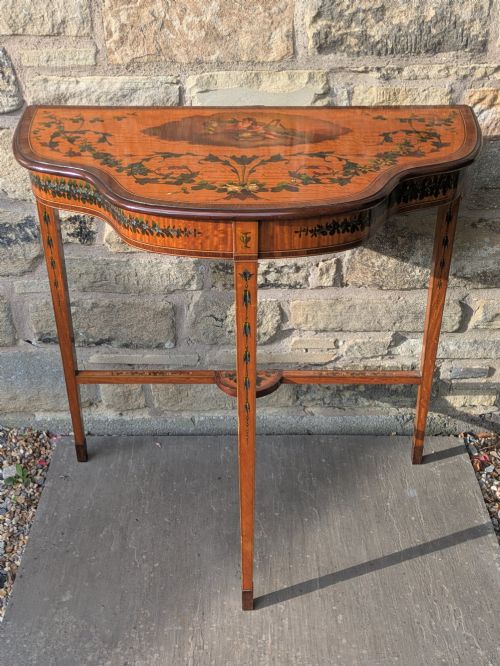
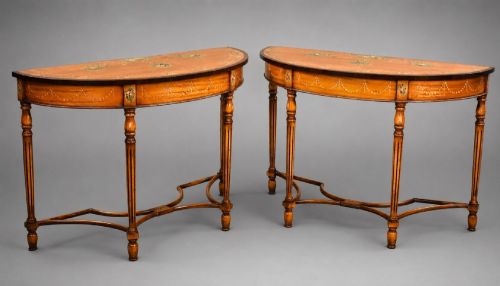
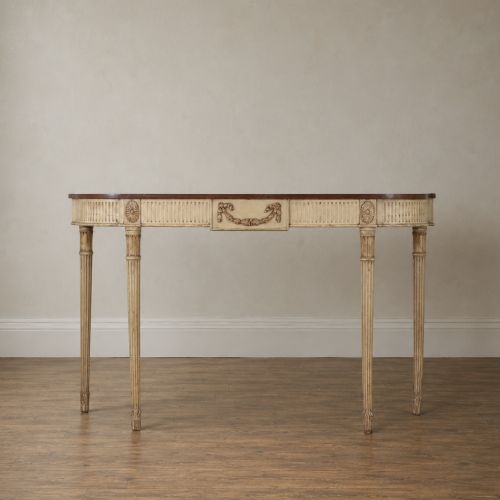
A georgian painted pier table is designed to stand against a wall, frequently between windows, taking the form of console or side tables with flat backs. The selection spans genuine eighteenth-century examples to later nineteenth-century revivals, including Regency and Sheraton Revival interpretations.
Most pieces seen here adopt the demi-lune or half-round shape, though rectangular formats also appear alongside associated decorative boxes and pier mirrors. These tables serve primarily as decorative console surfaces rather than heavy dining furniture.
Origins stretch from English workshops to Italian Neoclassical examples, reflecting varied regional interpretations of the style. Buyers frequently encounter revival pieces from the Victorian era and nineteen-twenty alongside earlier survivals.
Materials and construction
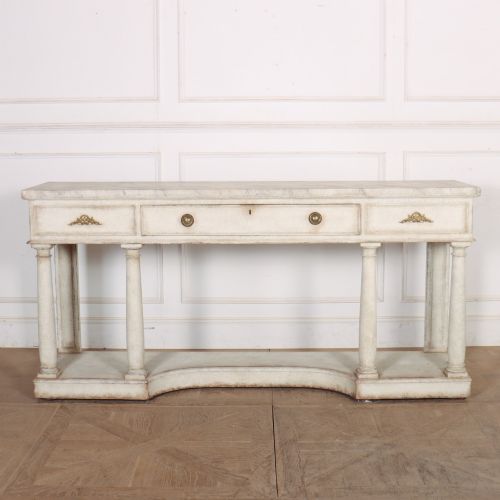
Makers utilised timber foundations, notably satinwood and various painted woods, finished with polychrome paintwork and gold leaf gilding. Many pieces incorporate smooth marble tops, particularly rouge marble, providing a durable and cool surface above the wooden frame.
Surface decoration relies heavily on hand-painted details, encompassing neoclassical motifs and penwork techniques. Giltwood accents highlight carved elements and mouldings, contrasting with the painted timber bodies.
Brighton chain pier boxes capture seaside novelty in miniature, proving that Regency craftsmen enjoyed building tiny architectural monuments.
Judging quality in painted furniture
The sophistication of the hand-painted decoration separates standard revival pieces from superior examples, with finer brushwork displaying greater detail and nuance. Original surfaces and untouched polychrome pigment carry more authority than later overpainting.
The choice of materials, such as figured satinwood bases paired with genuine marble tops, indicates higher initial cost and careful construction. Well-executed carving and crisp gilding likewise elevate the standing of an individual table.
Seddon Sons and Shackleton
The Georgian Painted Pier Table Glossary
- Demi-lune
- A half-moon shape characteristic of many console and pier tables designed to sit flush against a wall. This format became popular during the neoclassical period.
- Pier table
- A table specifically designed to stand against the wall between two windows, often placed beneath a matching pier mirror. They remain relatively shallow to preserve floor space.
- Satinwood
- A pale, lustrous timber native to India and Sri Lanka, highly prized for eighteenth-century and revival furniture. It takes paint exceptionally well.
- Penwork
- A decorative technique using fine ink lines to create intricate designs on wood surfaces, seen on Regency pieces. It allows for microscopic detail similar to an engraving.
- Neoclassical
- A style drawing inspiration from the classical art and architecture of ancient Greece and Rome. It dominates the ornamentation found on these tables.
Georgian Painted Pier Table: Frequently Asked Questions
Where should I place a pier table?
These tables suit narrow spaces such as hallways, entrance passages, or drawing rooms where floor space is limited. Their shallow depth allows them to sit neatly against a wall without obstructing movement.
They often complement a wall mirror mounted directly above, following traditional interior arrangements designed to reflect light.
Are marble tops original to these tables?
Many painted pier tables were originally manufactured to hold marble tops, offering a stable and luxurious surface. Rouge marble and other decorative stones appear frequently on both eighteenth-century and revival pieces.
Buyers should examine the fit between the stone and the wooden frame to ensure the top corresponds to the base.
How do I distinguish eighteenth-century from revival pieces?
Eighteenth-century originals show natural timber ageing and period-specific construction methods beneath the paint. Revival pieces from the Victorian era or nineteen-twenty often utilise machine-sawn timber and different priming layers.
Stylistic cues also help, as Sheraton Revival furniture from nineteen-hundred frequently employs brighter satinwood finishes and specific decorative interpretations.
Can these tables support heavy objects?
Pier tables are primarily designed for decorative display rather than heavy weight-bearing duties. Their slender legs and wall-anchored proportions make them suitable for lamps, small sculptures, or decorative bowls.
Pieces featuring heavy marble tops possess greater inherent weight, but the wooden frames beneath still require careful treatment.