

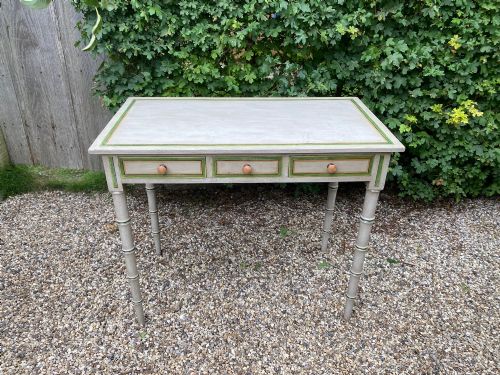
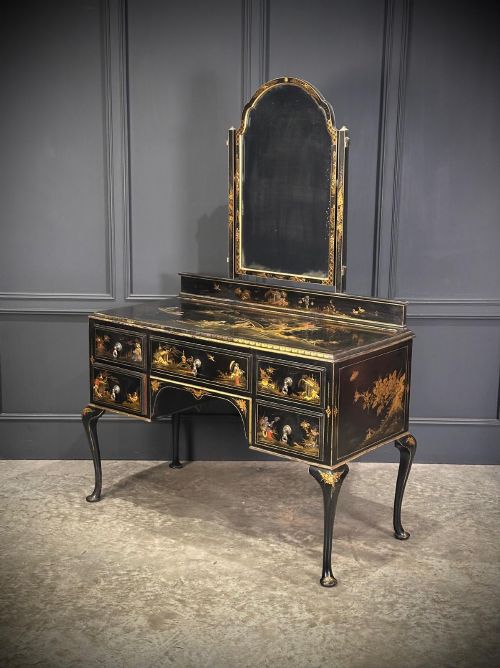

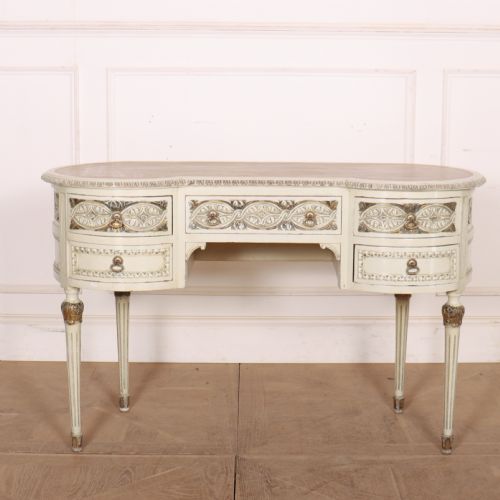


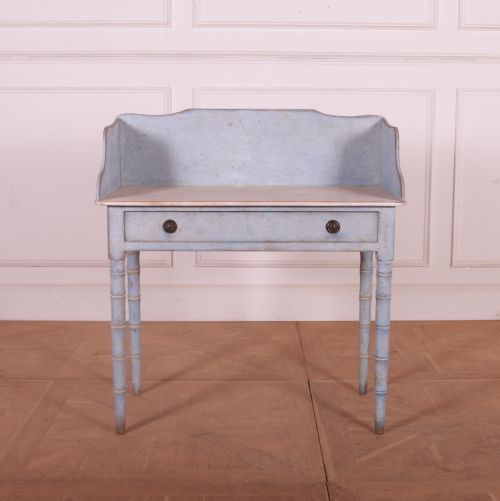


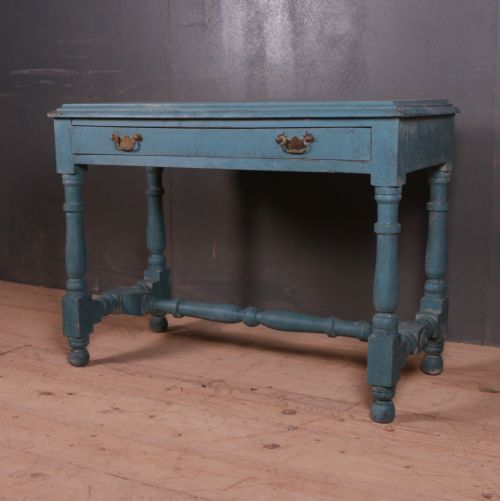
Georgian Painted Dressing Table
A georgian painted dressing table brings refined colour and period character to a bedroom through traditional craftsmanship.
Georgian Painted Dressing Table
When searching for a georgian painted dressing table, buyers encounter authentic examples from the eighteenth and nineteenth centuries alongside later revivals. These pieces combine practical storage with decorative surfaces, often taking the form of side tables, lowboys or kneehole desks adapted for the bedroom. The selection spans formal neoclassical designs to rustic country house interpretations.
Most pieces met on this page date from the Georgian, Regency and Victorian periods, showcasing traditional British cabinetry. Surviving examples frequently display hand-painted motifs, faux bamboo turnings or simulated wood finishes applied over softwood and pine. Each item reflects the domestic habits of its era, serving as a dedicated station for morning grooming and correspondence.
Materials and construction methods
Makers utilised timber such as pine and softwood as the primary carcass materials, providing a stable base for decorative surface work. Cabinetmakers shaped structural elements using hand tools before applying layers of paint, lacquer or gilt detailing. Metal hardware such as brass handles and pulls completed the assembly.
Surface decoration defined much of the production process, incorporating hand-painted geometric patterns, Chinoiserie lacquering or simulated graining. Artisans sealed these painted finishes to protect the artwork from daily wear in domestic settings. The integration of structural woodwork and applied art created durable, visually striking furniture.
Object forms recorded across the inventory include side tables, lowboys, kneehole desks, writing tables, chests of drawers and dressing mirrors.
Assessing quality and craftsmanship
Quality in a painted dressing table rests primarily on the integrity of the decorative surface and the skill of the original brushwork. Pieces featuring well-preserved, untouched paintwork outrank those with heavy modern interventions or unsympathetic overpainting. The subtlety of hand-drawn motifs and geometric detailing distinguishes superior workshop output from simpler vernacular items.
Construction standards further separate the tiers of craftsmanship, visible in the precision of drawer dovetailing and the stability of the timber frame. Superior examples retain original brass hardware and balanced proportions that reflect the aesthetic standards of their period. Originality of surface and structural soundness remain the decisive factors for collectors.
Sir Godfrey Kneller·Francis Alleyne·Gillows Design
The Georgian Painted Dressing Table Glossary
- Lowboy
- A small occasional table featuring one or more rows of drawers, commonly used as a dressing table or side table during the eighteenth century. These low-standing pieces often sat in bedrooms or parlours.
- Faux bamboo
- A decorative turning technique where wood is carved and painted to imitate natural bamboo stalks. This style gained popularity during the Regency period.
- Chinoiserie
- European interpretations of Chinese and East Asian artistic traditions, frequently expressed through lacquered finishes and painted motifs on furniture. This style flourished across various Georgian and later revival periods.
- Kneehole desk
- A writing or dressing table featuring a central recess for the user's legs, flanked by pedestals of small drawers. This form provided organised storage within a compact footprint.
Georgian Painted Dressing Table: Frequently Asked Questions
Are these tables suitable for daily use?
These dressing tables function well in modern interiors when treated with reasonable care and protected from excessive moisture. Their proportions and drawer configurations remain practical for contemporary bedroom storage.
Placing them away from direct sunlight preserves the integrity of historic painted surfaces. Using protective pads beneath cosmetic bottles prevents accidental staining on the decorative timber.
What is the difference between Georgian and Regency styles?
Georgian furniture generally reflects classical symmetry and proportions, often drawing inspiration from Palladian architecture. Painted pieces from this broad era frequently display restrained neoclassical details or simple country finishes.
Regency design introduces bolder decorative elements influenced by ancient Greek and Roman archaeology, alongside exotic trends like Chinoiserie. Turned components, simulated bamboo and brighter colour palettes typify this later aesthetic.
How should I clean antique painted surfaces?
Dusting gently with a dry, soft microfibre cloth removes everyday debris without disturbing fragile pigment layers. Avoid harsh chemical cleaners, modern detergents or excessive water that might soften historic paint.
Professional conservators should handle any significant cleaning or consolidation of flaking decoration. Regular gentle maintenance preserves the visual depth and historical character of the piece.