





Georgian Painted Display Cabinet
A georgian painted display cabinet brings colour and refined storage into a room, holding books and porcelain behind glass.
Georgian Painted Display Cabinet
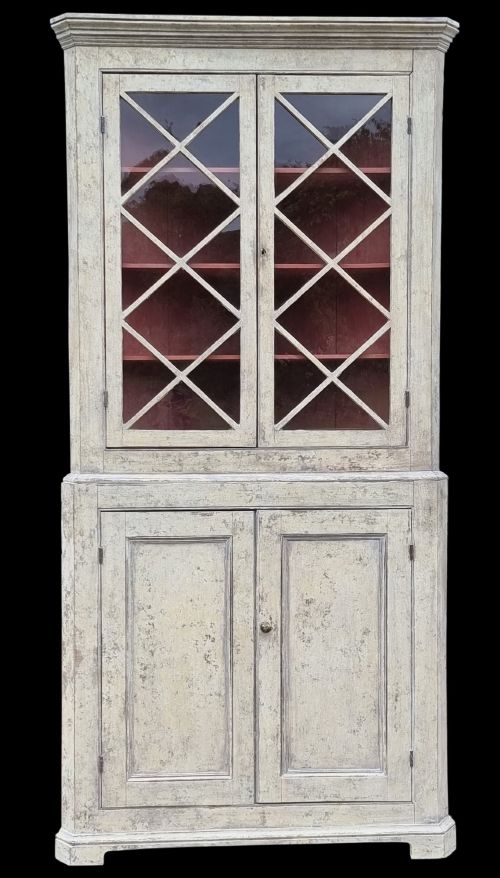
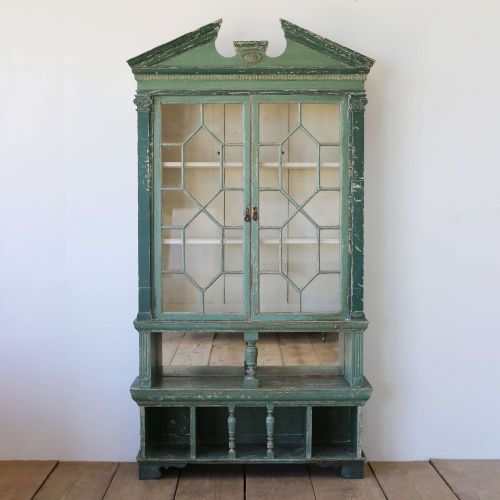
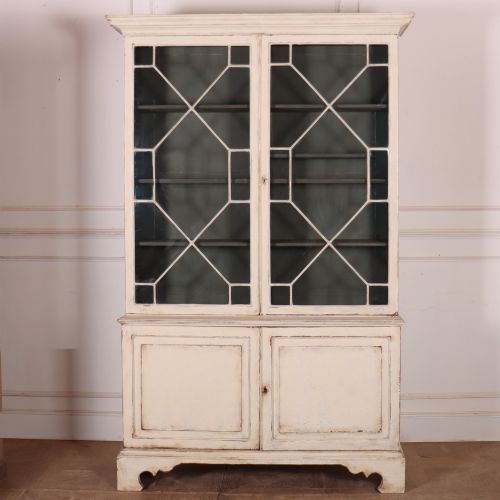
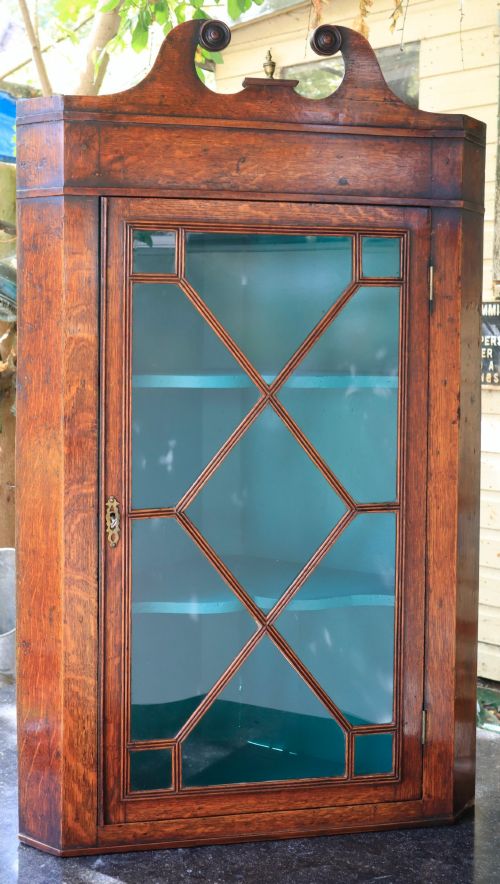
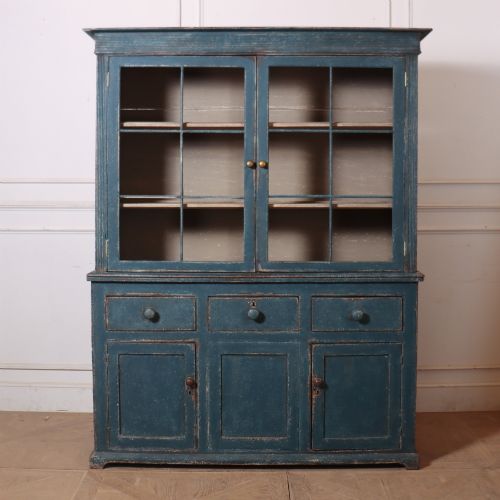
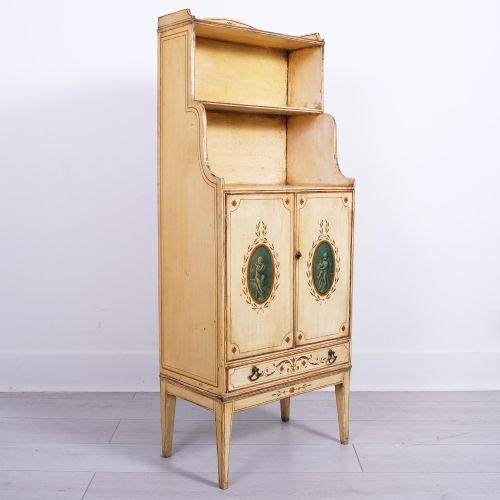
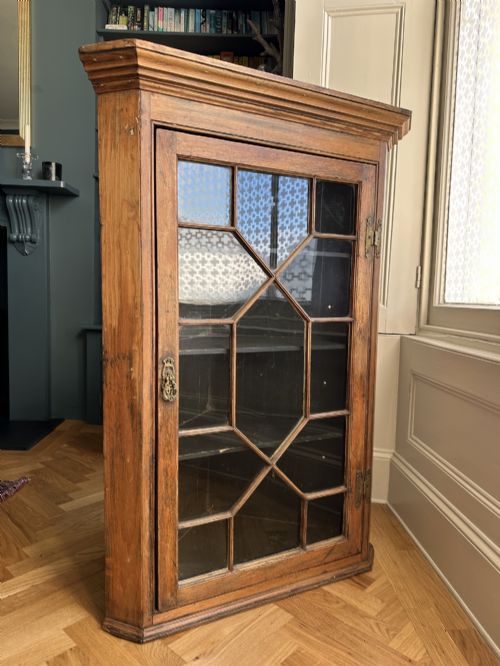
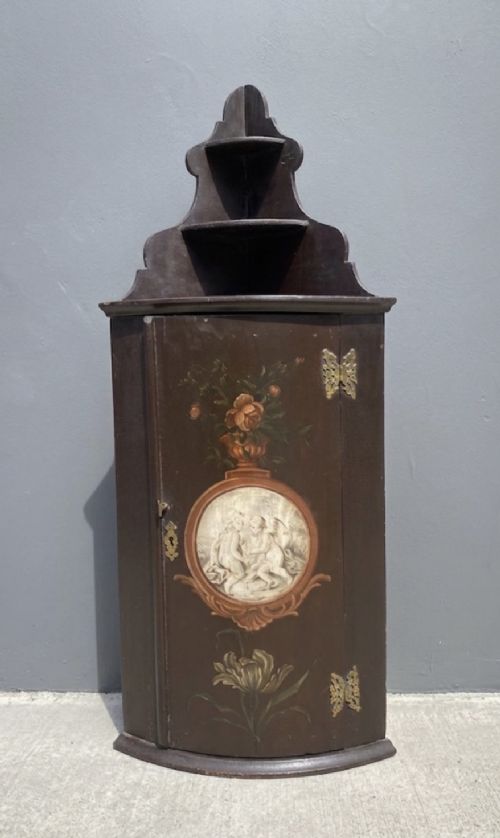
A georgian painted display cabinet combines architectural timberwork with decorative surface paint, providing shelved storage behind glazed doors. Pieces range from tall breakfront bookcases and corner cupboards to low cabinets on stands.
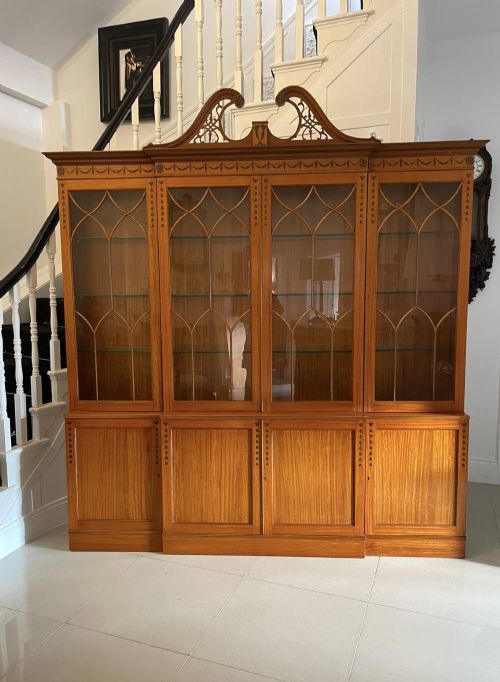
Most examples date across the eighteenth and nineteenth centuries, with later revivals appearing from the Edwardian era and the nineteen-thirties. Forms include breakfront libraries, corner cabinets, and kitchen dressers finished with painted decoration or simulated grain.
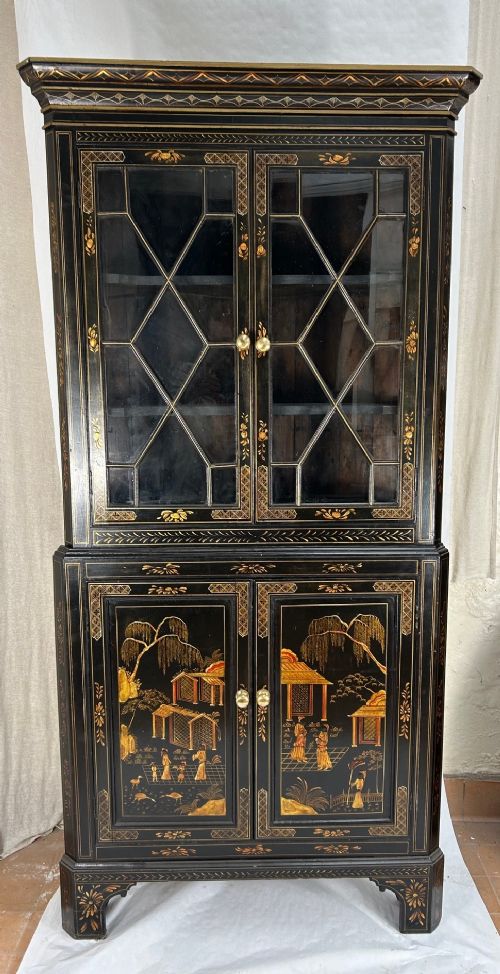
Origins span English regional workshops, Scottish makers, and Irish cabinet makers. Surfaces often feature original painted schemes, Chinoiserie motifs, or satinwood finishes.
Materials and construction
Carpenters constructed these cabinets using pine, mahogany, and satinwood, frequently applying decorative paint directly to the timber or utilising simulated rosewood graining. Brass hardware secures doors and supports shelving.
Glazing takes the form of astral bars dividing the glass panes to keep the interior visible while protecting the contents. Surface decoration relies on hand-painted botanical or figurative motifs, sometimes highlighted with gold leaf.
Georgian Painted Display Cabinet Retail Price Guide 2026
Typical asking prices for georgian painted display cabinet among the pieces listed under this phrase on Sellingantiques today, from the lower quarter to the upper quarter. They describe what is for sale here now, not the wider market.
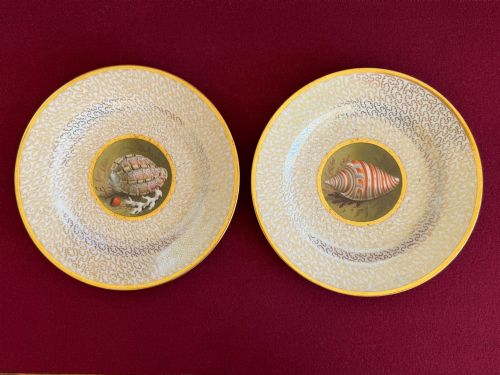
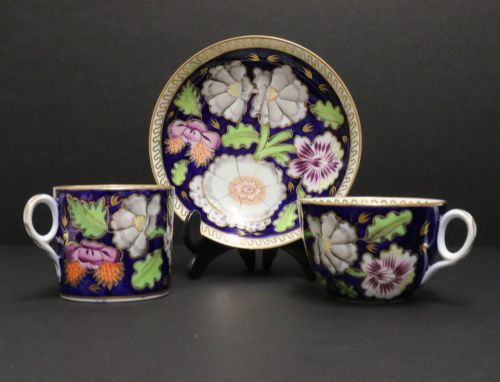
Object forms include corner cabinets, breakfront bookcases, kitchen dressers, and cabinet plates decorated with botanical and avian subjects.
Distinctions in quality
The standard of a georgian painted display cabinet rests on the integrity of its original painted surface and the crispness of its timber joinery. Cabinets retaining untouched period decoration command greater interest than later repainted examples.
Proportion and detail dictate distinction, visible in the handling of astral glazing bars, fine satinwood veneers, and the execution of hand-painted motifs.
Wedgwood·Newhall·Barr, Flight and Barr·Derby·Coalport·Ridgway·Samuel Astles·Thomas Steele
The Georgian Painted Display Cabinet Glossary
- Breakfront
- A piece of furniture where the central section projects forward from the flanking wings. This configuration creates visual depth in large bookcases and display cabinets.
- Astral glazed
- A glass door divided into smaller panes by wooden framing bars known as astrals. This method provides structural rigidity while framing the cabinet interior.
- Chinoiserie
- European decorative style reflecting Chinese artistic traditions, featuring hand-painted motifs of figures, landscapes, and pavilions. It appears frequently on eighteenth and nineteenth century painted furniture.
- Satinwood
- A durable hardwood with a lustrous, golden-yellow grain used extensively for fine cabinetmaking and decorative inlay work. It forms the primary surface of many revival and Georgian pieces.
- Simulated paint
- A decorative surface treatment mimicking expensive timbers such as rosewood or mahogany using applied pigments. This technique allowed cabinetmakers to achieve rich visual effects on more accessible woods.
Georgian Painted Display Cabinet: Frequently Asked Questions
Where were these cabinets placed?
These pieces sat in libraries, parlours, and drawing rooms to store books and display decorative ceramics.
Corner cabinets utilised neglected angles in smaller rooms, while large breakfront bookcases anchored principal reception spaces.
How do I spot original paint?
Original painted surfaces show consistent craquelure, wear patterns matching the age of the timber, and pigment that has settled evenly into the wood pores.
Later overpainting often conceals the natural grain texture and lacks the subtle fading accumulated over centuries.
What is simulated paint?
Simulated paint is a decorative technique where artists apply pigments to common wood to imitate exotic species like rosewood or mahogany.
Craftsmen used brushes and combs to replicate natural grain patterns on pine or secondary timbers.
How do I clean the glass?
Clean the glass gently using a soft cloth and a mild, non-ammonia cleaning solution applied to the cloth rather than the wood.
Prevent moisture from contacting the painted frame or antique timber surrounds during maintenance.