
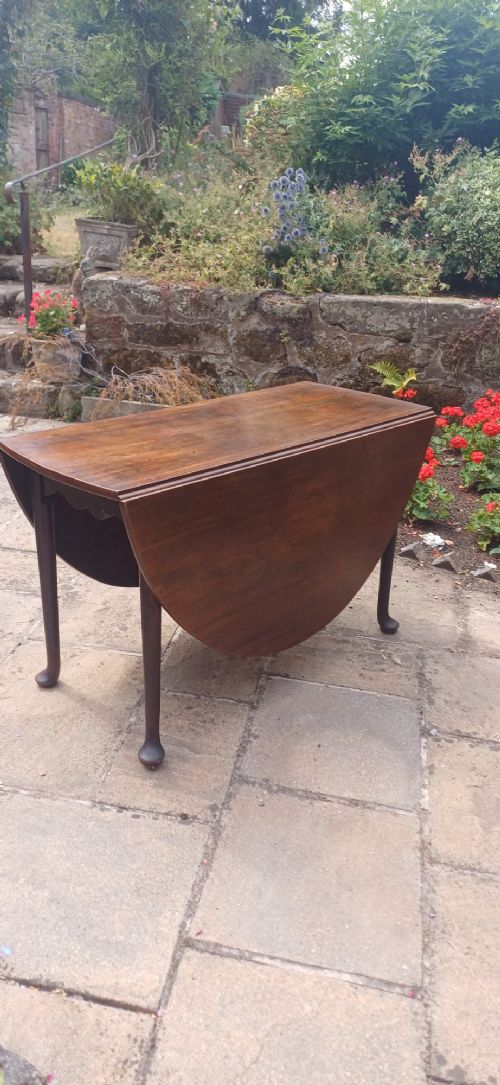
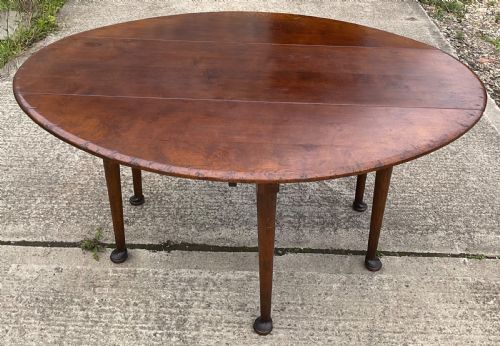


Georgian Pad Foot Dining Table
A georgian pad foot dining table offers folding leaves and sturdy cabriole supports designed to save space in period rooms.
Georgian Pad Foot Dining Table
A georgian pad foot dining table primarily takes the form of a drop-leaf or gateleg design, appearing across the eighteenth century and subsequent revival periods. These pieces provide an expandable surface supported by hinged flaps that drop down when not in use.
Most examples encountered here are constructed from mahogany, including Cuban and figured varieties, alongside solid oak variants dating from the early eighteenth century onwards. The defining characteristic is the pad foot resting at the base of cabriole or straight legs.
Materials and construction
Cabinet makers utilised dense timbers such as mahogany and oak to construct these tables, often selecting figured varieties for the top leaves to enhance the visual grain. Iron and brass fittings frequently appear in the hinges and operating mechanisms that support the folding leaves.
The framework relies on gateleg or drop-leaf actions, where pivoting legs swing out to bear the weight of the extended flaps. Carved cabriole legs terminate in pad feet, anchoring the structure while maintaining balance across uneven floors.
The listings combine eighteenth-century pieces in mahogany and oak with twentieth-century revival styles reflecting earlier forms.
Factors determining quality
The distinction between standard examples and superior pieces rests on the choice of timber and the crispness of the carving on the cabriole legs. Heavy Cuban mahogany and well-figured surfaces indicate a higher grade of manufacture from the period.
Proportion and scale also dictate quality, with larger or more unusual configurations commanding attention. The integrity of the hinge mechanism and the original form of the pad feet further separate notable examples from later reproductions.
The Georgian Pad Foot Dining Table Glossary
- Pad foot
- A simple, rounded foot resting flat on the floor at the base of a cabriole leg. This feature is characteristic of early eighteenth-century furniture design.
- Drop-leaf table
- A table with a fixed central section and hinged flaps on either side that fold down. These leaves are supported by swing legs when raised.
- Gateleg table
- A table with legs attached to a swinging gate frame that pulls out to support a drop leaf. This construction provides robust support for dining surfaces.
- Cabriole leg
- A furniture leg that curves outward at the knee and tapers inward toward the ankle. It often terminates in a pad, claw, or scroll foot.
Georgian Pad Foot Dining Table: Frequently Asked Questions
How do you use a drop leaf table daily?
These tables function as compact consoles or side tables when the leaves hang down against the central frame. Raising one or both flaps transforms the surface into a dining area suitable for multiple guests.
Positioning the piece against a wall saves floor space in smaller rooms. The folding mechanism allows the furniture to adapt quickly to changing seating requirements.
What timber was used for these tables?
Mahogany serves as the predominant timber across the selection, with specific variants like Cuban and figured mahogany appearing frequently. Oak is also common, particularly in examples dating from the early eighteenth century.
Secondary woods often support the internal framing and hinge blocks. The choice of dense hardwoods ensures the drop leaves remain stable over extended periods of use.
How can you tell a georgian table from a later copy?
Examination of the timber grain, construction joints, and hand-tooled hinge fittings reveals the age of the piece. Eighteenth-century examples display patination and wear patterns consistent with long periods of domestic service.
Later revivals from the twentieth century often utilise different internal construction methods and cleaner, more uniform timber surfaces. Comparing the leg turnings and foot shapes against established period benchmarks clarifies the date.
How do you care for an antique wood surface?
Maintaining the polish requires avoiding excessive moisture and keeping the timber away from direct heat sources. Regular dusting with a soft cloth preserves the natural finish of the mahogany or oak.
Applying traditional wax polish periodically protects the grain without building up heavy chemical residues. Treating the antique surface with care ensures the patination remains intact.