

Georgian Open Bookshelves
Georgian open bookshelves offer accessible display and storage, bringing timeless timber proportions into a modern room.
Georgian Open Bookshelves
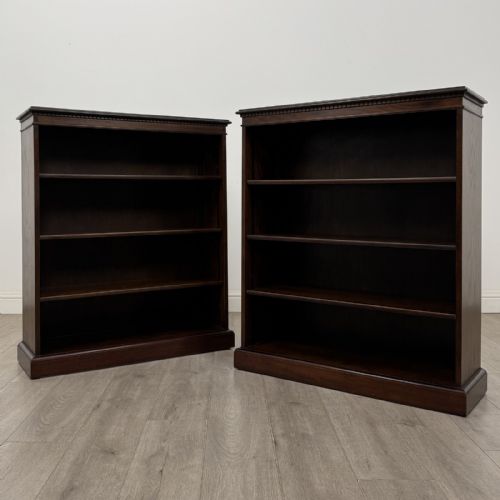
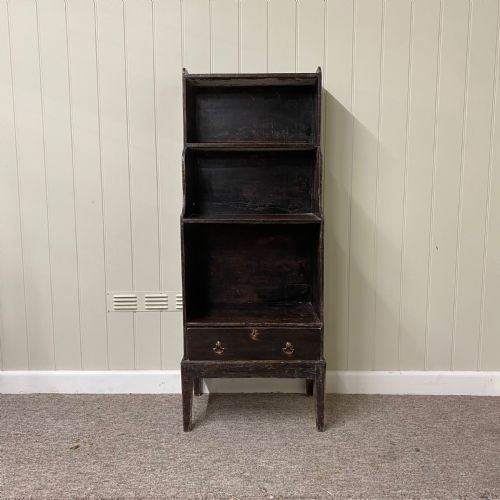
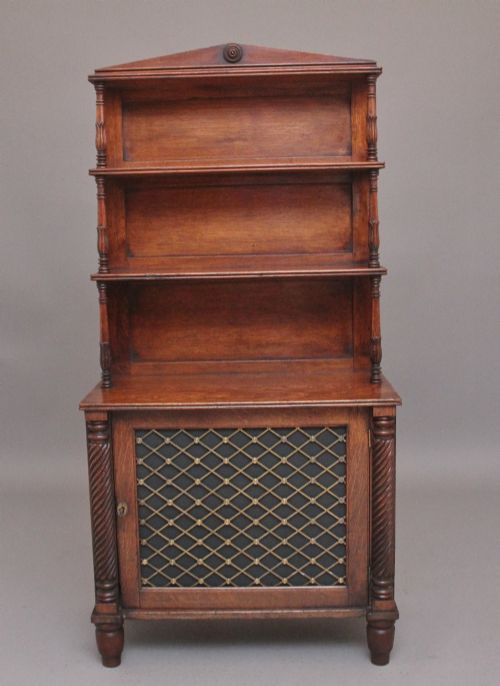
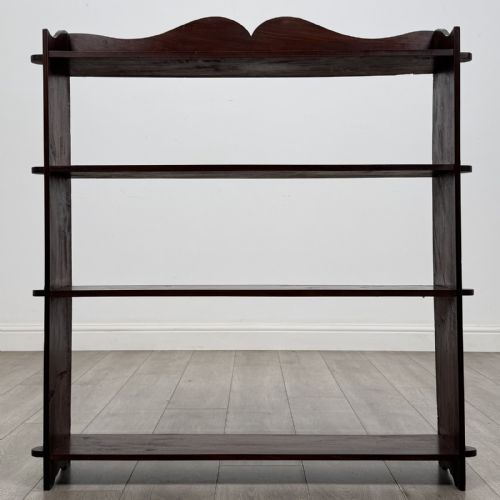
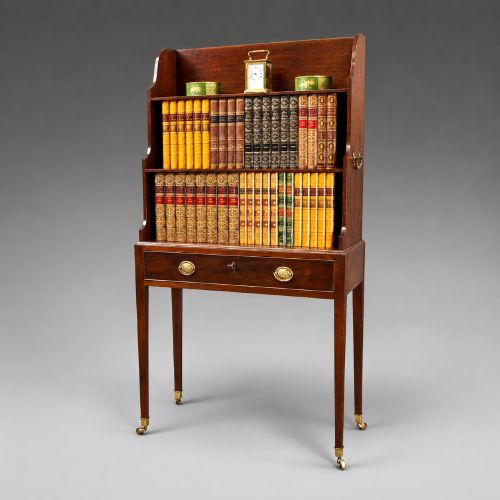
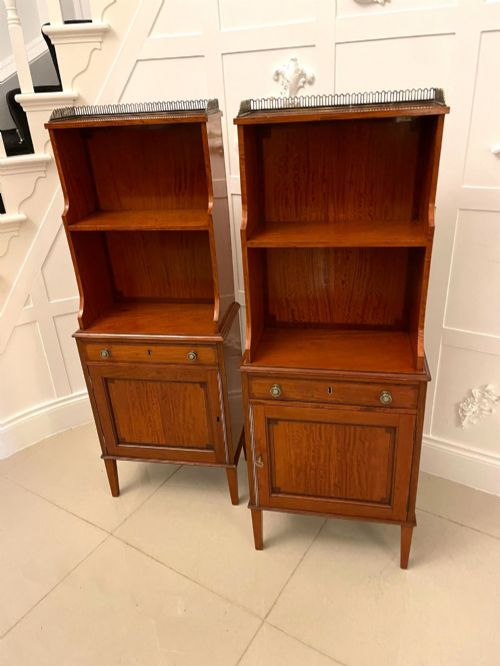
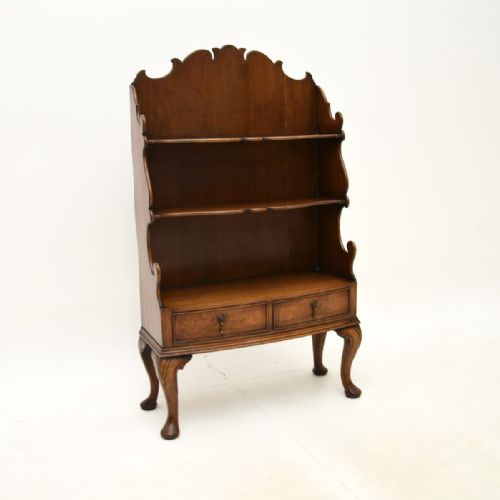
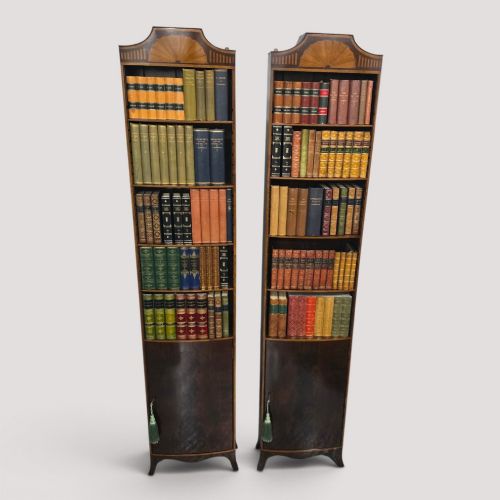
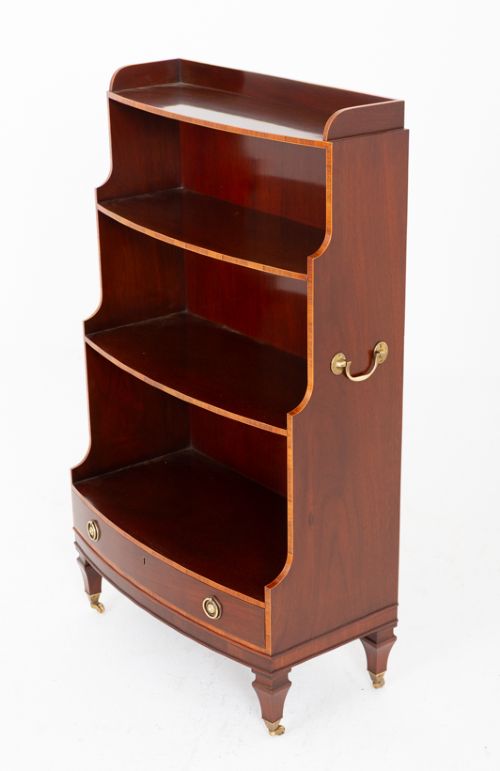
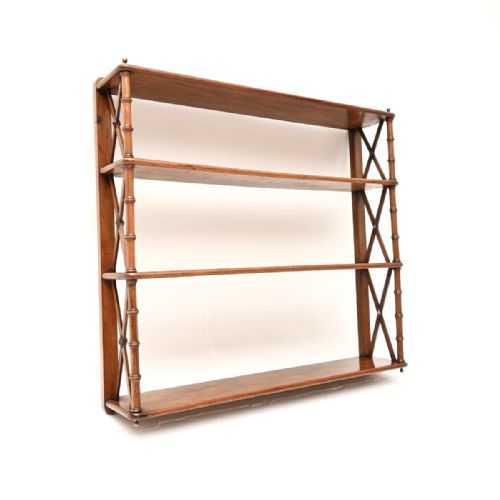
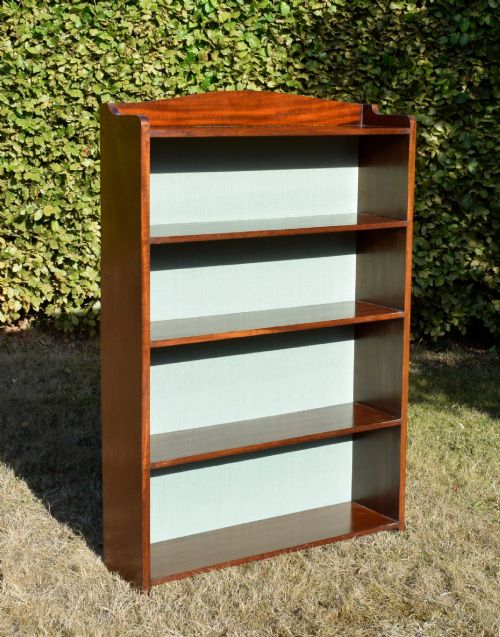
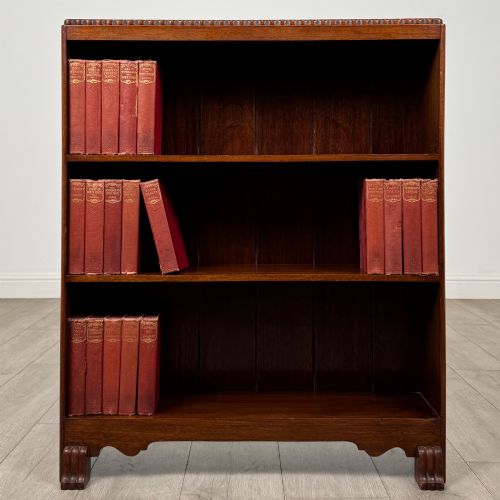
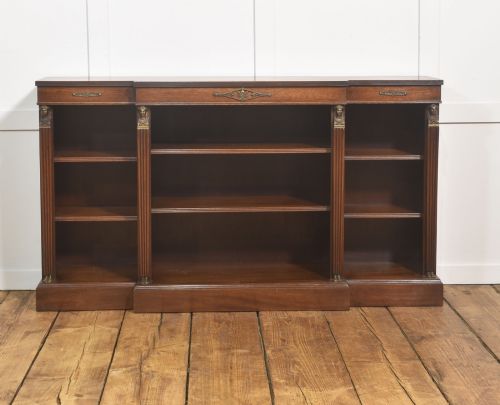
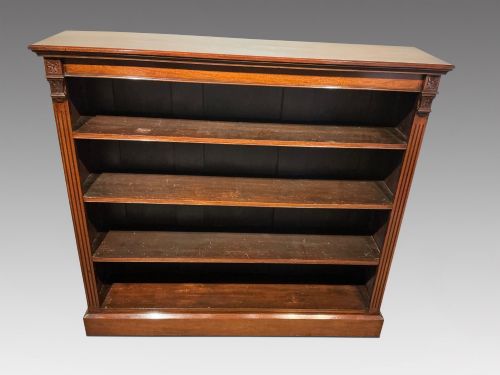
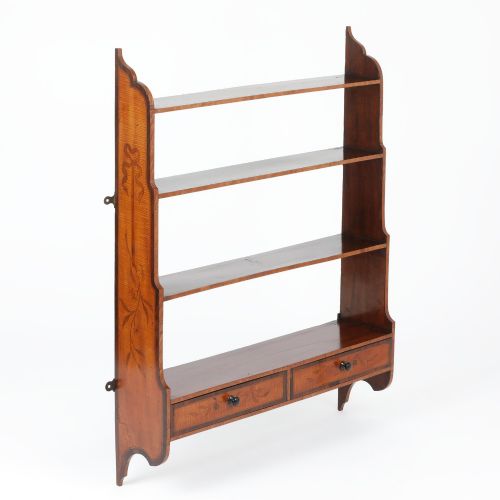
Georgian open bookshelves comprise timber shelving units designed to hold volumes without enclosing cabinet doors, ranging from compact hanging shelves to dwarf and tall library formats. When searching for georgian open bookshelves, buyers encounter authentic examples alongside later revivals from the nineteenth and twentieth centuries.
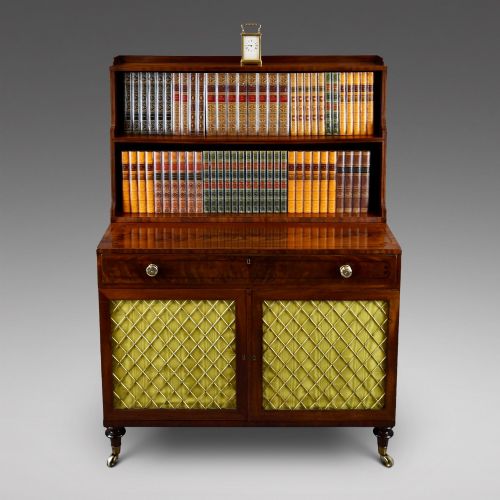
The material record on this page shows pieces constructed predominantly in mahogany, walnut, satinwood, and rosewood, spanning periods from the eighteenth century through the Edwardian era and 1920s. Common structural variations include waterfall tiers, breakfront profiles, raised galleries, and dentil cornices.
How they were made
Cabinet makers utilised dense hardwoods such as mahogany, rosewood, and walnut, frequently accented with satinwood inlay, boxwood stringing, or painted finishes. Timber selection dictated the weight and structural integrity required to support heavy volumes across open shelves.
Construction techniques include adjustable shelving mechanisms, raised galleries, carved top edges, and dentil cornices. Joinery relied on precise fitting of vertical sides to horizontal shelves, sometimes incorporating lower cupboards or cascading tiers.
Georgian Open Bookshelves Retail Price Guide 2026
Typical asking prices for georgian open bookshelves among the pieces listed under this phrase on Sellingantiques today, from the lower quarter to the upper quarter. They describe what is for sale here now, not the wider market.
What varies in quality
Quality rests upon the selection of timber figure, such as flame mahogany or burr walnut, and the crispness of architectural details like dentil cornices and inlaid stringing. Superior pieces exhibit balanced proportions and refined timber grain across primary display surfaces.
Gillows·Waring and Gillows
The Georgian Open Bookshelves Glossary
- Waterfall bookcase
- A tiered shelving unit where each successive shelf steps back from the one below, creating a cascading effect. These are often made in satinwood or mahogany.
- Breakfront
- A large cabinet or bookcase where the central section projects forward from the flanking wings. This architectural form adds visual depth to larger library pieces.
- Dentil cornice
- A projecting decorative moulding beneath the top edge, composed of small square blocks resembling teeth. It is frequently found on formal eighteenth and nineteenth-century pieces.
- Raised gallery
- A low protective rail or pierced border fitted around the top surface of a piece. It prevents items from sliding off upper display ledges.
- Stringing
- Thin lines of contrasting timber inlaid into the surface of a piece for decoration. Boxwood and satinwood are commonly utilised for this linear detail.
Georgian Open Bookshelves: Frequently Asked Questions
How do I identify a Georgian bookcase?
Authentic Georgian pieces display period timber characteristics, traditional joinery methods, and architectural elements such as dentil cornices. Many items listed under this style are later nineteenth or twentieth-century revivals.
Examining the secondary woods and construction helps determine whether a piece dates to the eighteenth century or later.
Where should I place an open bookcase?
Open bookshelves suit studies, living rooms, and libraries where immediate access to volumes is practical. Their open fronts keep books visible and accessible for daily use.
Care should be taken to position timber furniture away from direct heat sources and strong sunlight to protect the polished wood.
What woods were used for these bookcases?
Cabinet makers predominantly utilised mahogany, walnut, rosewood, and satinwood, occasionally incorporating pine and oak for secondary framing. Inlaid details often featured boxwood and contrasting veneers.
Flame mahogany and burr walnut were selected for prominent surfaces to highlight natural grain patterns.