


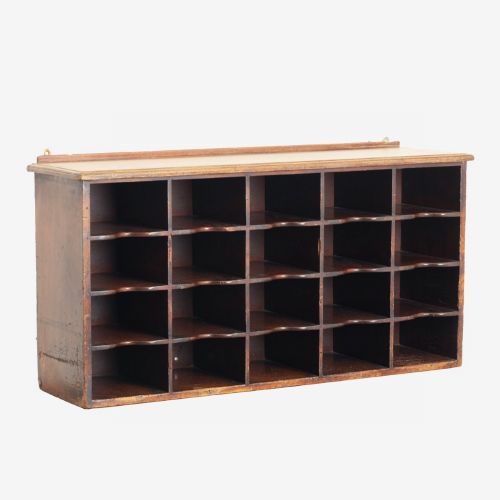


Georgian Office Cabinet
A georgian office cabinet brings fine timberwork and clever stationery storage into a room, offering a practical workspace built to endure.
Georgian Office Cabinet
The selection ranges from early examples dating to the seventeenth and eighteenth centuries up through nineteenth-century adaptations and Edwardian or later interpretations. These pieces function as writing desks, filing units, and desktop organisers designed to manage correspondence and documents.
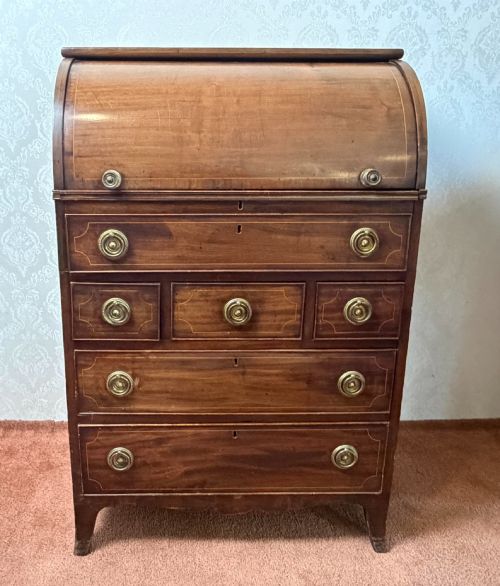
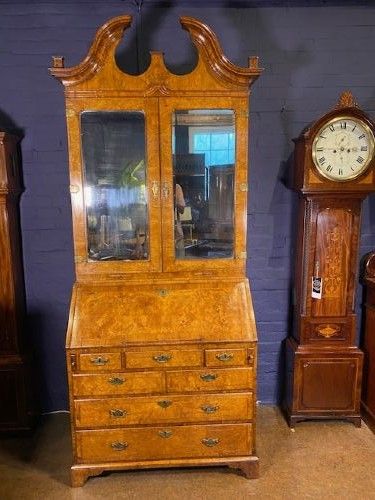
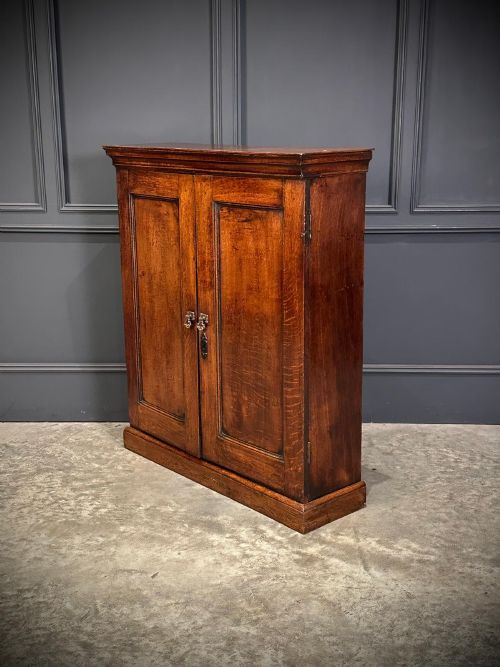
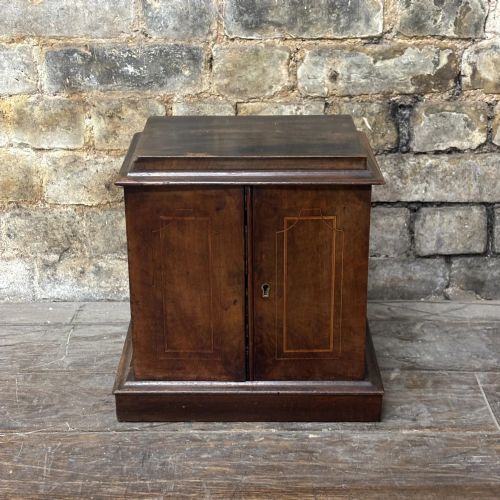
Makers and workshops of the past constructed these cabinets using durable hardwoods suited for daily administrative work. Buyers encounter compact davenports, large breakfront bookcases, and fitted office cabinets featuring internal pigeon holes and hidden compartments.
What varies in quality
The standard of a georgian office cabinet depends heavily on the selection of timber grain, such as burr walnut or figured mahogany, and the precision of its construction. Superior examples display neat dovetail joinery in the drawer construction and well-executed boxwood inlay.
Internal fittings dictate much of the utility and refinement, with top-tier pieces offering complex arrangements of pigeon holes, secret compartments, and original gilded lettering. The retention of original brass hardware and fitted leather surfaces elevates the standing of an individual piece.
Listings feature pieces spanning from the seventeenth century through the Edwardian era, constructed in mahogany, walnut, oak, and painted wood.
Gillows·Maple and Co
The Georgian Office Cabinet Glossary
- Bureau
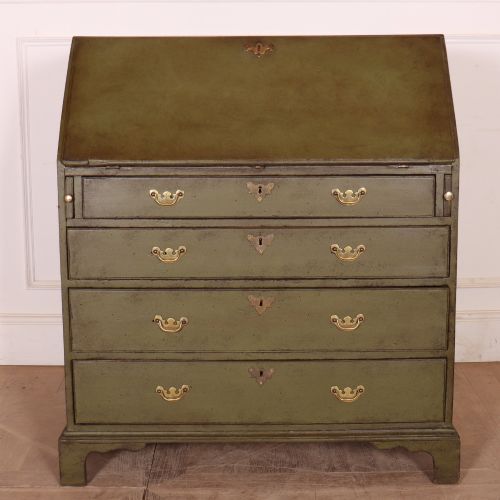
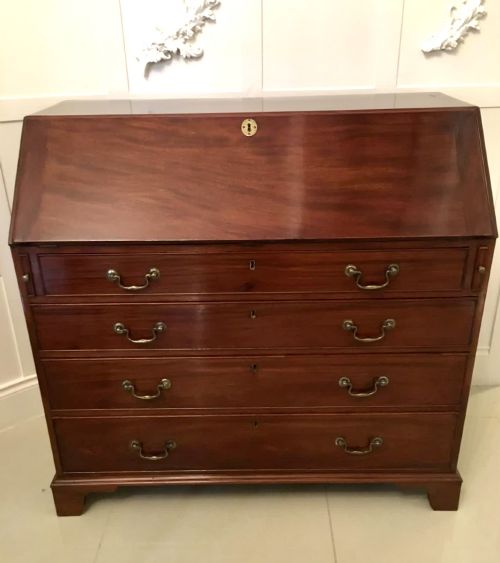
- A writing desk featuring a sloping fall-front that opens to reveal a fitted interior of pigeon holes and small drawers. This form allows correspondence to be concealed when not in use.
- Kneehole desk
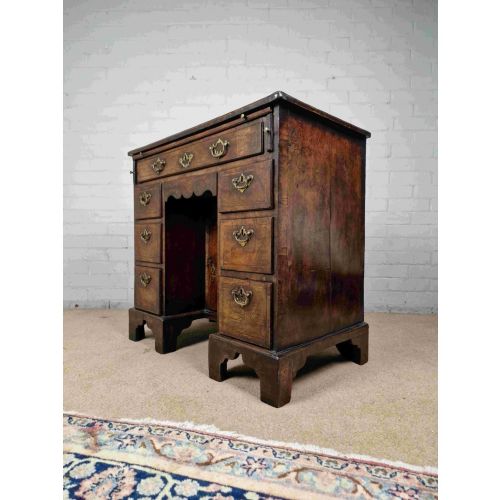
- A flat-topped desk with a central recess for the user's knees, flanked by pedestals of small drawers. They provide a compact workspace with substantial storage capacity.
- Tambour
- A sliding door or shutter constructed from narrow strips of wood glued to a canvas or leather backing. It runs in grooves to cover stationery compartments or writing surfaces.
- Davenport
- A small desk featuring a sloping desktop that lifts to reveal storage space, set above a pedestal of drawers. Originating in the late eighteenth or early nineteenth century, it offers a space-saving writing solution.
- Secretaire
- A piece of furniture containing a pull-down writing drawer or flap disguised as a standard drawer. This design conceals internal compartments for writing materials.
Georgian Office Cabinet: Frequently Asked Questions
What is a bureau bookcase?
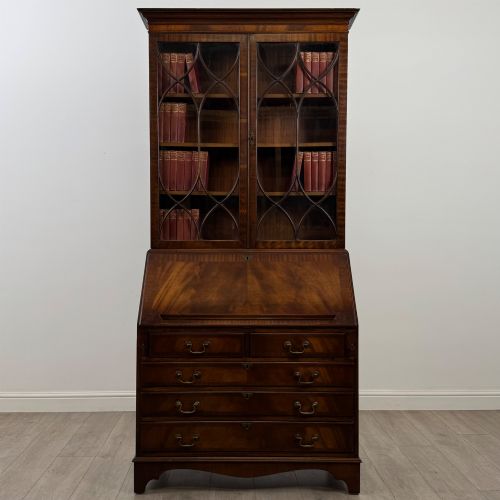
A bureau bookcase combines a sloping writing desk at the lower level with enclosed shelving or cabinet doors above. This dual-purpose form served for both correspondence and library storage in domestic and estate settings.
Lower sections typically house pigeon holes and drawers behind a fall-front, while upper glazed or panelled doors protect books and ledgers from dust.
How do I use an office cabinet today?
These cabinets serve effectively as laptop desks, letter organisers, and display units in modern studies and living spaces. Their internal compartments provide practical storage for stationery and modern correspondence.
Placing them away from direct heat sources helps preserve historic timber and leather surfaces during daily use.
What timber was most common?
Mahogany and walnut dominate the surviving examples, often selected for their strength and rich grain patterns. Oak also appears frequently, particularly in earlier or more utilitarian estate pieces.
Cabinet makers enhanced these woods with boxwood inlay, brass hardware, and occasional painted finishes.
How can I tell the period?
Dating relies on construction methods, timber choices, and stylistic details such as bracket feet or inlaid stringing. George III pieces often show refined proportions and detailed interior joinery.
Later nineteenth and twentieth-century versions adapt these traditional forms while employing contemporary manufacturing techniques.