







Georgian Oak Monks Bench
A georgian oak monks bench is a sturdy traditional seat built to withstand centuries of domestic life.
Georgian Oak Monks Bench
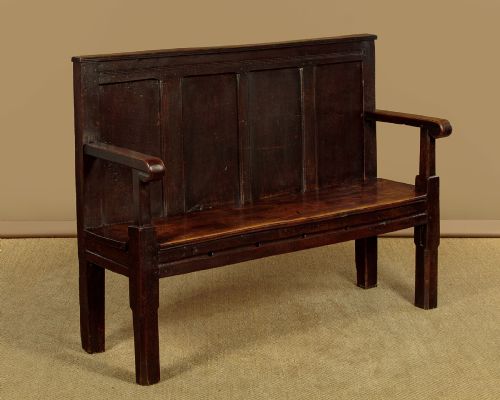
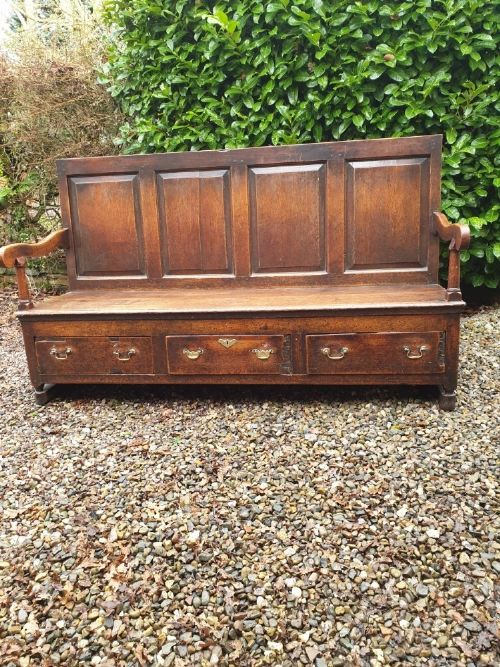
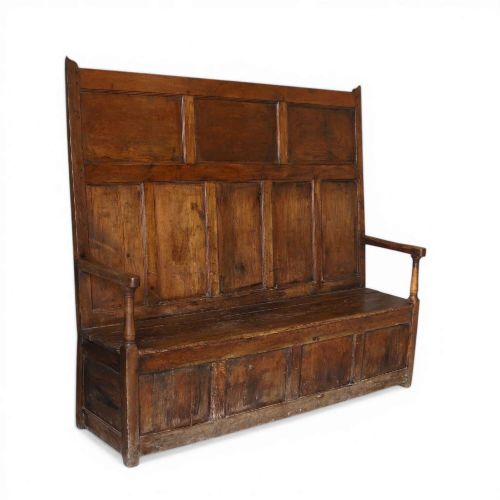
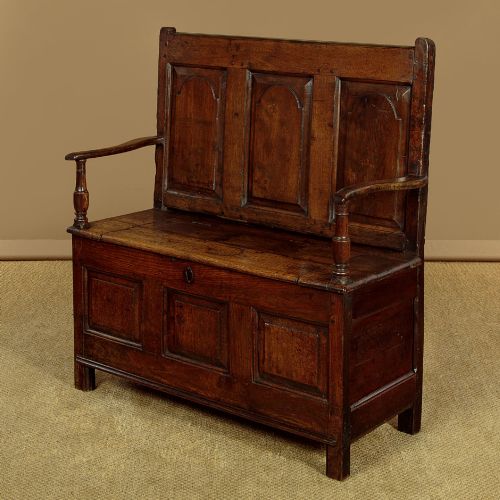
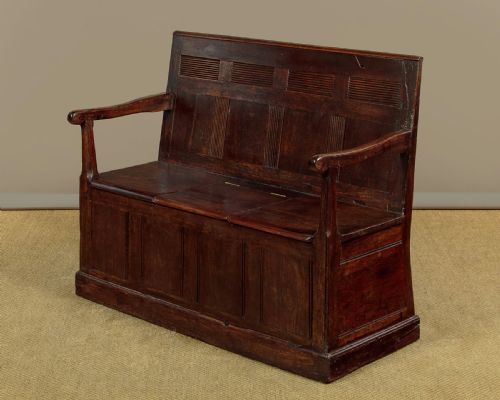
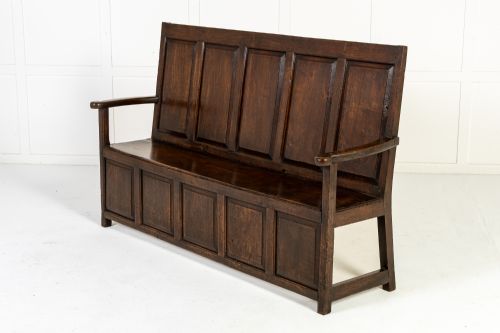
Buyers seeking a georgian oak monks bench encounter robust seating forms from the eighteenth and early nineteenth centuries, predominantly described in listings as settles and box settles rather than typical pivot-top furniture. These pieces belong to the vernacular and provincial traditions of English and Welsh cabinet making, designed for farmhouse kitchens and halls.
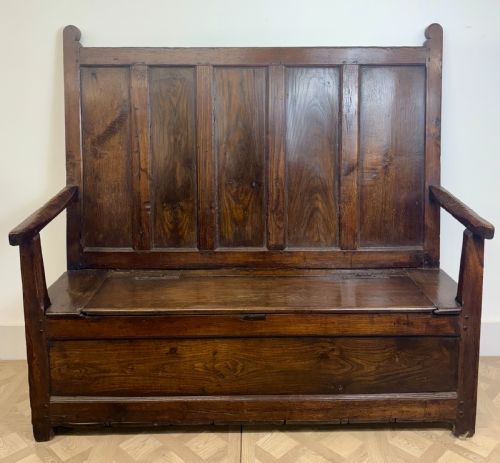
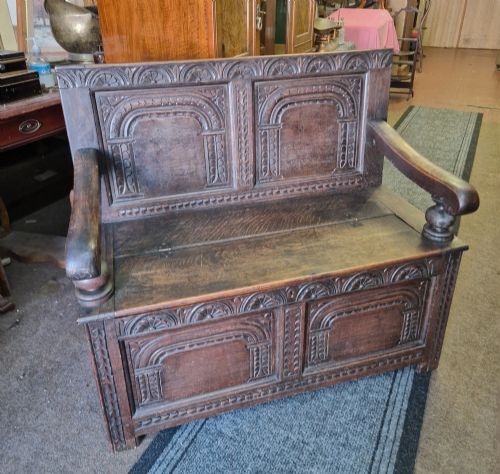
The objects available span several regional interpretations, including high-back panelled settles, small box settles with integrated storage, and tavern variants incorporating elm alongside oak. Such forms reflect domestic utility, offering high backs to block cold draughts and lidded seats to hold household goods.
Makers working within Georgian country styles relied on simple geometric panelling and sturdy joinery, producing functional seating that survives in various states of conservation from bleached surfaces to carved variants. Each example demonstrates the practical requirements of period rural interiors.
Materials and construction methods
Construction relies heavily on solid oak timbers, frequently supplemented with ash or elm for structural components, secured through traditional mortise and tenon joinery. Blacksmiths provided utilitarian iron hinges, brackets, and fittings to reinforce lids and uprights.
Carpenters utilised frame and panel construction to accommodate the natural seasonal movement of timber without splitting the main structure. Surfaces were typically left unpolished or simply waxed, allowing the grain of the oak to develop deep patination over generations of handling.
Georgian Oak Monks Bench Retail Price Guide 2026
Typical asking prices for georgian oak monks bench among the pieces listed under this phrase on Sellingantiques today, from the lower quarter to the upper quarter. They describe what is for sale here now, not the wider market.
Listings demonstrate that eighteenth-century examples frequently incorporate regional timbers such as ash, elm, and iron alongside primary oak.
Factors influencing quality and character
Quality in these vernacular seats rests upon the integrity of the original timber and the restraint of any later alterations or surface treatments. Pieces retaining their original board seats, undisturbed panel work, and honest patination stand apart from examples stripped down or extensively rebuilt in later centuries.
Proportion and scale dictate the visual success of the piece, with smaller country settles and finely proportioned five-panel examples commanding greater appreciation than heavier, clumsy variants. The presence of secondary timbers like ash or elm should be integrated harmoniously rather than looking like discordant repairs.
The Georgian Oak Monks Bench Glossary
- Settle
- A wooden bench with a high solid back, enclosed arms, and a box base designed to keep out draughts. These seats served as principal pieces of furniture in the hall or kitchen.
- Box settle
- A settle featuring a lidded compartment beneath the seat for storing blankets or household goods. This dual function made it a staple of eighteenth-century provincial homes.
- Vernacular
- Architecture and furniture built by local tradesmen using regional materials and traditional designs rather than high-style metropolitan fashions. It prioritises utility and local character.
- Patina
- The surface sheen and colour developed on wood through age, wear, and regular waxing. A genuine patinated surface cannot be easily replicated by modern finishing methods.
- Mortise and tenon
- A fundamental woodworking joint where a projecting tongue fits snugly into a matching cavity to lock two pieces of timber at a right angle.
Georgian Oak Monks Bench: Frequently Asked Questions
What is a georgian oak monks bench?
A georgian oak monks bench is a traditional wooden seat from the eighteenth or early nineteenth century, typically built with a high panelled back and a box base.
These pieces were constructed by regional craftsmen to provide functional seating and draught exclusion in historic domestic interiors.
How were these benches used historically?
Families placed them near hearths to block cold air and utilised the internal box storage for everyday textiles and household items.
The high back trapped radiant heat from the fire, making the seat a warm focal point of the room.
How do I identify an 18th-century settle?
Eighteenth-century examples display hand-split or sawn oak boards, pegged mortise and tenon joints, and authentic surface wear accumulated over generations of use.
Examination of the panel construction and underside reveals the tool marks and construction methods typical of the period.
Will an antique settle fit in a modern home?
These benches work effectively in hallways, kitchens, or living spaces where their narrow profile allows them to sit flat against a wall.
Their substantial storage compartments continue to provide practical utility alongside historical character.