



Georgian Oak Kitchen Table
A georgian oak kitchen table brings the heavy timber and honest utility of the eighteenth century straight into a modern interior.
Georgian Oak Kitchen Table
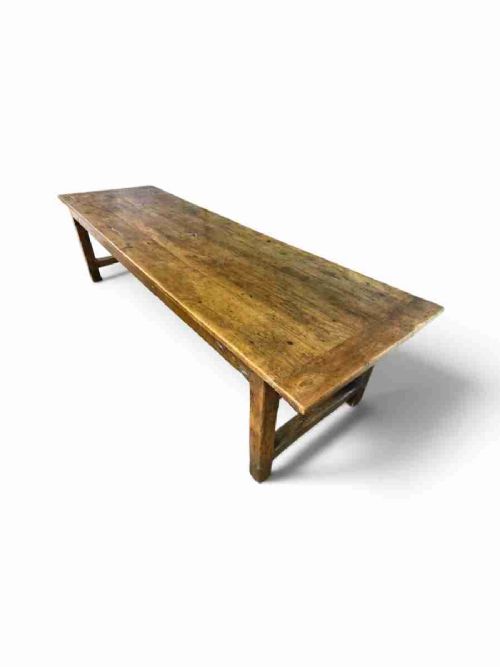
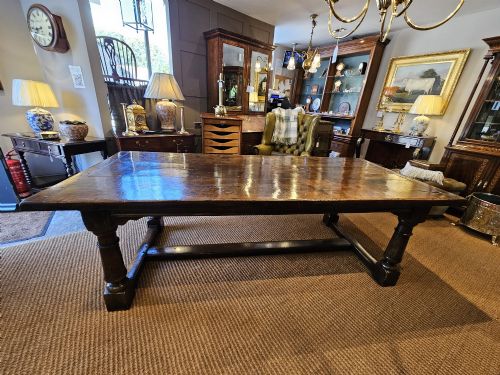
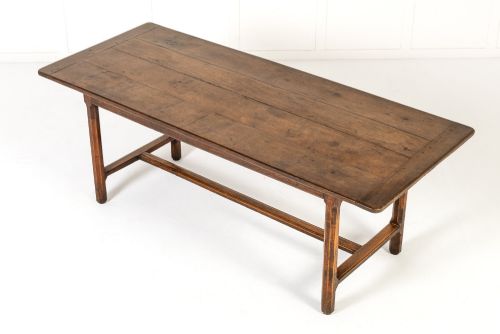
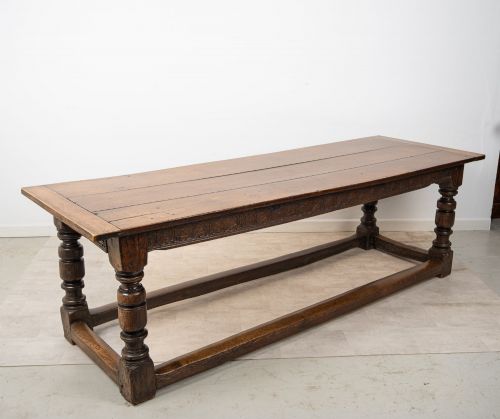
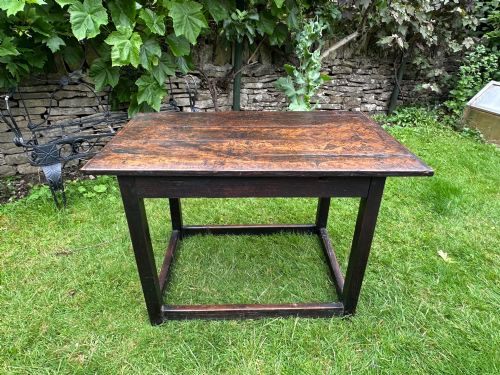
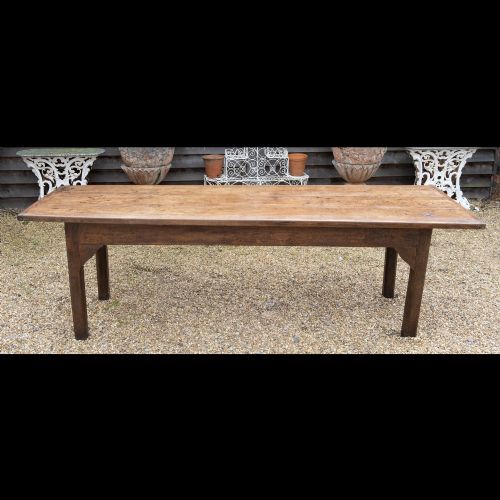
A georgian oak kitchen table represents the utilitarian heart of domestic life across the eighteenth and early nineteenth centuries, built for heavy daily use. When searching for a georgian oak kitchen table, buyers encounter robust refectory forms, drop-leaf gateleg designs, and plank-top farmhouse tables.
The pieces appearing here span the eighteenth century, the George III period, and into the early nineteenth century around eighteen hundred. Regional variations emerge from English workshops and Welsh sources, often displaying the practical vernacular of country houses, taverns, and dairies.
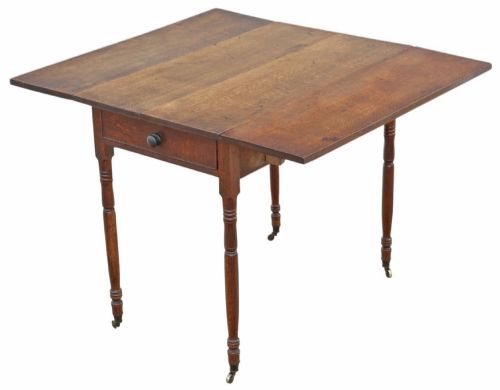
Forms range from large eight-seater refectory boards to smaller pembroke and turnover top tables suited to domestic kitchens. Secondary woods such as elm, beech, and pine frequently appear in structural framing and drawer linings alongside the dominant oak.
Materials and construction methods
Makers relied on solid oak for the primary surfaces and tops, selected for its dense grain and durability under daily preparation and dining. Plank construction defines the tabletops, joined simply and supported by heavy stretchers and substantial legs.
Secondary timbers including elm, beech, pine, and painted wood support the framework, drawer bases, and internal structure. Metal elements such as brass handles and steel fixings appear where hinges, pulls, or structural strengthening were required.
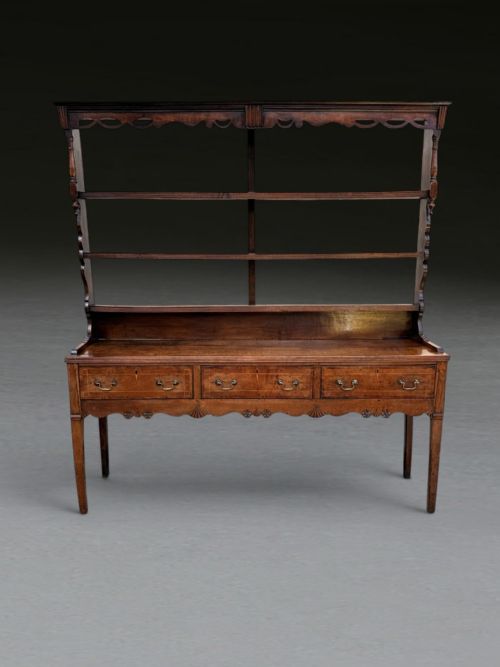
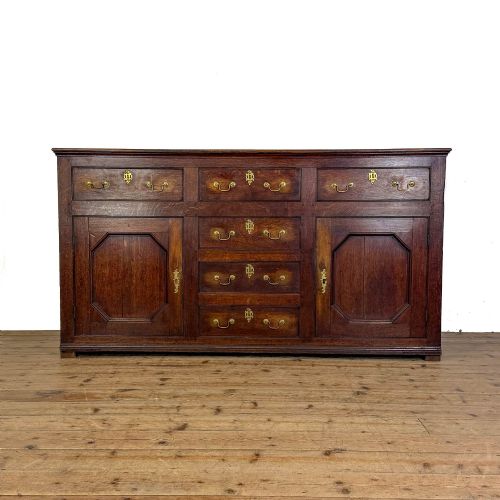
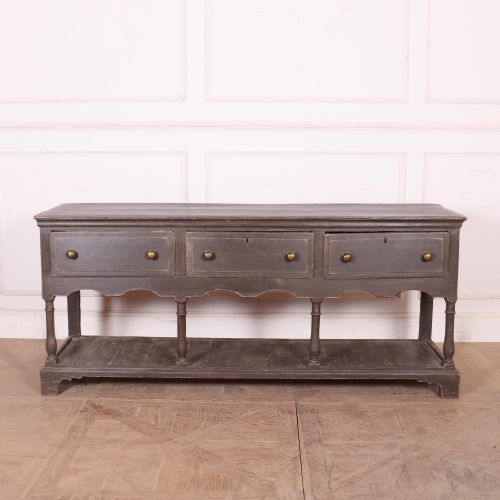
Surface treatments vary from natural waxed timber to painted finishes, reflecting the practical context of country houses and farm kitchens. Structural details such as potboards, drawers, and geometric carvings distinguish dresser bases and sideboards from simple dining boards.
Listings feature eighteenth-century and nineteenth-century pieces incorporating oak, elm, beech, pine, and painted timber.
Judging quality and integrity
Quality rests in the integrity of the timber selection, particularly the thickness and figuring of the oak planks used for the top. Heavy, well-proportioned refectory frames with original stretchers demonstrate superior structural ambition compared to later adaptations.
The balance between primary oak and secondary timbers such as elm or beech indicates the standard of regional workshop production. Fine joinery details, unaltered timber surfaces, and period hardware elevate certain examples above utilitarian counterparts.
The Georgian Oak Kitchen Table Glossary
- Refectory table
- A long, narrow dining table traditionally built for communal dining and communal spaces. These pieces rely on sturdy stretcher bases to support substantial oak planks.
- Potboard
- A lower open shelf fitted between the legs of a dresser base or table. This tier provided practical storage for heavy pots and kitchen utensils.
- Gateleg table
- A drop-leaf table where hinged legs swing outward to support folding leaves on either side. This mechanism allows the surface area to expand or contract as needed.
- Pembroke table
- A small table featuring two hinged drop leaves on opposing sides and usually a single drawer. These versatile pieces were easily moved around domestic rooms.
- Plank top
- A tabletop constructed from several wide boards of solid timber joined edge to edge. This method was standard for heavy kitchen and farmhouse tables.
Georgian Oak Kitchen Table: Frequently Asked Questions
How do I care for a historic oak table?
Feed the timber periodically with a traditional beeswax polish to nourish the dry grain and protect against moisture. Avoid placing the table near direct heat sources that might cause the old oak planks to split.
Use coasters and felt pads under heavy objects to prevent marking the historic surface. Gentle dusting with a dry cloth keeps the patina intact without stripping the finish.
Can I use these tables for daily dining?
These tables were originally designed for heavy domestic and agricultural work, making them remarkably resilient for modern family meals. Their sturdy construction handles daily use with ease.
Timbers like oak and elm withstand the demands of a busy kitchen environment. Simple precautions against standing water and heat will preserve the wood for future generations.
What distinguishes George III pieces?
George III pieces date from the reign spanning the second half of the eighteenth century into the early nineteenth century. They often display more refined proportions while retaining robust utilitarian construction.
Stylistic cues include straight legs, subtle geometric carvings, and balanced stretcher arrangements. These details reflect the transition from rustic vernacular to more considered country house design.
Why do some tables feature secondary woods?
Makers utilised secondary timbers such as pine, elm, and beech for structural economy and functional strength. Drawer linings, internal framework, and lower stretchers frequently incorporated these accessible local woods.
This practical mixing of materials is characteristic of regional furniture production. It highlights the resourcefulness of country workshops rather than diminishing the integrity of the main oak structure.