
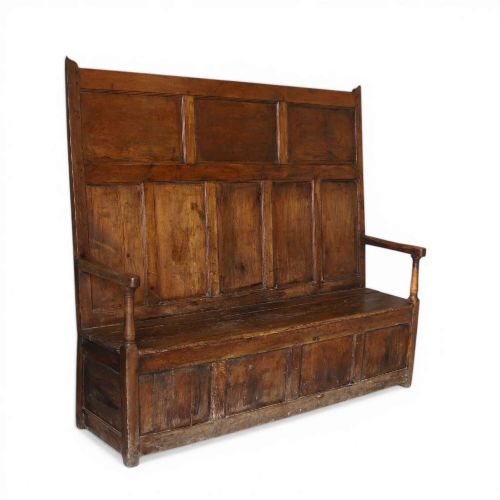
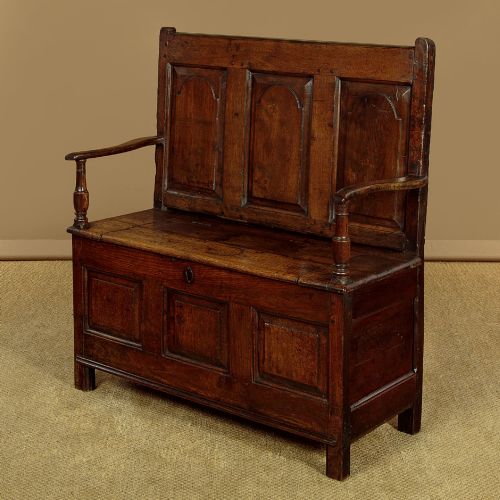


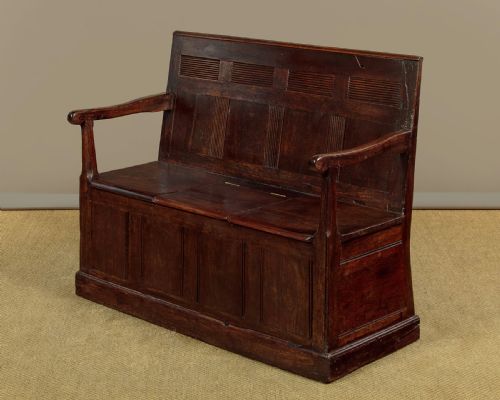


Georgian Oak Hall Bench
A georgian oak hall bench brings sturdy vernacular timber seating and generations of domestic utility directly into a modern hallway.
Georgian Oak Hall Bench
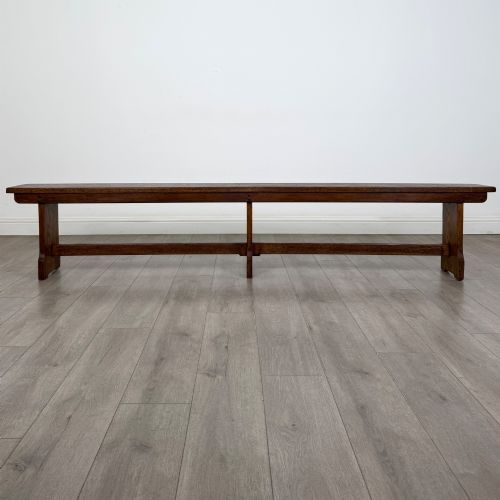
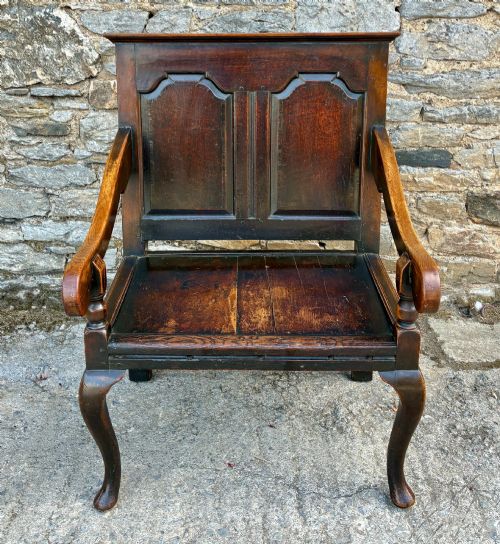
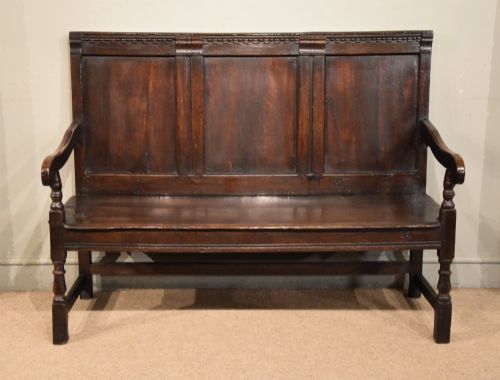
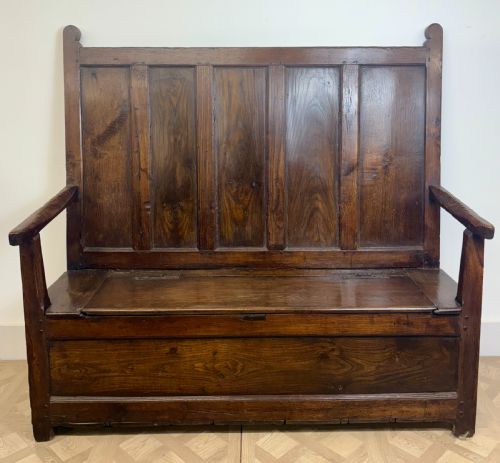
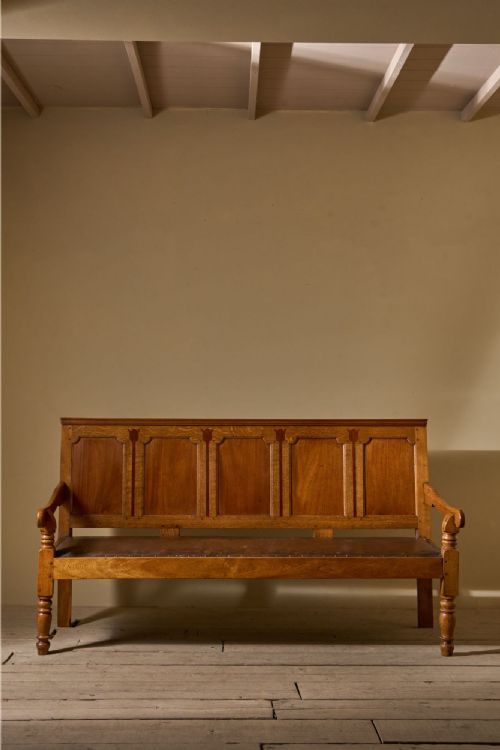
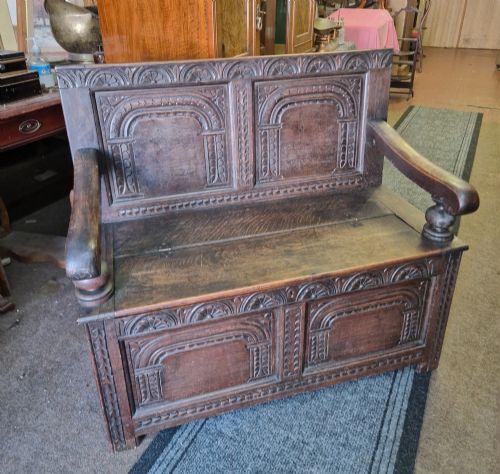
A georgian oak hall bench encompasses heavy panel-backed seats, high-back settles, and long tavern benches originating from English and Welsh country houses and provincial origins. These items were built to withstand heavy daily use in draughty halls, kitchens, and passages.
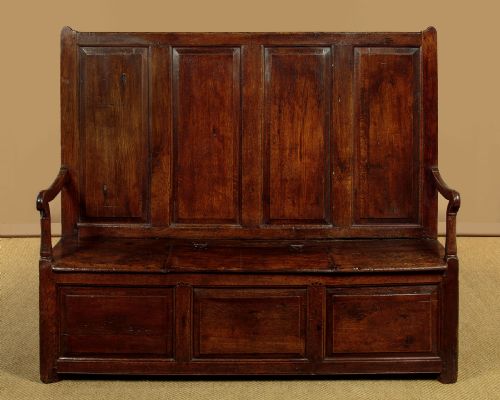
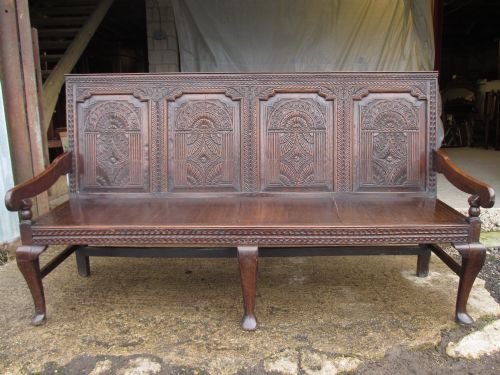
The varieties seen here range from simple boarded benches and chairback settees to large box settles with enclosed storage beneath the seat. Regional pieces often display distinct characteristics, such as the curved wings of barrel settles or carved tulip decoration.
Most examples date across the eighteenth and nineteenth centuries, spanning Georgian, Regency, and Victorian periods. Buyers frequently encounter vernacular styles including Welsh country pieces and West Country bacon settles designed for curing meats.
Materials and Technique
Makers relied primarily on solid oak, frequently combined with secondary timbers like ash or elm for structural supports and panels. Peg-jointed construction ensured frames remained rigid under constant weight and movement.
Surface detailing relied on simple joinery techniques, including panelled backs, crossbanding in mahogany or other woods, and occasional surface carving. Some pieces exhibit later bleaching or historical surface treatments alongside original iron and brass hardware.
Some provincial settles doubled as domestic larders, hiding cured meats in their high panelled backs while you sat below.
Proportions and Surface Character
Quality rests in the integrity of the timber and the honesty of the construction, where peg-joined frames and substantial oak panels command greater respect than later alterations. Proportion plays a central role, distinguishing well-balanced country proportions from awkward proportions.
The depth of the surface patina separates standard examples from exceptional ones. Untouched timber showing generations of wear, minor ageing, and original structural elements holds superior character compared to heavily stripped or over-restored surfaces.
The Georgian Oak Hall Bench Glossary
- Settle
- A wooden bench with a high back, solid arms, and frequently a box compartment beneath the seat. This form provided draught protection in communal halls.
- Box settle
- A settle featuring a hinged seat lifting to reveal a storage chest underneath. These provided dual utility for seating and household storage.
- Panel-back
- A backrest constructed from wooden panels fitted within a framed groove. This method accommodated timber shrinkage without splitting.
- Crossbanding
- A decorative border of veneer laid around the edges of panels with the grain running perpendicular to the centre. This technique added subtle contrast to plain timber surfaces.
- Peg-joined
- A method of securing mortise and tenon joints using wooden pins rather than iron nails. This traditional fastening accommodated the seasonal expansion of oak.
Georgian Oak Hall Bench: Frequently Asked Questions
Where were hall benches used?
These benches sat in the entrance passages, kitchens, and great halls of large houses and farmsteads. They provided robust seating for visitors waiting in draughty hallways.
High-backed variants specifically deflected cold air away from the occupants seated near doors or open fires.
What is a bacon settle?
A bacon settle is a specialised regional variant featuring high panelled backs equipped with internal hooks or rails. Households utilised these upper compartments to hang and cure meats in dry domestic spaces.
Over time, these utilitarian kitchen items transitioned into general domestic seating as rural methods changed.
How do I spot a barrel settle?
Barrel settles feature curved wooden wings that wrap entirely around the seated person to block lateral draughts. This enclosed structural form resembles half a wooden barrel.
They represent some of the most substantial and sought-after vernacular seating forms surviving from the period.
Can these benches fit modern hallways?
Many examples come in compact proportions or shorter lengths suitable for contemporary entrance spaces. Buyers must measure available corridor depth carefully against the fixed back-to-front depth of high-backed settles.
Their narrow bench seats allow them to function effectively in narrow passageways without obstructing movement.