


Georgian Oak Farmhouse Table
A georgian oak farmhouse table brings solid English utility and rich timber warmth to any interior.
Georgian Oak Farmhouse Table
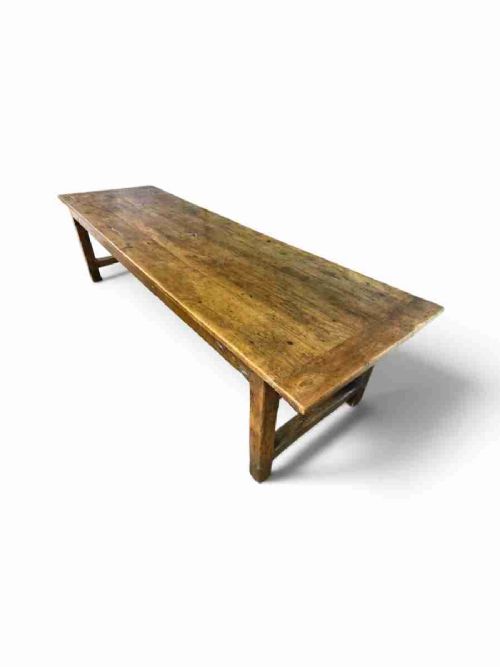
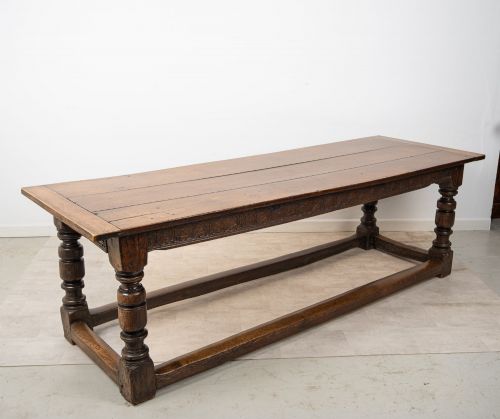
A georgian oak farmhouse table is a heavy, utilitarian dining or kitchen board designed for everyday domestic use during the eighteenth and early nineteenth centuries. Buyers searching this phrase look for honest, timber-built surfaces that show decades of practical service.
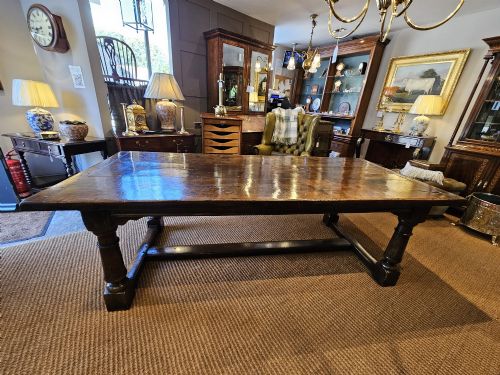
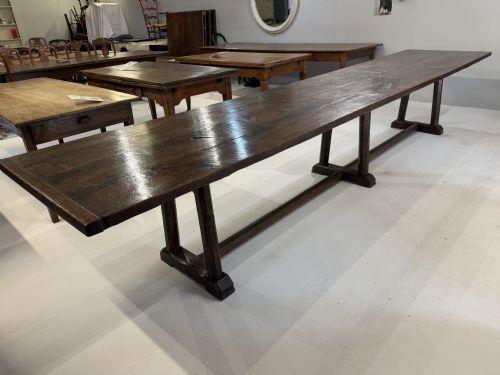
The versions most commonly met on this page span the eighteenth century and the George III period, often taking the form of refectory or plank top tables. These pieces originate from English and Welsh country houses, taverns, and farmhouses.
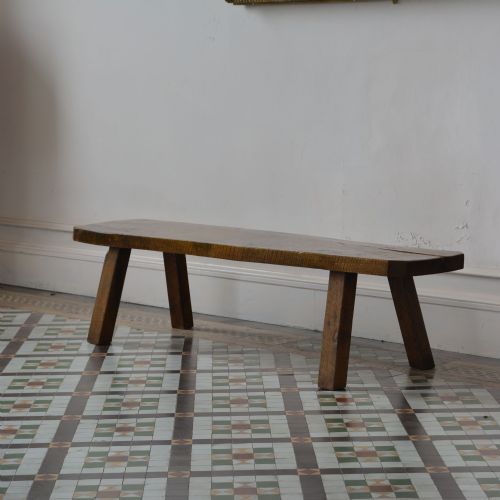
Alongside standard four-leg dining designs, related forms such as gateleg tables, benches, and tavern boards appear within the selection. Each piece reflects the straightforward carpentry of its provincial origin.
How They Were Made
Carpenters constructed these tables primarily from solid oak, utilising elm, beech, and pine for secondary framing, planking, or structural supports. Steel brackets or modern reinforcements are absent from original joints, relying instead on traditional pegged construction.
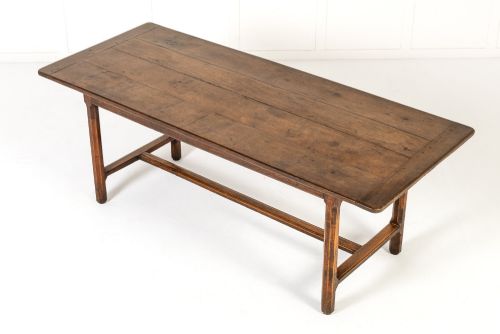
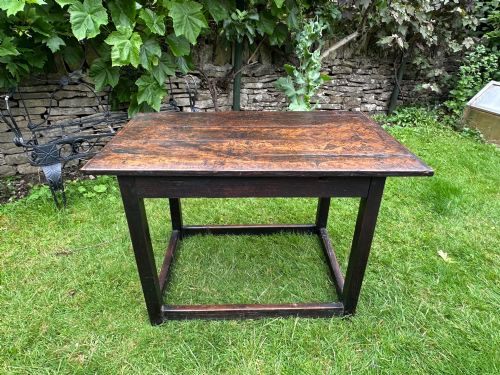
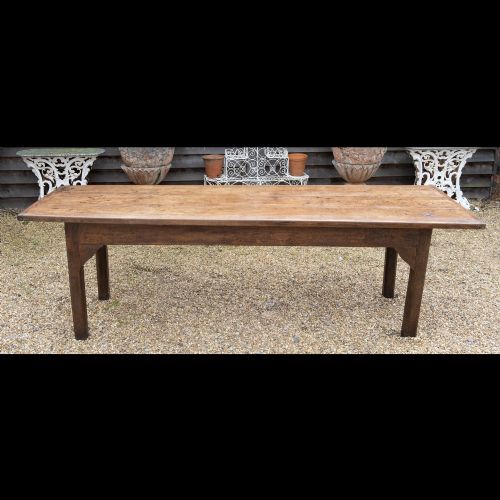
Plank tops were hand-planed from wide timber boards, resting upon sturdy legs connected by stretcher rails. This direct method of assembly ensured stability under heavy daily labour in kitchens and dairies.
Several tables survived decades of hearty tavern dinners and dairy spills to reach modern dining rooms.
What Varies in Quality
The distinction between ordinary and superior examples rests upon timber selection and the integrity of the original structure. Tables featuring thick, single-board oak tops command greater appreciation than those joined from narrow strips of disparate timber.
Proportion and surface patina further separate the tiers, with untouched waxed finishes showing deep historical character outranking overly stripped or heavily restored boards. The harmony between the base framing and the top defines the overall balance of the piece.
The Georgian Oak Farmhouse Table Glossary
- Refectory table
- A long, narrow dining table traditionally used for communal meals in large halls and later adapted for domestic farmhouse kitchens. These forms provide generous seating capacities along the sides.
- Plank top
- A table surface constructed from individual timber boards laid side by side rather than a single sheet of wood. Carpenters joined these boards securely to accommodate natural wood movement over time.
- Gateleg table
- A drop-leaf table featuring hinged flaps supported by swing-out legs that pivot like a gate. This design allows the surface area to expand or contract according to space requirements.
- George III period
- The era spanning from seventeen sixty to eighteen twenty, characterised in country furniture by robust proportions and restrained decoration. Pieces from this time emphasise structural honesty over ornamentation.
Georgian Oak Farmhouse Table: Frequently Asked Questions
How do I seat eight people?
Refectory designs and longer plank top formats provide adequate length along the sides to accommodate eight diners comfortably. Sturdy stretcher bases allow leg room without obstruction.
Matching benches or country chairs complete the arrangement, following traditional domestic layouts seen in period farmhouses.
Can I use one daily?
These boards were built for heavy kitchen and dairy work, making them well-suited for modern family dining. Solid timber construction withstands regular use while accumulating further character.
Routine maintenance involves simple waxing and protecting the surface from excessive moisture.
How do I spot an eighteenth century piece?
Examination of the timber reveals hand-planed surfaces, tool marks, and pegged joinery characteristic of eighteenth century carpentry. Older boards exhibit natural shrinkage and colour variation developed through prolonged exposure.
Listing details often specify period markers such as George III styling or eighteenth century origin.
Are Welsh tables different?
Welsh examples share the robust construction of English country pieces while often utilising local oak stocks and distinct regional proportions. Workshops in Wales produced sturdy boards for taverns and farmhouse kitchens alike.
These regional variations add distinct character to the overarching Georgian farmhouse style.