
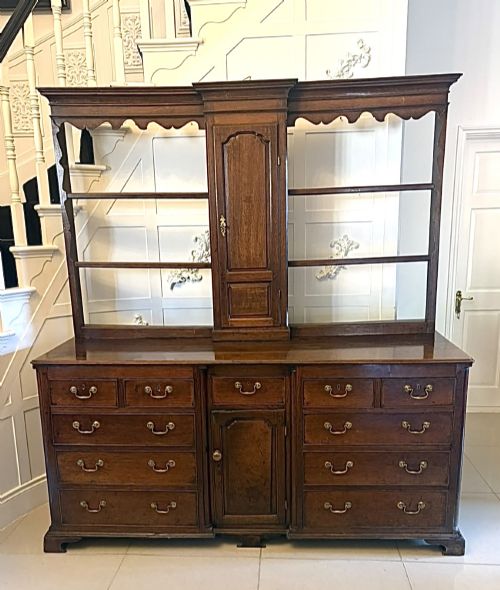
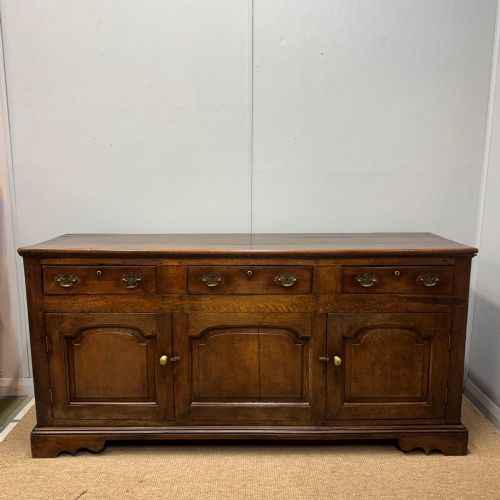
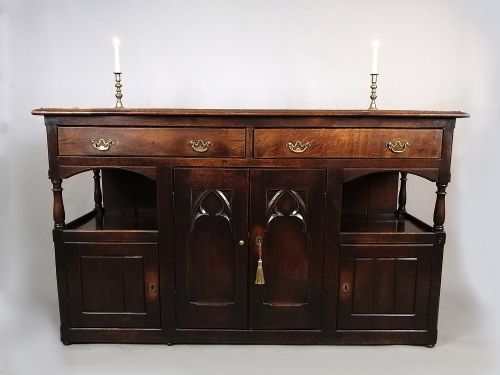
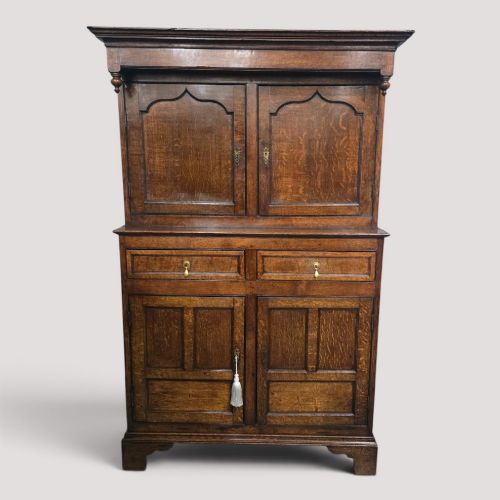
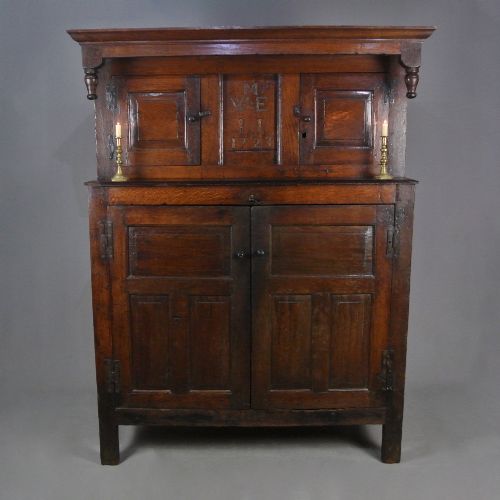
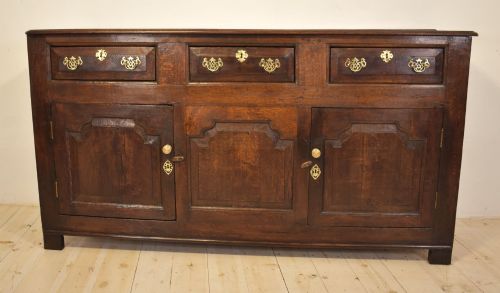
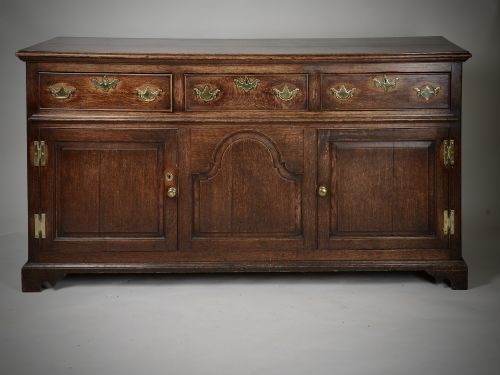
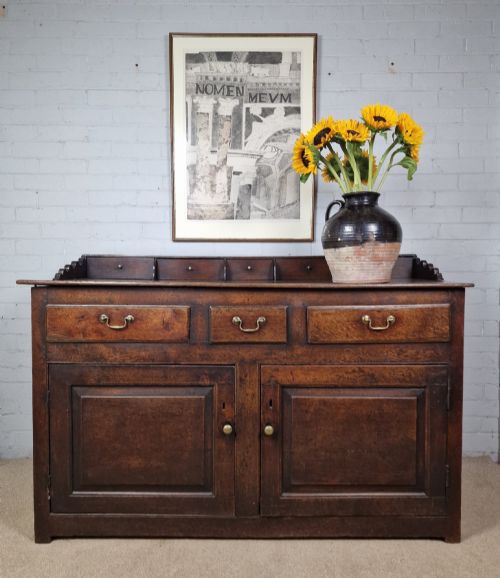


Georgian Oak Buffet Cupboard
A georgian oak buffet cupboard brings sturdy domestic storage and rich grain into a room, spanning the eighteenth and nineteenth centuries.
Georgian Oak Buffet Cupboard
A georgian oak buffet cupboard draws on regional English and Welsh vernacular traditions, encompassing dresser bases, sideboard forms, and enclosed cupboards. Buyers encounter pieces spanning the eighteenth century, the Georgian period, and later Victorian revivals.
The selection here prioritises substantial timber furniture built for storage and display, ranging from simple country workshop items to breakfront and inlaid examples. Pieces frequently integrate lower cupboards or pot boards beneath long drawers.
Character and Craft
Quality rests in the depth of the timber's grain, the crispness of hand-carved geometric details, and the integrity of the original construction. Regional vernacular pieces demonstrate individuality through idiosyncratic drawer arrangements and proportions.
Subtleties in brassware, the preservation of original painted finishes, and the harmonious integration of burr elm veneers separate standard utility items from more ambitious cabinet work.
Certain Welsh dressers carry secret belly racks designed for hiding extra plates.
The Georgian Oak Buffet Cupboard Glossary
- Dresser base
- A low wooden sideboard featuring rows of drawers, frequently paired with lower pot boards or enclosed cupboards beneath. This form served domestic utility in kitchens and dining rooms.
- Court cupboard
- An enclosed antique storage piece featuring upper and lower sections with panelled doors. These items pre-date standard nineteenth-century sideboards.
- Breakfront
- A cabinet or sideboard construction where the central section projects forward from the flanking wings. This architectural layout adds visual depth to larger dining furniture.
- Pot board
- An open lower shelf fitted beneath a dresser base to store heavy kitchen pottery and metalwares. It defines many traditional English and Welsh country forms.
Georgian Oak Buffet Cupboard: Frequently Asked Questions
How do I date a piece?
Examine the construction methods, such as hand-cut dovetails and pegged joinery, alongside timber selection and hardware.
Style indicators like geometric carvings or regional vernacular traits help narrow the period between the eighteenth and nineteenth centuries.
Where were they used?
These cupboards served busy kitchens, dining halls, and living quarters in English and Welsh country homes.
They stored tableware, linens, and provisions while providing sturdy surfaces for food preparation and display.
How do I care for oak?
Keep wooden furniture away from direct heat sources and sudden humidity shifts to prevent timber splitting.
Apply a traditional beeswax polish occasionally to nourish the grain and maintain a natural protective sheen.
Are regional styles different?
Regional workshops incorporated local building preferences, resulting in distinct variations like Welsh dresser bases and Lancashire proportions.
Differences appear in the use of burr elm inlay, pot board layouts, and overall decorative carving.