

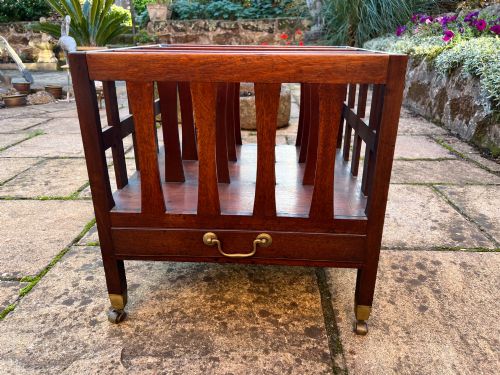
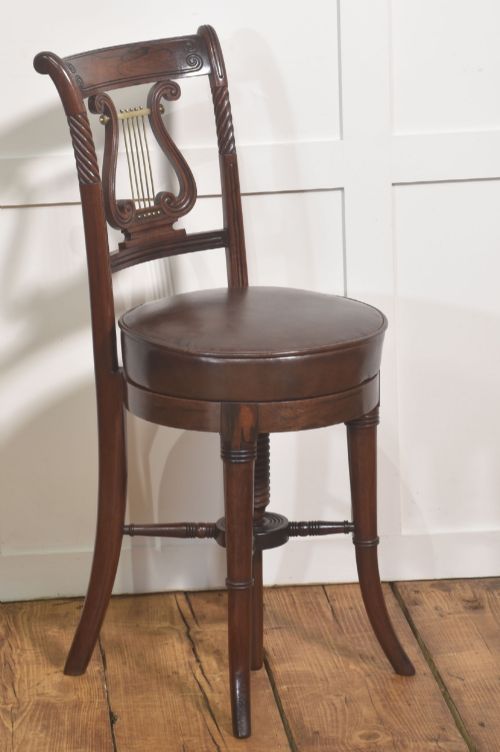


Georgian Music Table
These georgian music table pieces are purposeful adjustable stands built for scores and volumes, offering the exact support a musician or reader needs.
Georgian Music Table
When you search for a georgian music table, you encounter practical furniture designed to hold sheet music, books, and papers at a readable angle. The selection on this page centres primarily on reading tables, music stands, and canterburys spanning the Georgian, Regency, and Edwardian periods.
The forms vary from adjustable double reading tables to open front low canterburys and compact cabinets. Mahogany remains the dominant timber across these versatile furnishings, often enhanced with rosewood, boxwood, and inlaid details.
Originating to serve domestic musical and literary pursuits, these pieces combine surface utility with adjustable mechanisms. They bridge the gap between occasional tables and dedicated stands for daily use.
How they were made
Cabinet makers utilised solid timbers and veneers, predominantly rich mahogany and figured rosewood, to construct these functional stands. Fine details such as boxwood stringing and brass mounts appear frequently to accent the structural lines.
Adjustable ratchets, hinges, and sliding book ledges required precise metalwork to ensure the reading surfaces could tilt securely. Secondary woods and leather inserts were often integrated into the design to complete the interior and working parts.
Georgian Music Table Retail Price Guide 2026
Typical asking prices for georgian music table among the pieces listed under this phrase on Sellingantiques today, from the lower quarter to the upper quarter. They describe what is for sale here now, not the wider market.
Listings feature pieces spanning the 18th century, Georgian, Regency, and Edwardian periods, constructed predominantly in mahogany and rosewood.
What varies in quality
The distinction between standard examples and superior pieces rests in the sophistication of the adjustable mechanism and the choice of timber figure. Heavily figured mahogany and finely executed boxwood inlay elevate the visual presence of a stand.
Proportion and the retention of original brass fittings dictate the integrity of the piece. Finer workshops invested greater care into the stability of the reading surfaces and the smoothness of the mechanical adjustments.
The Georgian Music Table Glossary
- Canterbury
- A low stand featuring vertical partitions, designed specifically to hold sheet music, magazines, or newspapers. This form evolved during the late eighteenth century for domestic music rooms.
- Reading Table
- A specialised table equipped with a ratcheted or adjustable top that tilts for books or documents. These stands often include pull-out candle slides or ledges.
- Inlaid Timber
- The technique of embedding contrasting woods, such as boxwood into mahogany, to create decorative patterns and borders on the surface. This adds refined detail without altering the structural form.
- Regency
- A style period spanning the early nineteenth century characterised by classical revival motifs and darker timbers like rosewood. Pieces from this era often feature bold brass accents and clean geometric lines.
Georgian Music Table: Frequently Asked Questions
What is a georgian music table used for?
These tables were built to hold and display sheet music, folios, and books at comfortable reading angles during practice or performance. The adjustable tops allowed musicians to position their scores precisely.
They also served general reading and writing functions in libraries and parlours. Their adaptable design made them essential furniture for period drawing rooms.
How do I identify a Regency music stand?
Regency stands typically feature darker timbers such as mahogany or rosewood, paired with classical brass mounts and restrained carving. Look for architectural lines and crisp turning on the central column.
The mechanical adjustments on pieces from this era often utilise sturdy brass ratchets. These design markers distinguish Regency examples from later Edwardian reproductions.
Can these tables hold modern books?
The adjustable ledges and sturdy reading surfaces are well-suited for supporting heavy modern volumes, atlases, and sheet music. The internal mechanisms were engineered to bear considerable weight.
Care should be taken when adjusting older ratchets to preserve the original timber and brass components. Regular domestic use remains entirely practical for these durable antiques.