



Georgian Military Miniature Art
Georgian military miniature art captures the likeness of officers and commanders in small portable formats spanning the eighteenth and nineteenth centuries.
Georgian Military Miniature Art
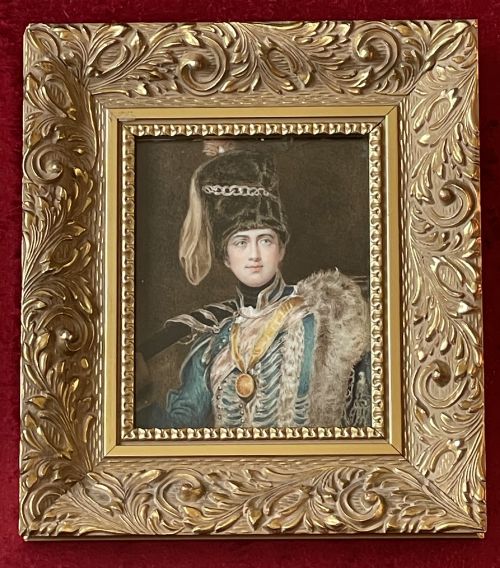
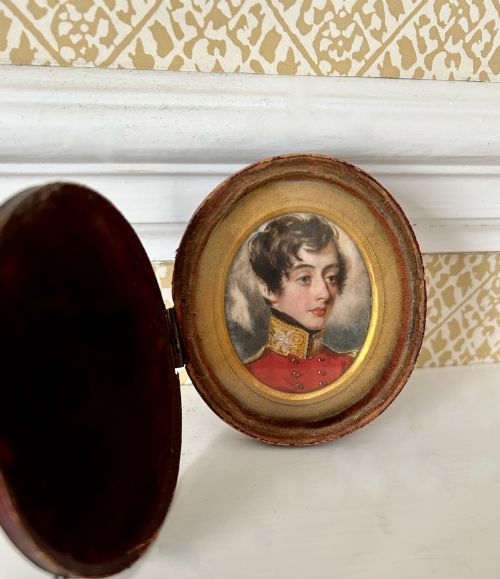
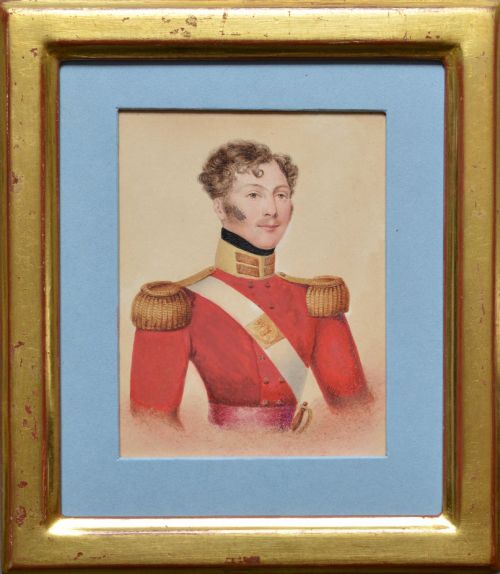
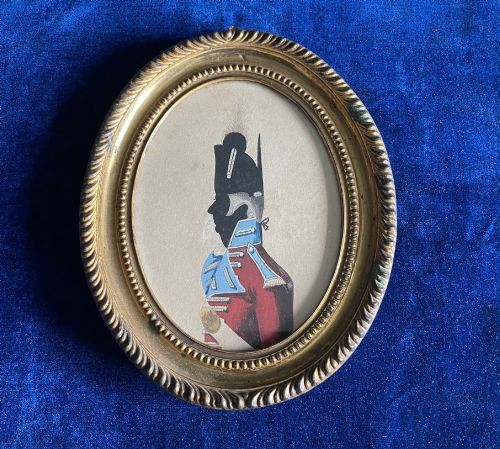
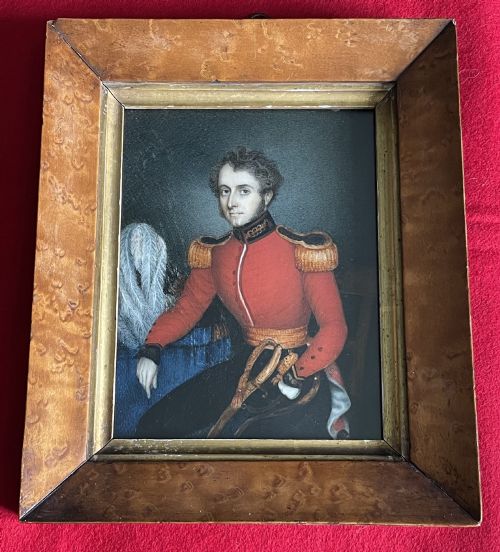
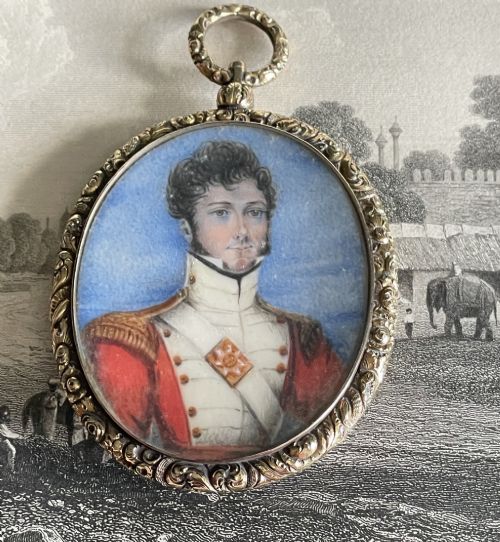
Georgian military miniature art comprises small-scale portrait paintings and works on paper depicting officers from regiments such as the Dragoons, Staffordshire 80th Regiment of Foot, and the Royal Artillery. These pieces originate predominantly from the eighteenth and nineteenth centuries, including the Georgian and Regency periods.
The subjects range from Lieutenant-Generals and Captains to naval officers and Anglo-Indian commanders. Alongside standard watercolour and paper works, the category includes profiles, gold-framed paintings on agate panels, and textile works.
Collectors encounter named sitters like Lt-Gen. Charles Vane-Stewart Hussar, Sir William Barnard, and General Sir James Henry Craig. These artworks offer a direct visual record of military personnel across British and Anglo-Indian service.
Materials and construction
Artists painted these miniature portraits using watercolour on paper or ivory surfaces, capturing fine facial details and uniform insignia within restricted dimensions. Some specialised works utilise agate panels as a painting substrate.
Makers housed these portraits in protective enclosures constructed from glass, paperboard, and leather. High-status pieces feature surrounds fashioned from gilt metal or gold set with pearls and giltwood.
Georgian Military Miniature Art Retail Price Guide 2026
Typical asking prices for georgian military miniature art among the pieces listed under this phrase on Sellingantiques today, from the lower quarter to the upper quarter. They describe what is for sale here now, not the wider market.
Some officers sat for their portraits while maintaining remarkably stern expressions despite wearing highly decorative red coats and gold braid.
Distinctions in quality
The value and distinction of the piece often derive from the framing materials and housing, such as solid gold mounts, pearl embellishments, and original protective glass cases.
Edward Pugh·Sir William John Newton·Gerrit Schipper
The Georgian Military Miniature Art Glossary
- Miniature portrait
- A small-scale painting executed with fine brushwork, designed for intimate viewing or portable display. These works capture the likeness of individuals with high precision.
- Agate panel
- A polished slice of semi-precious stone utilised as a rigid and smooth painting ground. Artists painted directly onto the natural banding and surface of the stone.
- Gilt metal
- Base metal treated with a thin layer of gold or gold-coloured wash to simulate solid gold hardware. This material frequently appears in period frames and mounts.
- Silkwork
- A picture created using coloured silk threads stitched onto a fabric backing to form a pictorial scene. These textile works often depict theatrical or figural subjects from the period.
Georgian Military Miniature Art: Frequently Asked Questions
What subjects appear in military miniatures?
These artworks depict named military and naval officers, including generals, captains, and commanders from specific British and Anglo-Indian regiments.
The sitters range from well-documented historical figures to lesser-known officers recorded during the eighteenth and nineteenth centuries.
How were these miniatures displayed?
Makers housed these small paintings in protective cases, pocket frames, or wall-hanging formats constructed from wood, leather, and glass.
Many incorporated suspension loops or stands for desk placement, allowing owners to carry or display the portraits easily.
Which materials indicate higher status?
Encased works utilising precious metals such as gold, along with decorative elements like seed pearls and specialised stone panels, denote higher quality.
Standard examples typically rely on paper, card, basic gilt metal, and glass to protect the delicate painted surfaces.
How do you date a military miniature?
Dating relies upon the uniform style, epaulettes, and headwear depicted in the portrait, which changed according to military regulations of the era.
Inscribed biographical details on the reverse, artist signatures, and framing conventions also help narrow down the period of production.