



Georgian Medicine Chest
These georgian medicine chest examples are fitted wooden boxes and cabinets containing original glass bottles and drawers designed for domestic and travel use.
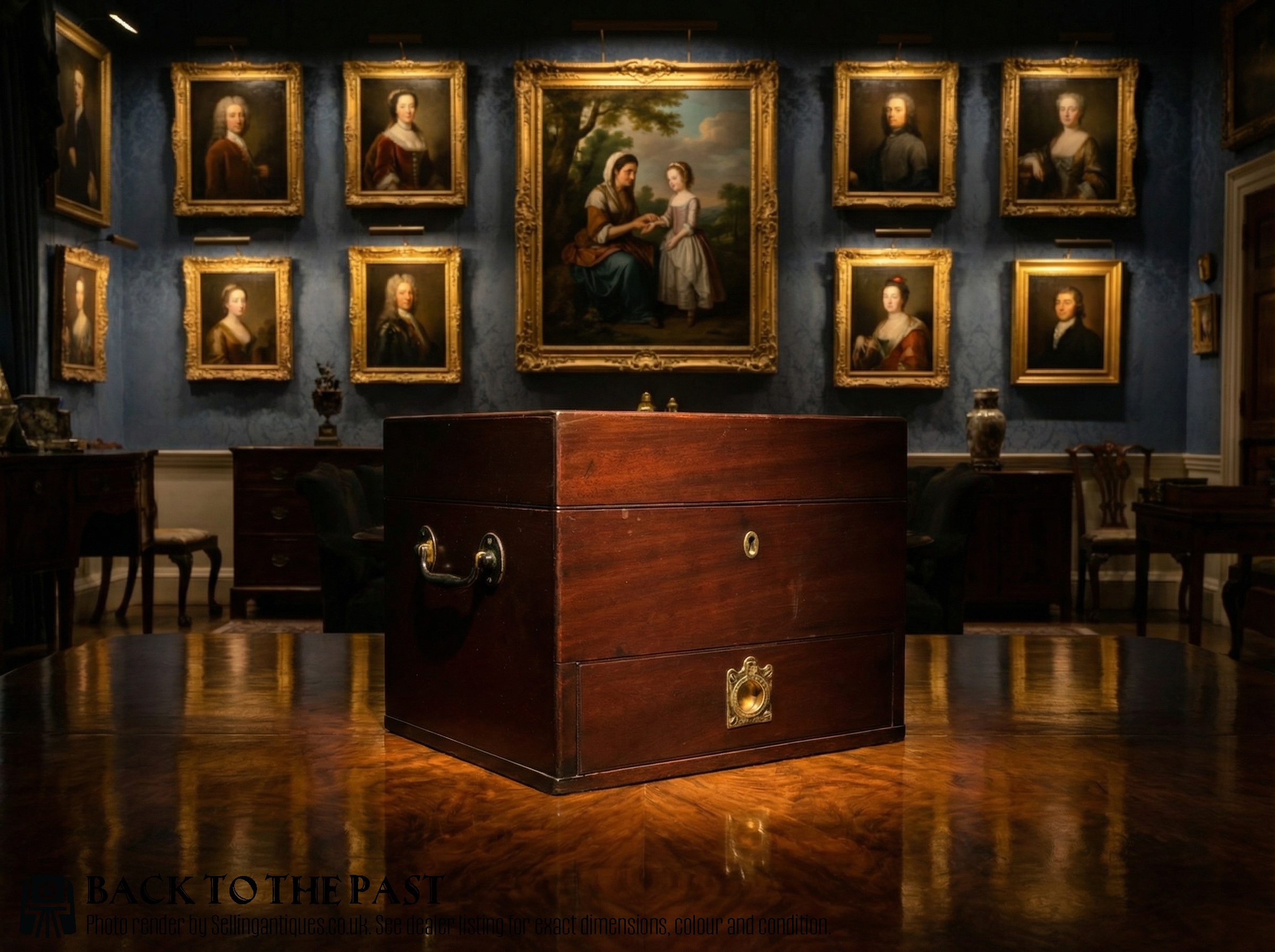
Georgian Medicine Chest
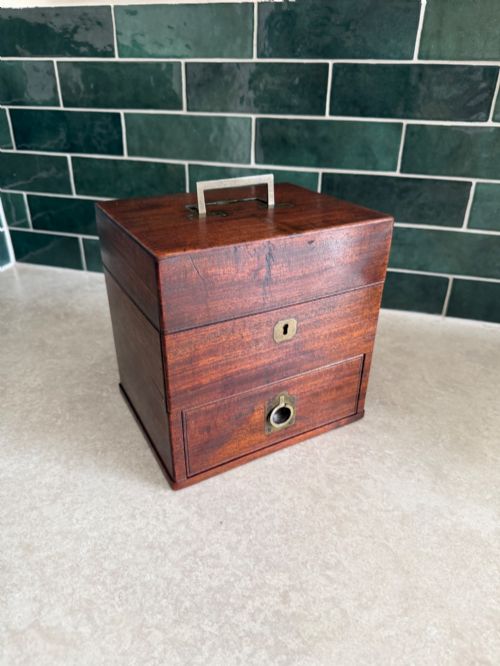
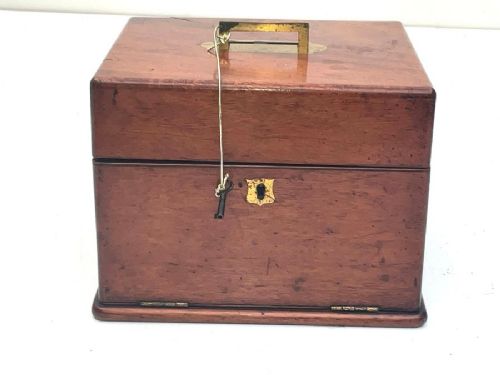
A georgian medicine chest typically takes the form of a compact mahogany or oak box, travelling case, or wall cabinet designed to hold remedies and potions safely.
The versions most commonly met on this page span the Georgian, Regency, and early Victorian periods, often retaining interior glass bottles and fitted drawers.
Alongside dedicated apothecary boxes, related forms such as spice cupboards and wall-hanging cabinets appear within the period style.
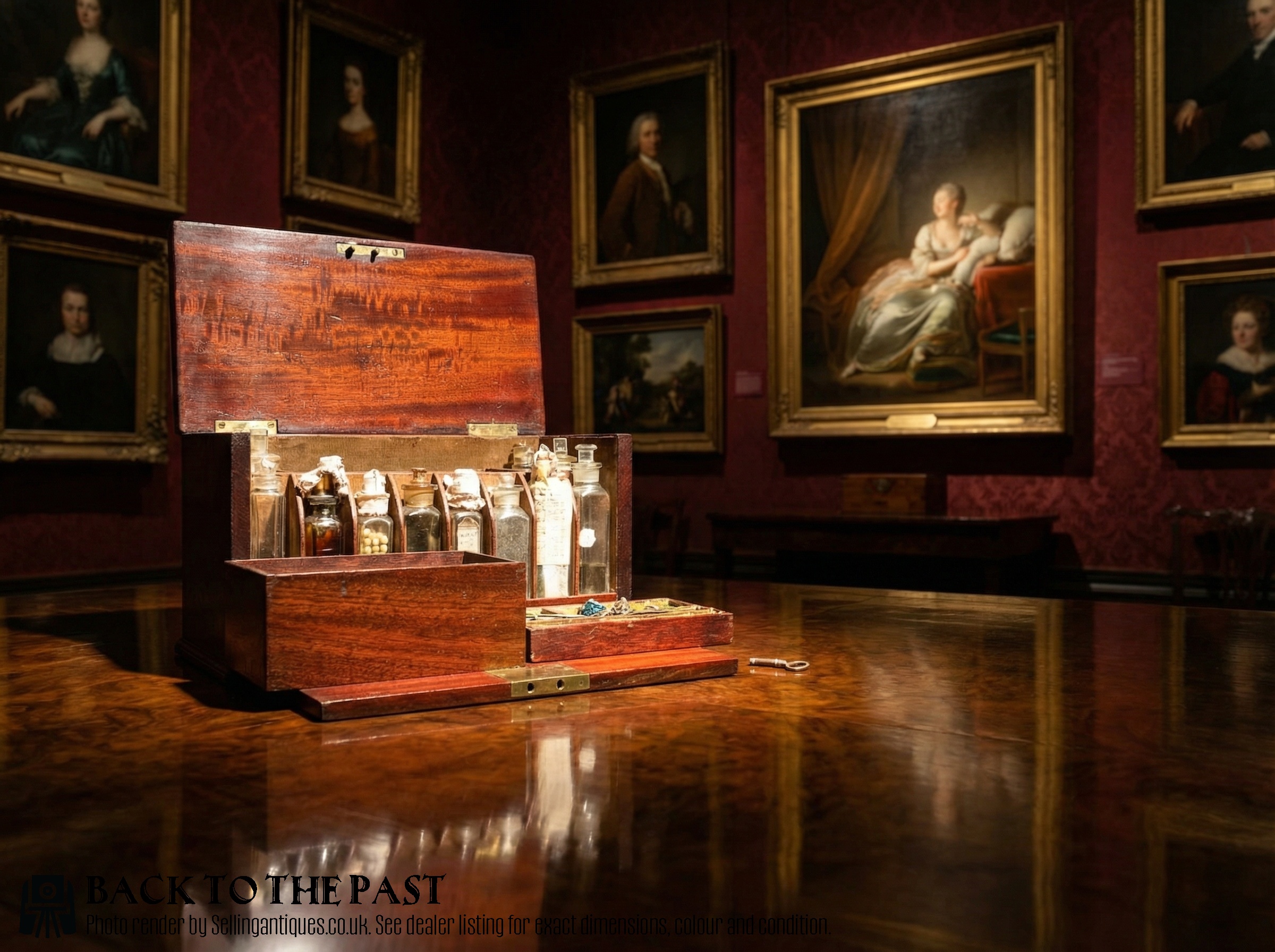
Materials and construction
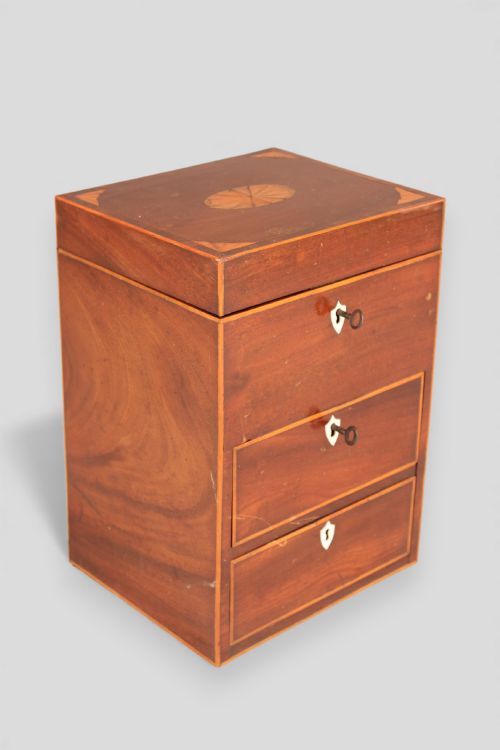
Cabinetmakers utilised sturdy hardwoods like mahogany and oak to build the primary carcass, frequently incorporating boxwood inlay for decorative contrast.
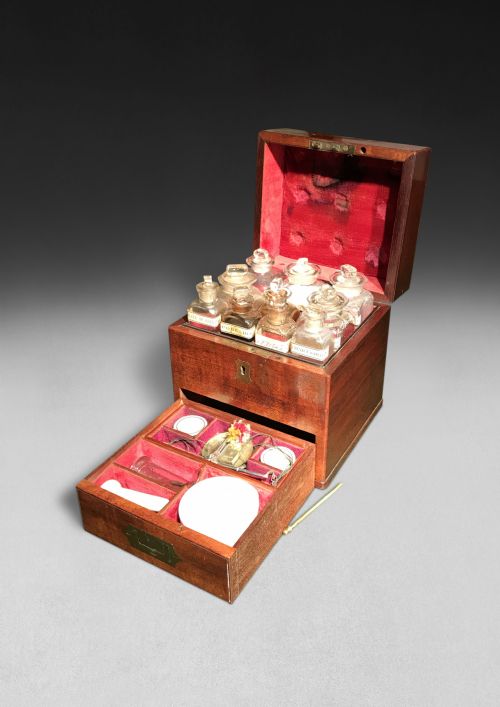
Fitted interiors often relied on velvet linings to cushion delicate glass bottles, while brass handles and hardware provided durable security for travel.
Listings demonstrate a heavy reliance on mahogany and oak, frequently paired with functional brass hardware and delicate glass bottles.
Assessing quality and completeness
Quality rests significantly on the survival of original contents, with complete sets of glass bottles and intact drawers elevating a piece considerably.
Finer examples display careful attention to timber selection, precise boxwood inlay, and robust brass campaign fittings that remain fully functional.
The Georgian Medicine Chest Glossary
- Apothecary box
- A fitted wooden case designed specifically to store medicinal bottles, scales, and compounding equipment. These boxes often feature secret compartments and secure brass locks.
- Campaign case
- A portable chest or box constructed for travel, equipped with recessed brass carrying handles and sturdy exterior reinforcements. These pieces were built to withstand the rigours of transit.
- Boxwood inlay
- A method of ornamentation where light-coloured boxwood is inserted into recesses cut into darker timbers like mahogany. This technique creates crisp geometric or linear patterns.
- Spice cupboard
- A small wall-mounted or tabletop wooden cabinet featuring multiple interior drawers for storing provisions. They share similar joinery techniques with smaller medicine chests.
Georgian Medicine Chest: Frequently Asked Questions
What was inside a georgian medicine chest?
These chests typically held an array of glass bottles for liquid remedies, along with small drawers for powders, scales, and pestles.
Owners stored necessary ingredients to treat common ailments at home or while travelling long distances.
How do I date a medicine chest?
Dating relies on observing the primary timber, hardware style, and construction methods used in the carcass.
Earlier pieces often feature solid mahogany with simple brass pulls, while later variations introduce more complex fitted interiors and specific inlay patterns.
Are the glass bottles usually original?
Many surviving chests retain their original blown glass bottles, though some have lost them or contain later replacements over centuries of use.
Matching bottles bearing period characteristics add significantly to the historical integrity of the box.
Where were these chests kept?
Domestic chests sat upon tables or within private chambers, while campaign variants travelled inside carriages or ships.
Wall-hanging versions were secured in kitchens or private rooms where dry storage was readily available.