

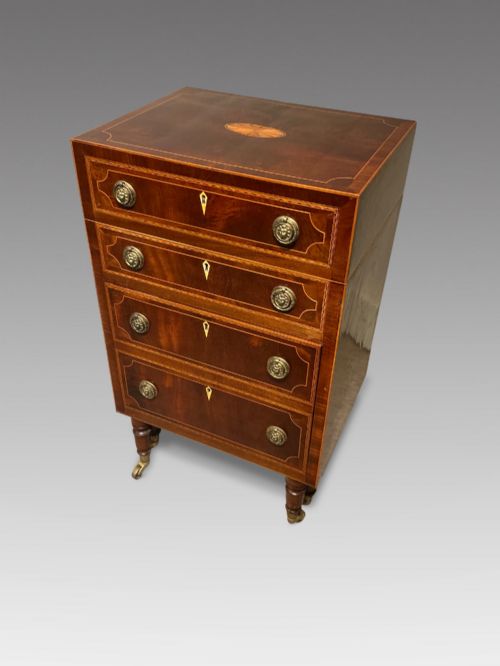
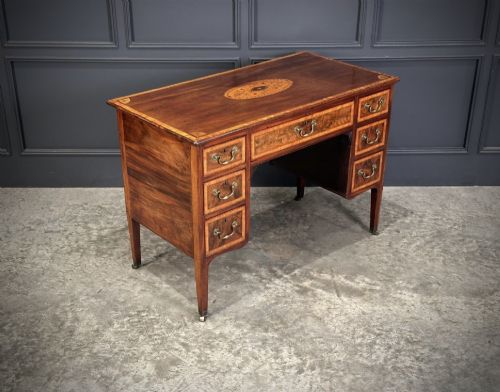
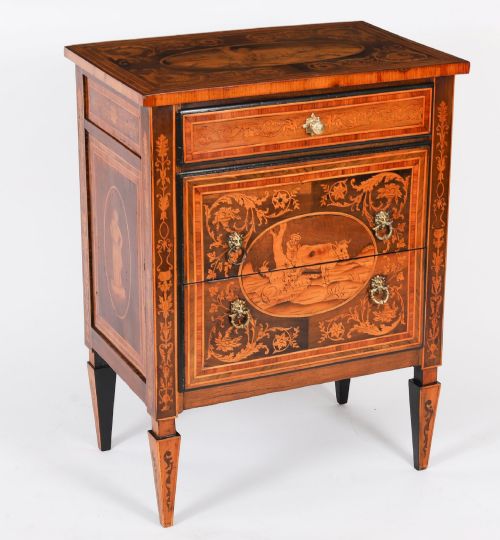
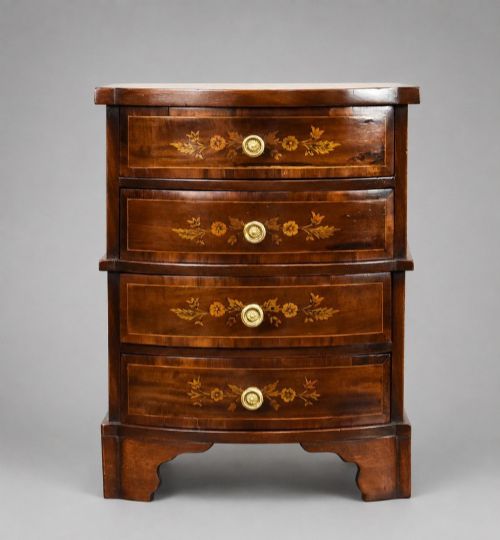





Georgian Marquetry Drawers
Georgian marquetry drawers bring together figured timbers and meticulous floral or geometric inlay, offering fitted storage steeped in eighteenth-century craftsmanship.
Georgian Marquetry Drawers
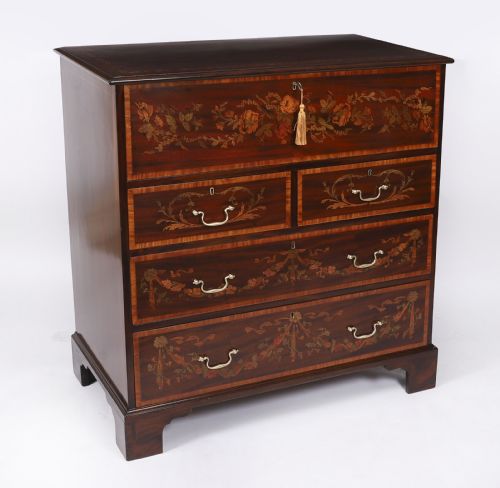
When you search for georgian marquetry drawers, you encounter storage furniture built primarily in the eighteenth and nineteenth centuries, spanning Georgian, Regency, and Edwardian periods. Chests of drawers dominate the selection, alongside bureau bookcases, commodes, and specialised writing tables.
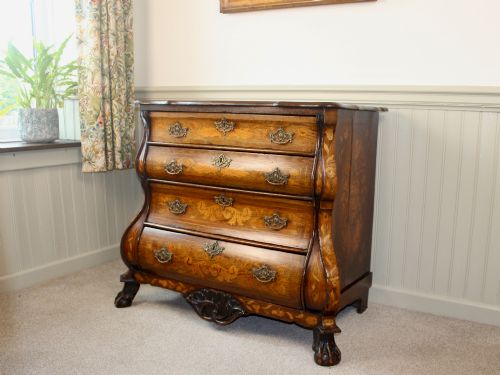
The most common forms you meet are mahogany or walnut carcases adorned with contrasting wood inlays, often featuring bow fronts or serpentine shapes. Pieces frequently originate from British workshops as well as Dutch, Italian, and Maltese centres.
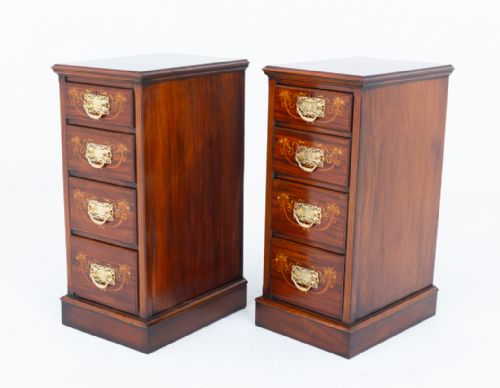
Makers utilised various scales, from full-size chamber chests down to miniature cabinets and dressing table mirrors. Each variant reflects the domestic requirements of its era, combining utility with decorative veneered surfaces.
How they were made
Cabinet makers constructed solid carcases in timber such as mahogany, oak, and walnut, applying fine veneers to principal surfaces. Marquetry inlay was meticulously sawn from contrasting woods like satinwood, fruitwood, and harewood, then fitted into recessed channels.
Surface ornamentation often incorporated brass stringing or escutcheons to complement the timber grain. Carvers shaped serpentine and bow fronts from dense hardwoods, ensuring structural stability for deep drawers and secretaire compartments.
Georgian Marquetry Drawers Retail Price Guide 2026
Typical asking prices for georgian marquetry drawers among the pieces listed under this phrase on Sellingantiques today, from the lower quarter to the upper quarter. They describe what is for sale here now, not the wider market.
Listings feature mahogany, walnut, satinwood, and oak alongside specialised forms including serpentine commodes and bureau bookcases.
What varies in quality
The distinction between tiers of quality lies in the precision of the marquetry cutting and the choice of timbers. Superior examples display seamless integration of veneer with minimal filler, while lesser pieces show simpler geometric banding and wider joints.
The sophistication of the internal drawer construction and the selection of secondary woods indicate the workshop standard. Exceptional items combine figured flame mahogany or burr walnut with intricate, multi-timber floral panels that retain sharp definition.
Edwards and Roberts·Ince and Mayhew
The Georgian Marquetry Drawers Glossary
- Marquetry
- Decorative veneer work assembled in patterns or pictorial scenes using various coloured woods. This technique requires exact fitting before application to the carcase.
- Serpentine
- A front shape curving inward centrally and outward at the sides. It demands considerable skill from the cabinet maker to execute cleanly.
- Secretaire
- A desk disguised as a chest of drawers featuring a pull-down writing flap. Inside lies a fitted interior of small drawers and pigeonholes.
- Commode
- A low decorative chest of drawers or cabinet originating from French influence. These pieces often feature prominent marquetry and marble tops.
- Burl
- Wood grain characterised by swirling knots and distorted growth rings, creating highly figured surfaces. Craftsmen prized burr walnut and similar burls for veneering principal facades.
Georgian Marquetry Drawers: Frequently Asked Questions
What is the difference between marquetry and inlay?
Marquetry involves assembling an entire picture or pattern from veneer sheets before gluing it to the carcase. Inlay refers to cutting recesses directly into solid wood to insert contrasting decorative elements.
While both techniques appear across these pieces, marquetry creates more complex pictorial surfaces, whereas inlay typically forms geometric borders or stringing lines.
How do I identify a Georgian chest?
Georgian chests typically feature dense native timbers like mahogany or oak, constructed with hand-cut dovetails on the drawer sides. Proportions remain classical, and brass handles often follow period Chippendale or Hepplewhite designs.
Later pieces from the Edwardian revival period imitate these forms but utilise different internal construction methods and machine-sawn components.
Where were these pieces made?
Production centres include British workshops alongside continental hubs such as Holland and Italy. Dutch and Italian pieces often showcase bombe shapes and elaborate floral marquetry.
Regional variations appear in timber selection and carcase construction, reflecting local furniture-making traditions across Europe.
How should I care for antique marquetry?
Keep wooden furniture away from direct sunlight and heat sources to prevent timber shrinkage and veneer lifting. Maintain a stable room humidity and dust surfaces gently with a dry cloth.
Avoid commercial polishes containing silicone, opting instead for traditional microcrystalline wax to preserve the finish.