

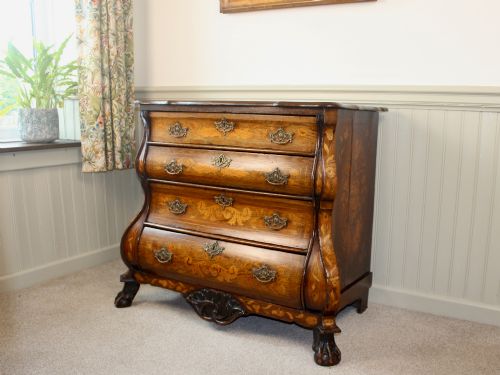


Georgian Marquetry Chest Drawers
A georgian marquetry chest drawers brings elaborate wood picture-work and rich timber tones into a room.
Georgian Marquetry Chest Drawers
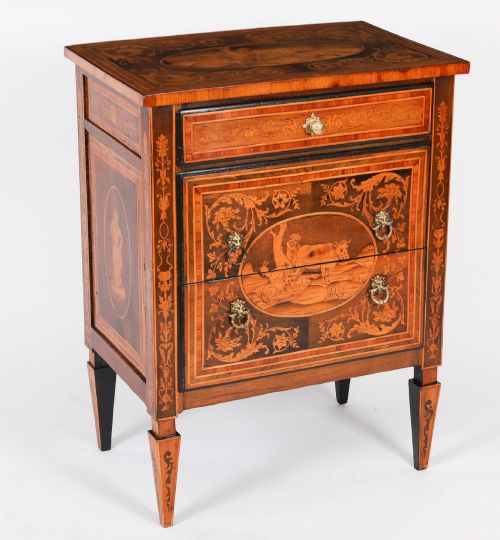
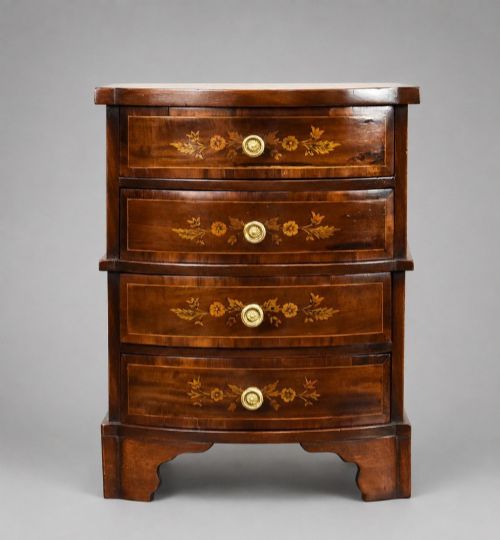
A georgian marquetry chest drawers combines practical storage with complex decorative wood veneers, forming a striking centrepiece in any room. These pieces range from compact miniature furniture to large serpentine and bow-front forms.
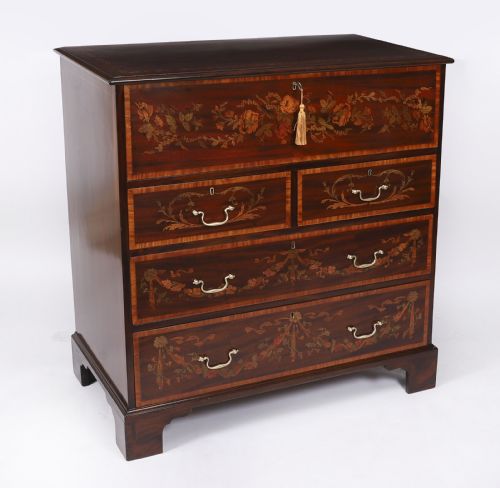
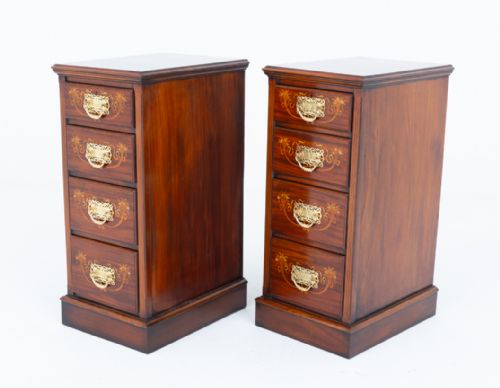
The version most commonly met on this page is the mahogany or walnut chest of drawers featuring floral or geometric marquetry inlay, often tied to the Georgian, George III, or Sheraton styles.
How they were made
Cabinetmakers constructed carcass frames primarily from oak or mahogany, laying down dense veneers of walnut, satinwood, and harewood across the drawer fronts and top surfaces. Artisans then cut intricate floral and architectural patterns from contrasting dyed and natural timbers, embedding them precisely into the surface ground.
Brass handles, escutcheons, and occasional marble tops completed the construction, while secret drawers and secretaire fitted interiors added concealed utility to the skilled woodwork.
Georgian Marquetry Chest Drawers Retail Price Guide 2026
Typical asking prices for georgian marquetry chest drawers among the pieces listed under this phrase on Sellingantiques today, from the lower quarter to the upper quarter. They describe what is for sale here now, not the wider market.
A tiny miniature chest waits patiently on this page, perfectly scaled down as an apprentice's masterwork.
What varies in quality
The standard of a georgian marquetry chest drawers rests upon the crispness of the timber cutting and the natural ageing of the contrasting veneers. Superior examples display seamless integration of marquetry details where grain direction and wood tone create genuine depth.
Poorer quality versions often rely on heavy surface staining or clumsy veneer matching that obscures the underlying timber character and diminishes the visual harmony of the design.
Edwards and Roberts
The Georgian Marquetry Chest Drawers Glossary
- Marquetry
- Decorative wood inlay forming pictorial or geometric patterns. Artisans assemble thin slices of various timbers to create elaborate surface designs.
- Serpentine
- A curved furniture front shaped in a wave line. This profile swells outward at the centre and recedes at the edges.
- Secretaire
- A cabinet or chest containing a pull-out writing drawer with small compartments. It conceals a fitted desk space behind a drop front or sliding drawer.
- Oyster veneer
- Circular wood veneers sliced cross-wise from small branches. The resulting patterns resemble overlapping oyster shells.
- Commode
- A decorative low chest of drawers or cabinet. French and Italian versions often feature curved bombe shapes and marble tops.
Georgian Marquetry Chest Drawers: Frequently Asked Questions
How do I clean marquetry surfaces?
Dust gently with a dry, soft cloth to keep the delicate wood veneers safe from moisture damage. Avoid modern chemical polishes that can lift the old adhesives binding the inlay.
Apply a traditional microcrystalline wax occasionally to nourish the timber and protect the contrasting wood tones from fading in direct sunlight.
Were these chests used for clothes?
These pieces served primarily in principal bedrooms for storing linens, garments, and personal valuables. Many included hidden compartments or secret drawers for sensitive items and documents.
Grand reception rooms also utilised them as commodes and side cabinets to display decorative objects and store dining accessories.
What is the difference between inlay and marquetry?
Inlay generally refers to contrasting materials set into a solid wood recess. Marquetry involves assembling an entire picture or pattern from veneer sheets before applying it to the carcass.
Floral and scrollwork designs on these chests typically utilise the marquetry technique to achieve multiple tones and textures.
How do I spot a later restoration?
Examine the timber under natural light to check if replacement veneer sections match the age and wear of the surrounding wood. Consistent patination across the top and drawer fronts indicates uniform historical survival.
Original brass hardware leave distinct ghost marks on the timber if handles have been swapped over the centuries.