

Georgian Mahogany Wardrobe Chest
A georgian mahogany wardrobe chest brings together generous hanging space and deep drawer storage in a single timber housing.
Georgian Mahogany Wardrobe Chest
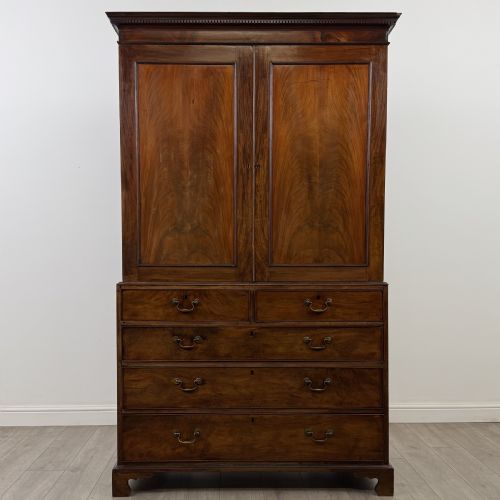
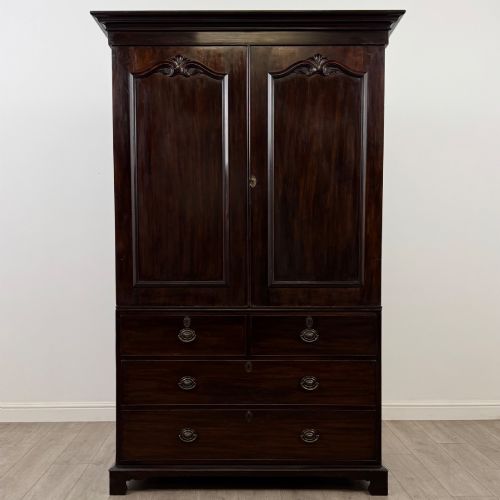
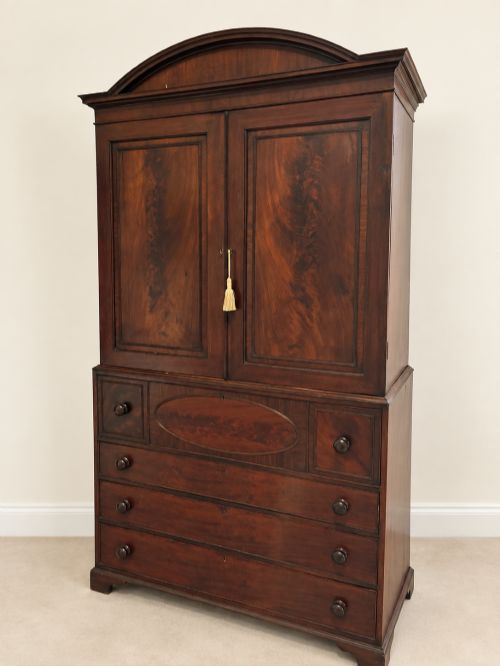
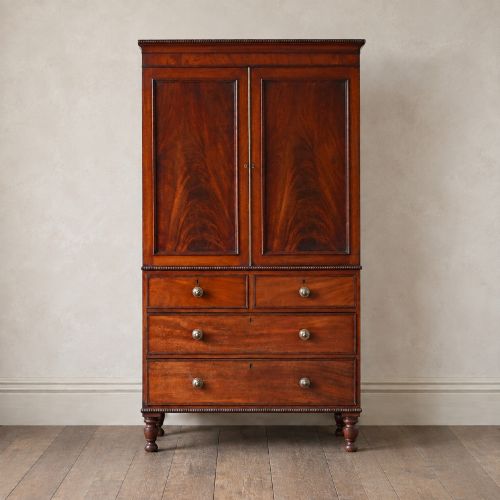
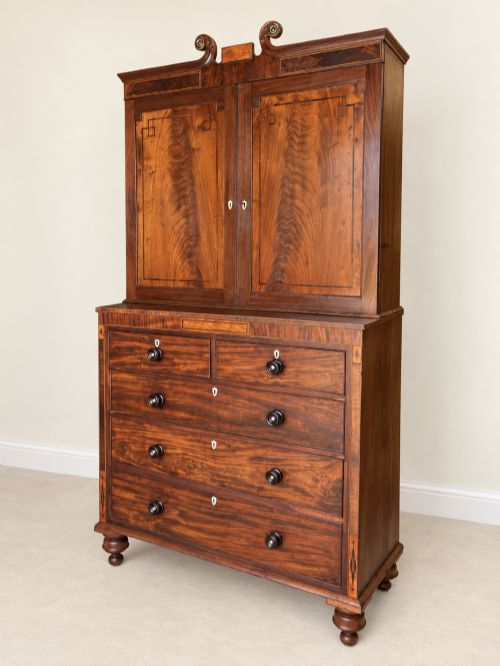
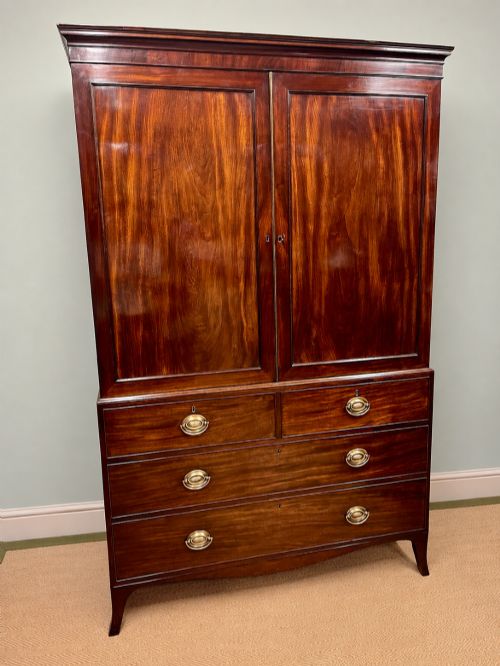
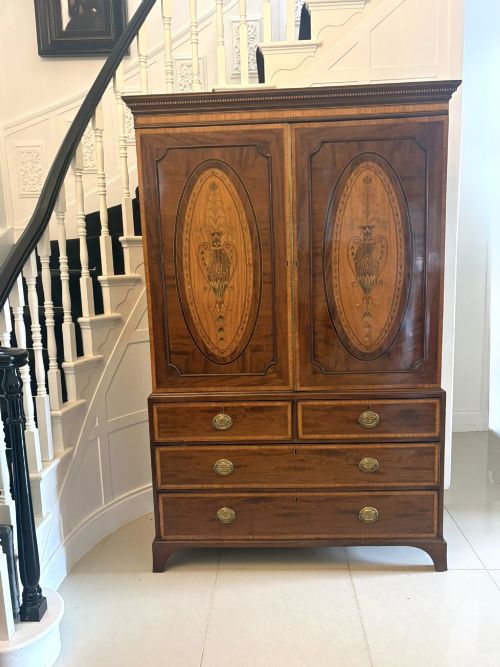
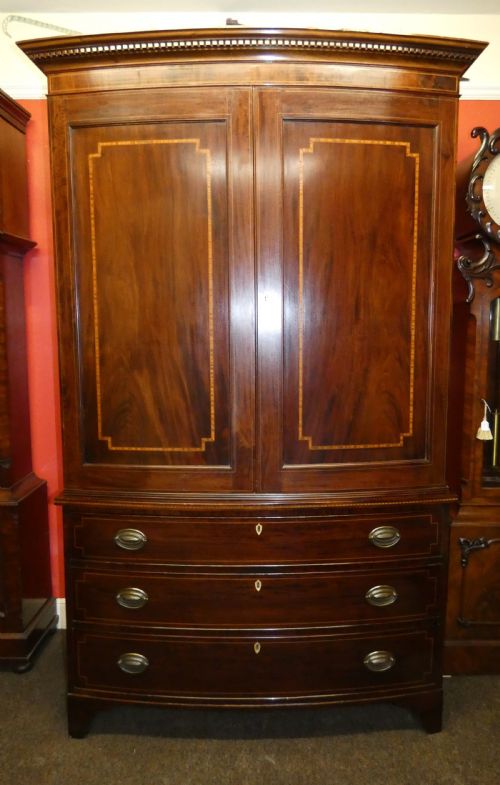
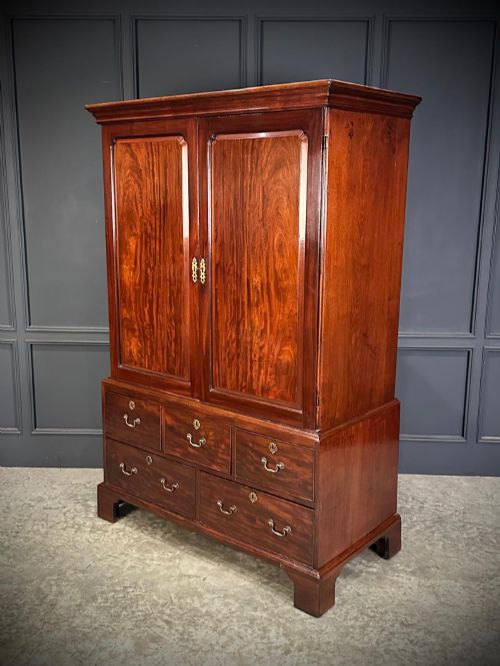
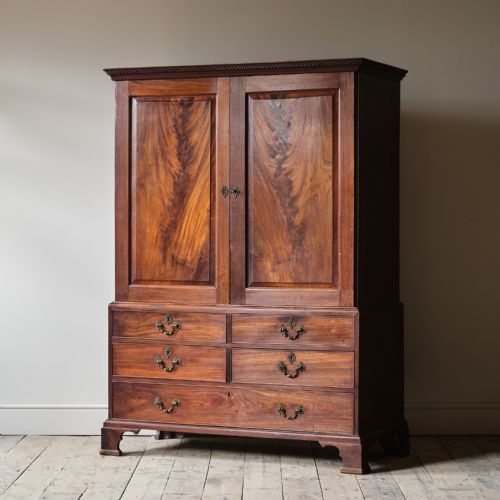
A georgian mahogany wardrobe chest serves as a substantial storage piece, combining upper cupboard doors with lower chest drawers. These items appear across the eighteenth and nineteenth centuries, spanning George III, Regency and William IV periods.
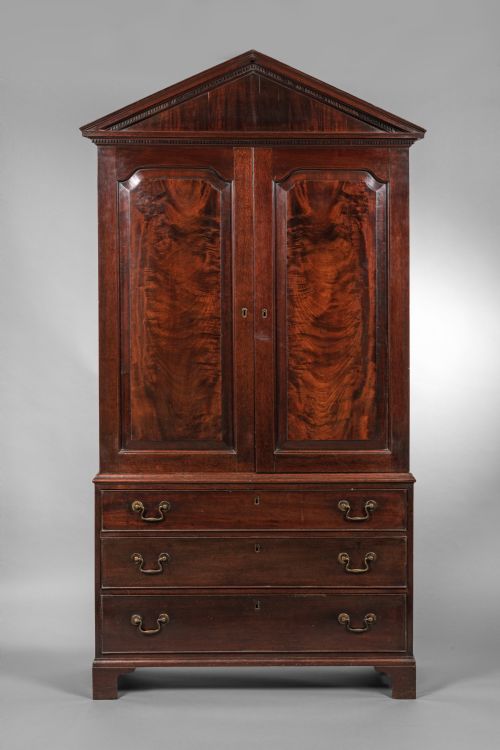
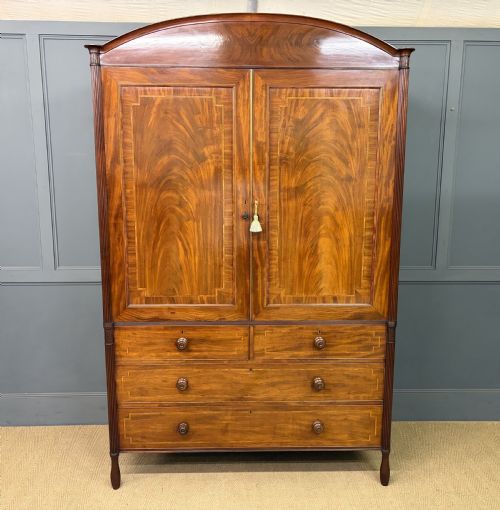
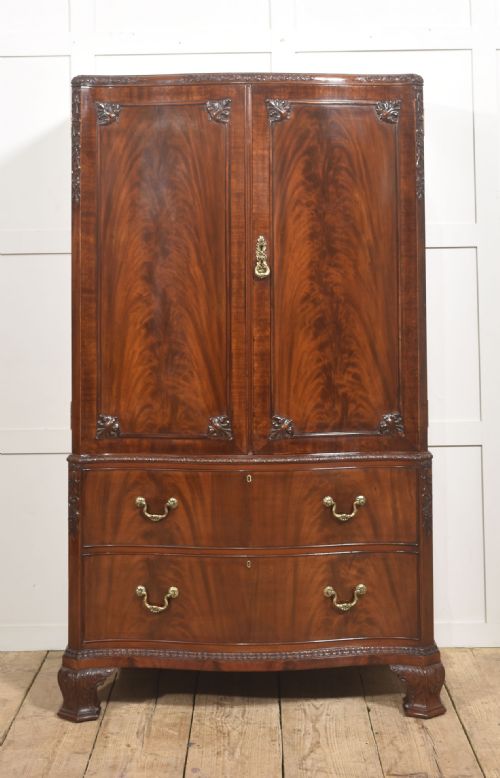
The most common formats on this page include linen presses, gentleman's wardrobes and cupboard on chest designs. Many examples sit upon bracket feet or plinth bases, presenting panelled doors above multiple graduated drawers.
Makers utilised architectural cornices and refined proportions to balance the visual weight of the timber. Interiors frequently house sliding trays or hanging space tailored for period attire.
Materials and construction methods
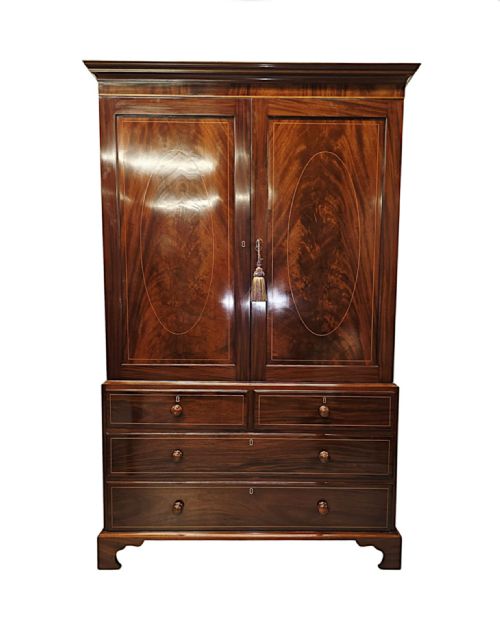
Cabinetmakers built these pieces using solid mahogany and flame mahogany veneers over secondary woods such as oak. Workshops selected timber figures carefully, matching grain patterns across large door surfaces and drawer fronts.
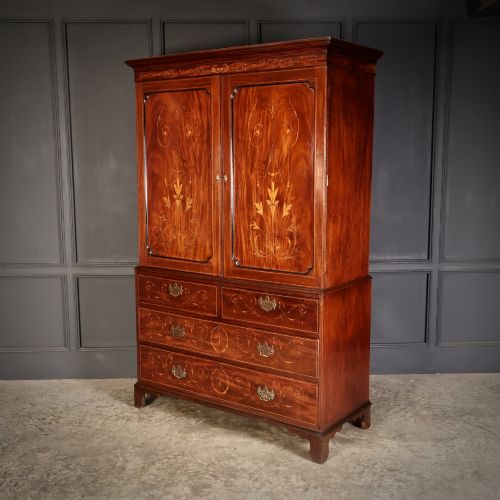
Decorative detailing relies on contrasting stringing, satinwood and boxwood inlays, alongside brass hardware and occasional marquetry. Crossbanding in rosewood or walnut adds geometric definition to borders and panels.
Listings feature mahogany, satinwood, boxwood, oak and brass alongside flame mahogany veneers.
Assessing craftsmanship and proportion
The standard of a georgian mahogany wardrobe chest rests upon timber selection and the continuity of grain matching across doors and drawers. Superior pieces exhibit crisp inlay work, well-chosen flame veneers and properly fitted internal sliding trays.
Structural integrity depends on secondary wood choice, drawer lining construction and original brass fitments. Pieces retaining their original feet, cornices and polished surfaces command greater appreciation among collectors.
The Georgian Mahogany Wardrobe Chest Glossary
- Linen press
- A tall cabinet comprising upper cupboard doors enclosing sliding trays, set above a lower chest of drawers. This form originated for storing household textiles flat before hanging wardrobes became standard.
- Flame mahogany
- A veneer cut from the fork of the mahogany tree to produce a dramatic, flickering flame-like grain pattern. Cabinetmakers reserved this timber for principal facade surfaces.
- Crossbanding
- A narrow strip of veneer laid around the border of a panel with the grain running perpendicular to the centre. This technique frames drawer fronts and doors on finer pieces.
- Sliding trays
- Internal wooden pull-out shelves housed behind the upper doors of a press. They allowed folded garments and linens to be stored without creasing.
- Gentleman's wardrobe
- A multi-functional storage cabinet designed for men's apparel, combining hanging space, shirt drawers and pull-out trays. These pieces reflect the specific tailoring needs of the eighteenth and nineteenth centuries.
Georgian Mahogany Wardrobe Chest: Frequently Asked Questions
What is inside a georgian mahogany wardrobe chest?
Most examples contain internal sliding wooden trays behind the upper doors, paired with graduated drawers in the lower chest section.
Some variations include dedicated hanging space or compartmentalised drawer layouts tailored for gentleman's garments and household linens.
How do I date a georgian mahogany wardrobe chest?
Dating relies on stylistic shifts from eighteenth-century architectural cornices and bracket feet to nineteenth-century Regency brass inlay and plinth bases.
Secondary woods, construction methods of the drawers and the presence of flame mahogany veneers further help narrow the period of manufacture.
Can I use these for modern clothes?
The deep lower drawers accommodate folded garments, knitwear and bedding with ease.
While upper sliding trays suit folded items, certain configurations allow conversion to hanging rails depending on the internal depth.
Are these pieces difficult to move?
These large pieces typically separate into an upper cornice section, central cupboard body and lower chest base for transport.
Enlisting professional antique movers ensures the heavy mahogany components and internal trays remain secure during transit.