
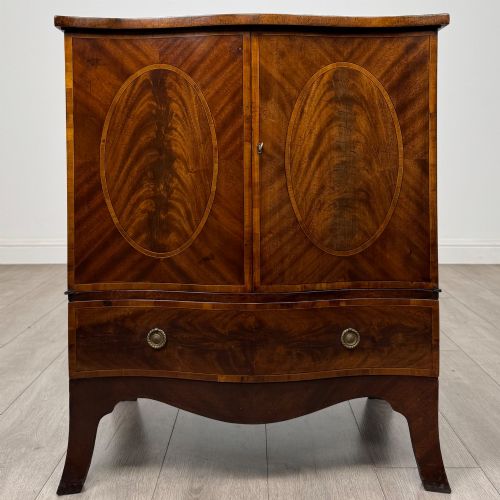
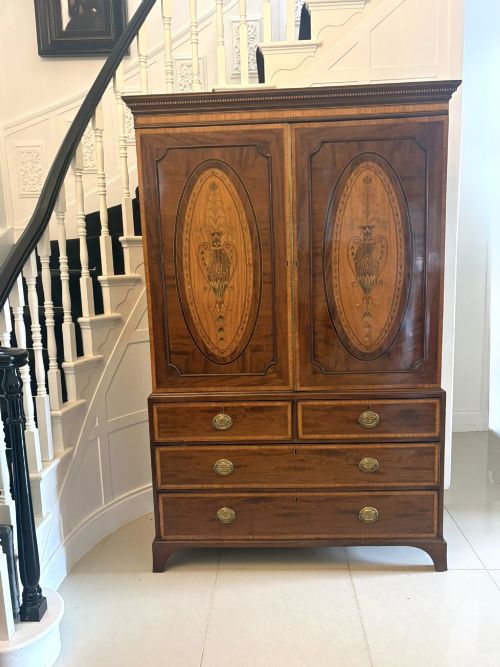

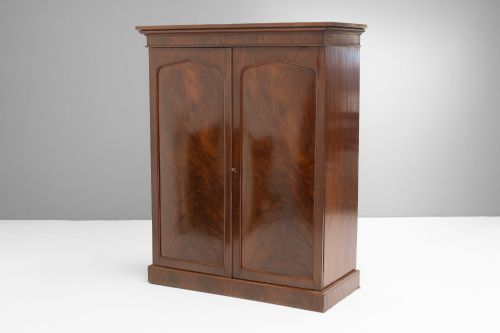
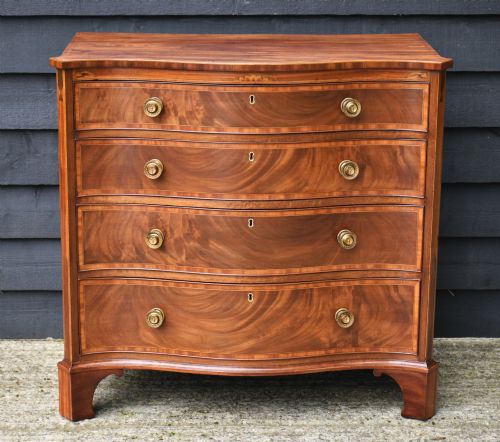
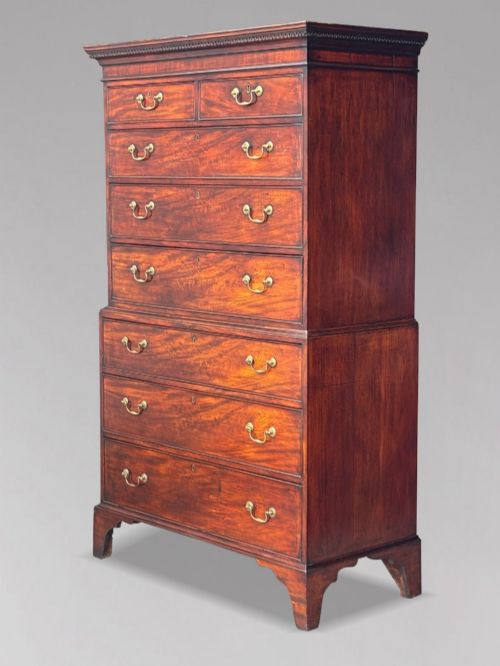
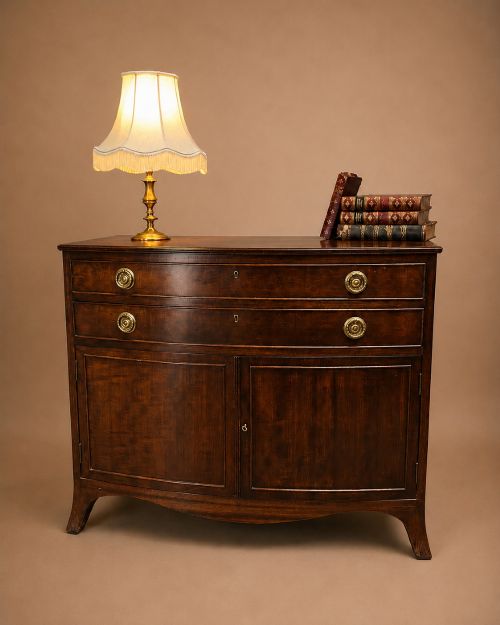
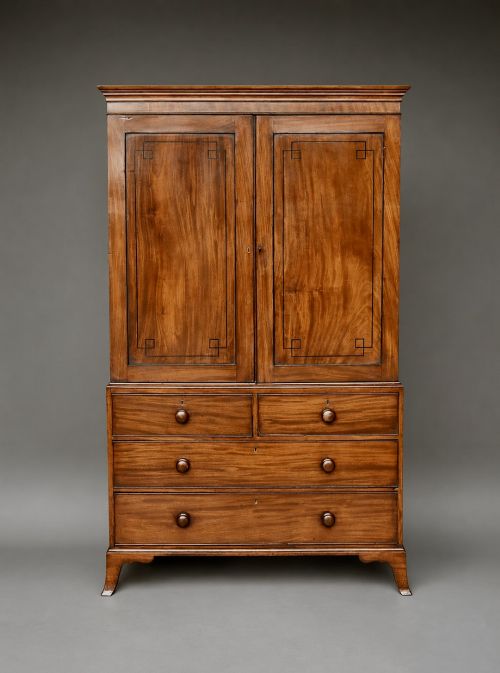
Georgian Mahogany Storage Cabinet
A georgian mahogany storage cabinet brings deep timber grain and practical capacity together in a single functional anchor for the room.
Georgian Mahogany Storage Cabinet
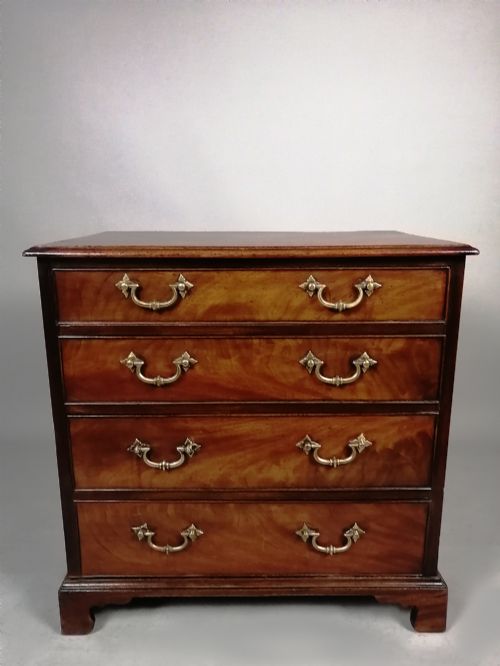
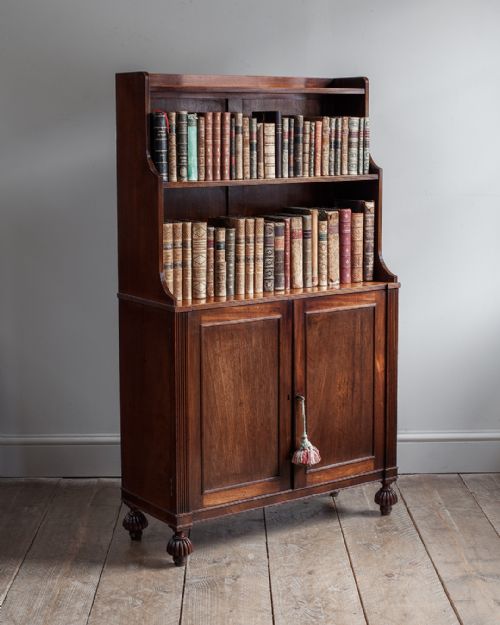
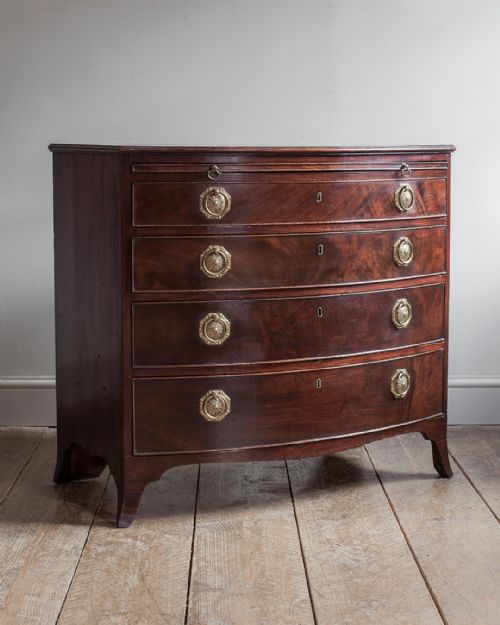
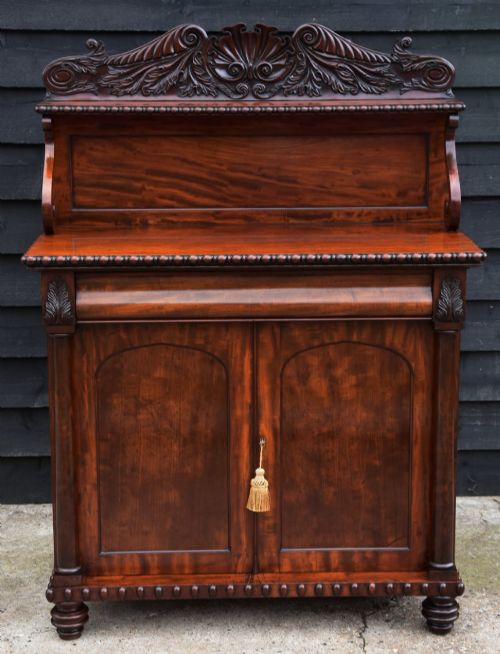
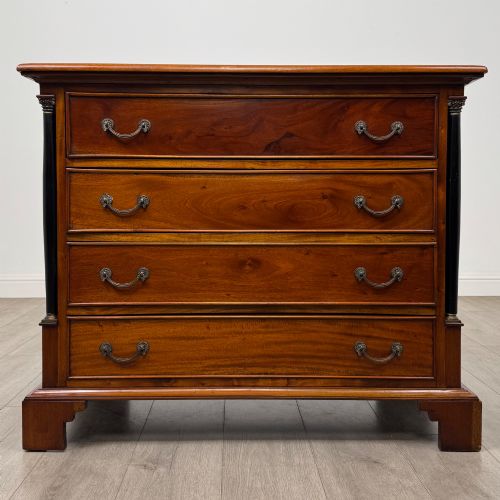
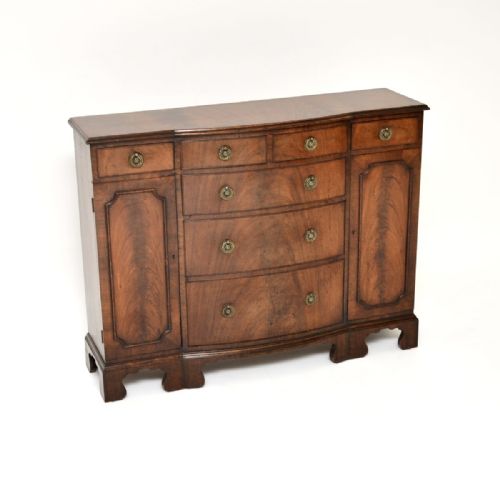
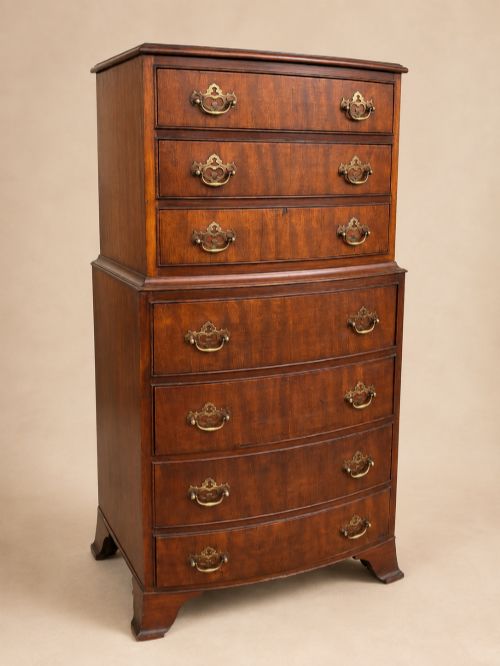
When you search for a georgian mahogany storage cabinet, you encounter a varied group of case furniture spanning chests of drawers, linen presses, sideboards, and cupboards. These pieces originate across the Georgian and Regency eras, alongside later revival interpretations from the nineteenth and twentieth centuries.
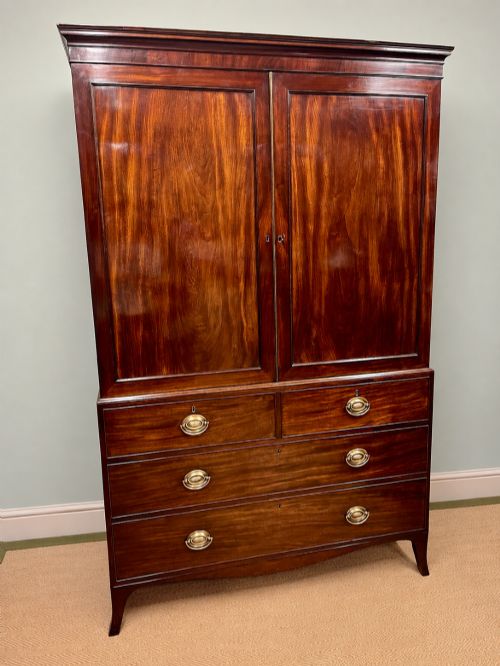
The chests of drawers and linen presses represent the most frequent forms on this page, offering deep storage capacity behind panelled doors or graduated drawer tiers. Alongside these stand smaller bedside night tables, corner cupboards, and side cabinets designed for domestic utility.
Materials and construction
Cabinet makers utilised solid mahogany and flame mahogany veneer over secondary timbers such as oak, applying brass hardware for handles and escutcheons. Selected examples incorporate satinwood inlay to define drawer edges and border panels.
Construction methods rely on traditional joinery, dovetailing drawer carcases and mounting panelled doors within sturdy frames. Cornices occasionally feature decorative carving such as blind fretwork above the primary storage compartments.
Cellarettes occasionally retain their original lead-lined interiors, built to hold melting ice alongside bottles of vintage wine.
Proportion and timber selection
Quality rests upon the choice of timber and the restraint of its decorative details, where figured flame mahogany and crisp satinwood stringing elevate a piece above standard utility. Well-judged proportions and original brasses further distinguish finer examples.
The handling of secondary woods and the precision of the dovetail joints reveal the hand of the maker. Superior pieces maintain crispness in their mouldings and structural integrity across centuries of domestic use.
The Georgian Mahogany Storage Cabinet Glossary
- Linen press
- A tall storage cabinet featuring upper sliding trays or shelves enclosed by doors, positioned above a chest of drawers base. This form originally housed household textiles and folded garments.
- Bowfront
- A curved convex front profile that softens the vertical angles of a chest of drawers or sideboard. This shape gained popularity during the late eighteenth and early nineteenth centuries.
- Serpentine
- A horizontally undulating front edge that curves outward at the centre and inward toward the ends. It demands advanced cabinet making skill to shape timber precisely.
- Blind fretwork
- Carved ornamentation applied to a flat surface in an openwork geometric pattern that imitates pierced fretwork without cutting through the wood. It often appears along the cornices of linen presses.
- Cellarette
- A dedicated cabinet or box designed to hold wine bottles securely, sometimes fitted with lead-lined interior compartments. These sit low to the ground for convenient access during dining.
Georgian Mahogany Storage Cabinet: Frequently Asked Questions
What is a linen press?
A linen press is a tall storage cabinet that combines sliding shelves or trays enclosed by upper doors with a set of drawers below. Originally built to store household linens flat, these pieces now serve as versatile wardrobes or general storage.
The upper section typically houses wide sliding shelves, while the lower base provides standard drawer capacity. This dual format makes them practical for modern clothing storage.
How do I date a mahogany cabinet?
Dating relies on examining construction techniques, hardware types, timber thickness, and overall stylistic proportions. Earlier pieces from the eighteenth century often feature hand-cut dovetails and native secondary woods.
Later nineteenth-century and revival examples show standardised machine milling and different internal framing methods. Comparing the secondary timber and drawer construction helps clarify the period of manufacture.
Where should I place a corner cupboard?
Corner cupboards fit neatly into ninety-degree room angles, transforming dead architectural space into functional display or storage areas. They work effectively in dining rooms or hallways where floor space is limited.
These pieces come in wall-mounted hanging variants or floor-standing models. Their triangular footprint allows them to anchor an empty corner without crowding the room.
What is flame mahogany?
Flame mahogany is a decorative veneer sliced from timber where the branch meets the main trunk, creating a distinctive flamelike grain pattern. Cabinet makers reserved this figured wood for the primary visible surfaces of high-status furniture.
The grain creates dramatic visual movement across drawer fronts and door panels. It is frequently bordered by contrasting stringing lines in satinwood.