



Georgian Mahogany Steps
Georgian mahogany steps combine the practicality of multi-tiered access with the warmth of rich timber.
Georgian Mahogany Steps
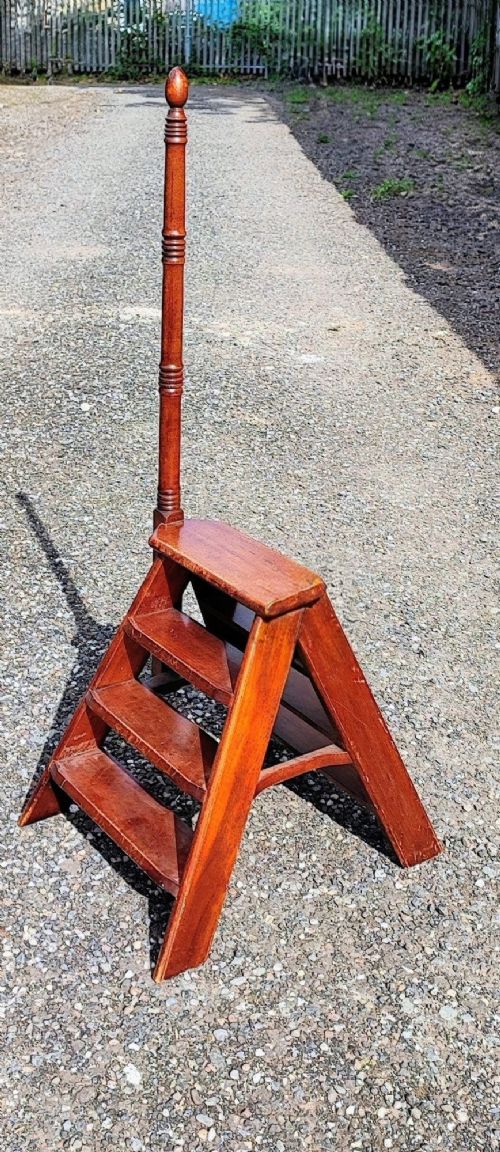
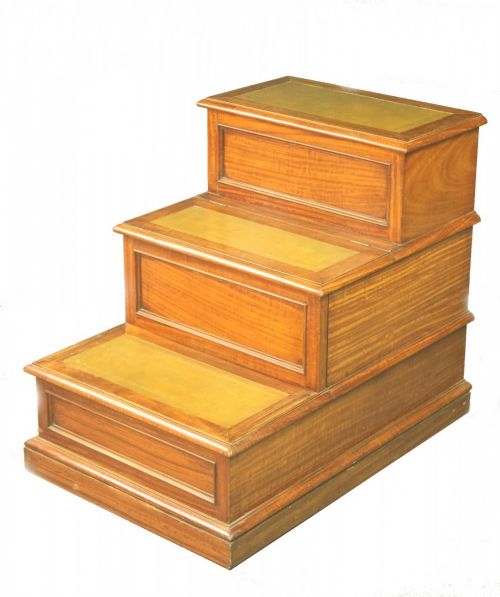
Georgian mahogany steps are functional pieces designed to reach high bookshelves or assist with grand beds, often taking the form of library steps or bed steps. They appear across periods from the George III era through to the Regency period, maintaining a compact footprint suited to domestic spaces.
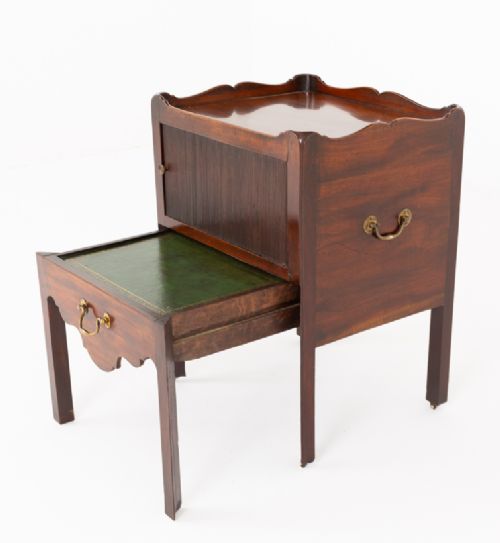
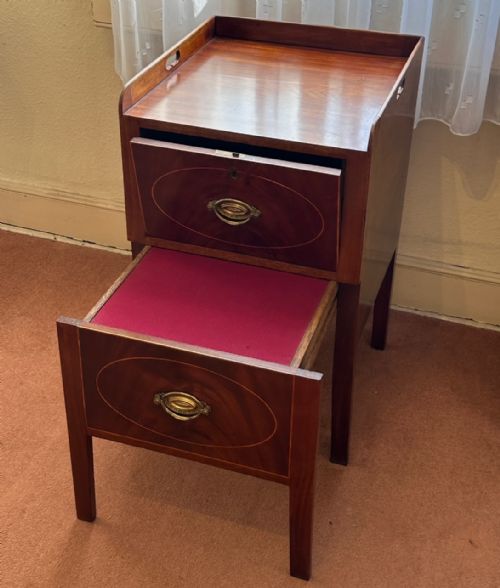
Buyers seeking georgian mahogany steps will encounter variations that include traditional tiered staircases, folding designs, and clever metamorphic library armchairs. These items served a dual purpose in period homes, functioning as seating or commodes alongside their primary role as steps.
The most common examples on this page date from the Georgian, Late Georgian, and Regency eras, constructed primarily from solid mahogany or flame mahogany veneer. Many incorporate leather treads or concealed compartments within their structure.
How they were made
Cabinetmakers utilised solid mahogany and flame mahogany veneer over secondary timbers, often pairing the timber with brass hardware for hinges and fittings. Leather inserts frequently cover the tread surfaces to provide grip and a finished writing or mounting surface.
Construction techniques involved precise joinery to handle the weight-bearing demands of climbing, particularly in folding and metamorphic examples. Secondary materials such as satinwood occasionally appear in stringing or inlay work to accent the primary mahogany frame.
Listings feature mahogany, satinwood, brass, and leather across pieces dating from the 18th century through to the 1930s.
What varies in quality
Quality in these steps rests on the cleverness of the mechanism and the crispness of the timber selection, especially when flame mahogany veneer is used. Simpler fixed structures rely on the proportion and thickness of the timber, whereas metamorphic pieces depend on the smooth execution of folding or pivoting joints.
The integration of secondary functions, such as built-in commodes or leather-lined treads, distinguishes standard utility pieces from finer cabinet work. Superior examples show careful attention to internal framing and the retention of original brass fittings and leather inserts.
J.Jarvis·Morgan and Sanders
The Georgian Mahogany Steps Glossary
- Metamorphic
- Furniture designed to transform from one form into another, such as an armchair that unfolds into a flight of steps. This ingenuity was particularly popular during the Regency period.
- Commode
- A piece of furniture containing a concealed chamber pot, frequently disguised as a set of steps or a small cabinet in Georgian bedrooms.
- Flame mahogany
- A veneer cut from the branch junction of a mahogany tree, producing a distinctive flickering flame pattern. Cabinetmakers used it on prominent surfaces.
- Tread
- The horizontal surface of a step where the foot rests. In library steps, these are often lined with tooled leather.
- George III
- The period from 1760 to 1820, encompassing much of the classical mahogany furniture production seen in these listings.
Georgian Mahogany Steps: Frequently Asked Questions
How do metamorphic library steps work?
Metamorphic steps pivot or fold using hidden hinges and clever internal tracks, allowing an armchair or small cabinet to extend into a secure staircase.
These mechanisms required precise cabinetmaking to ensure stability when weight was applied in either configuration.
Were these steps used only in libraries?
While library steps assisted readers in reaching high shelves, many versions were built specifically as bed steps to help people climb into high-post Georgian beds.
Bed steps frequently doubled as commodes or housed storage compartments beneath the treads.
How do I spot a Regency period piece?
Regency pieces often display bolder classical influences, incorporating sabre legs, reeded mouldings, and brass stringing into the mahogany structure.
Makers of this era also favoured complex metamorphic designs that combined seating with functional steps.
Are the leather inserts usually original?
Leather treads received heavy wear from feet and often required replacement over centuries of domestic use.
Finding period-appropriate tooled leather on the treads adds to the historical integrity of the piece.