
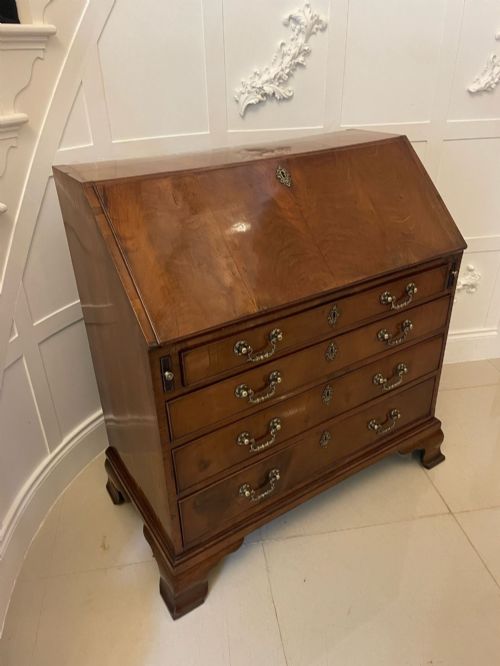
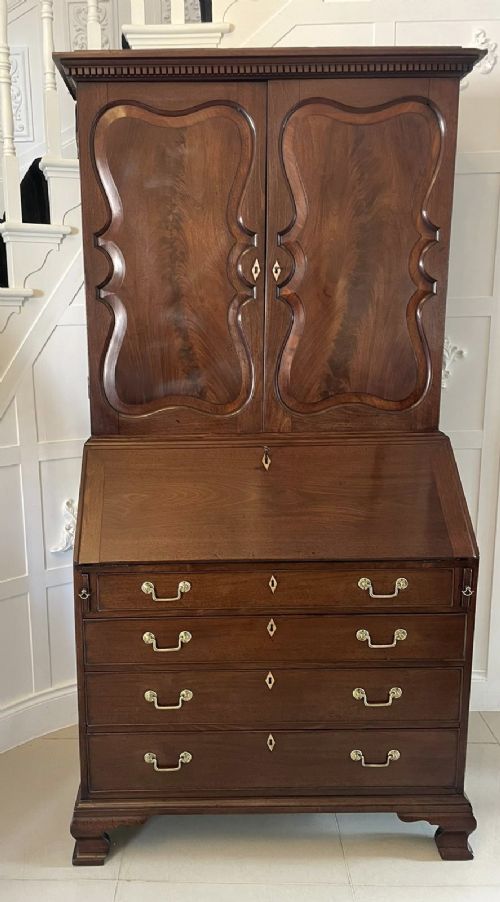
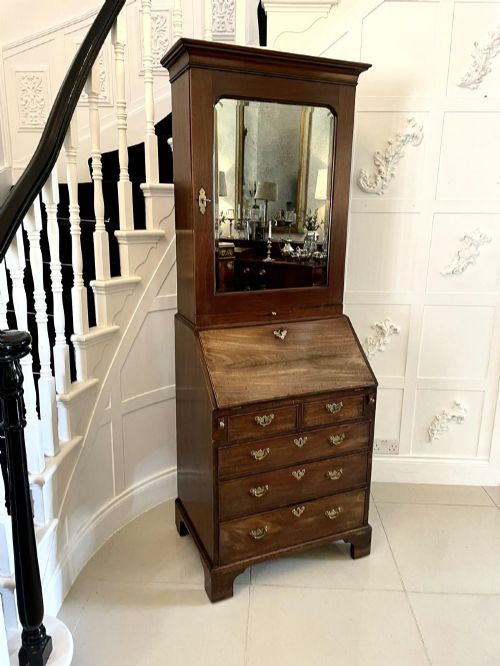

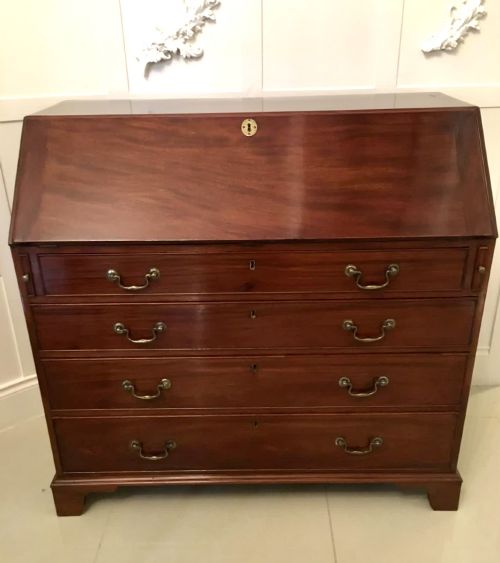
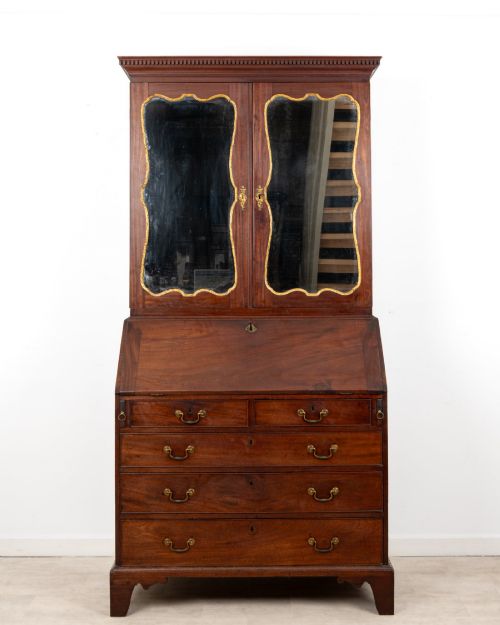
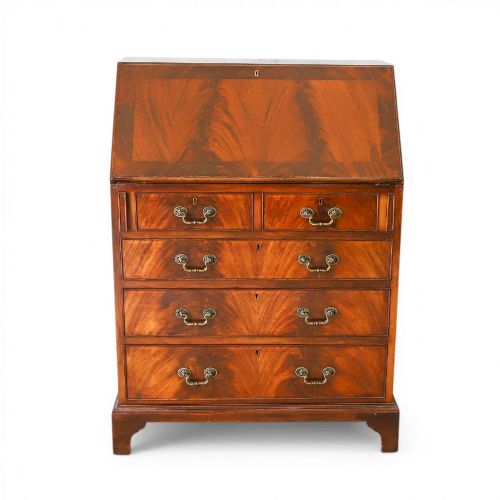
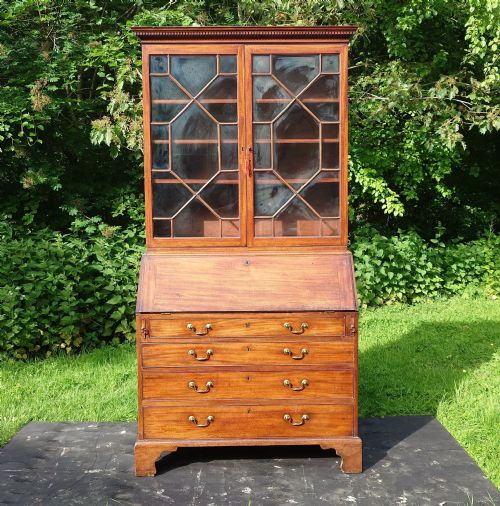
Georgian Mahogany Slant Front Bureau
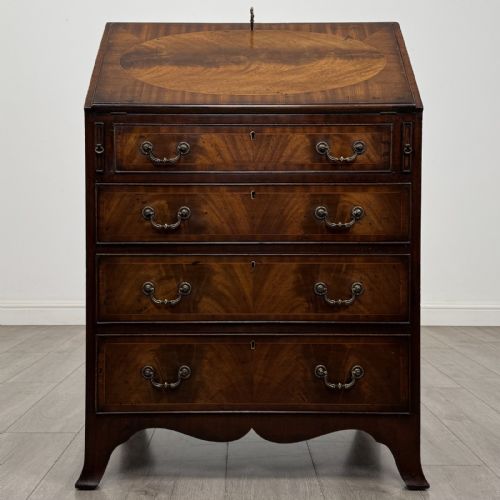
A georgian mahogany slant front bureau brings functional writing space and fitted interiors together in a classic form you will meet in various sizes.
Georgian Mahogany Slant Front Bureau
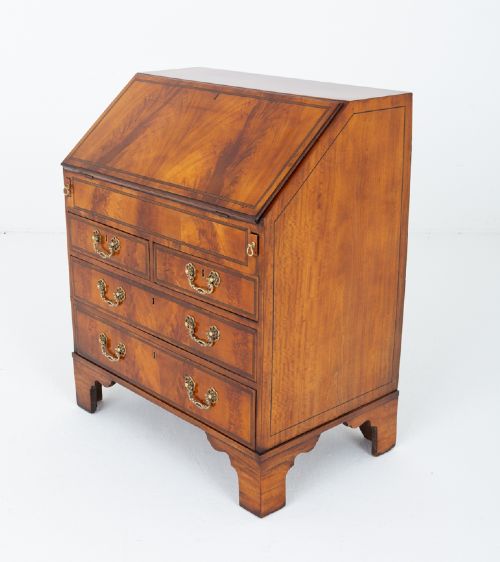
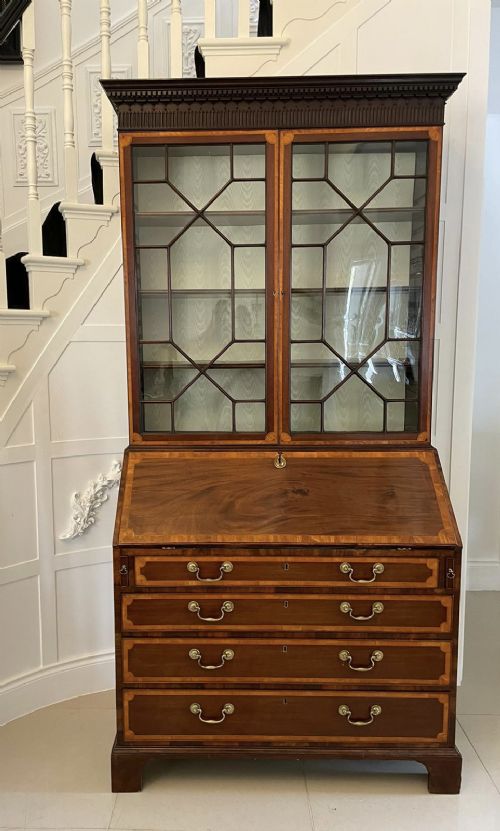
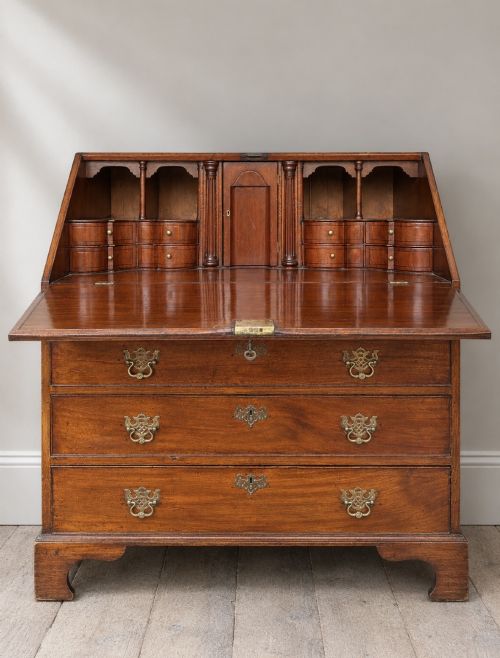
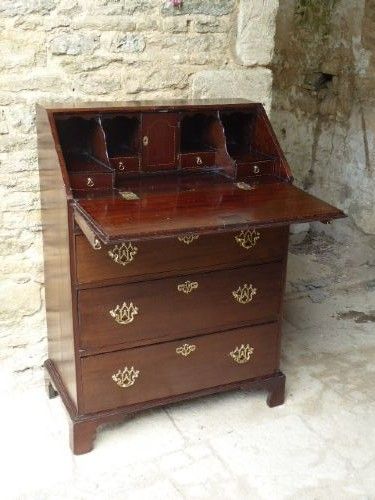
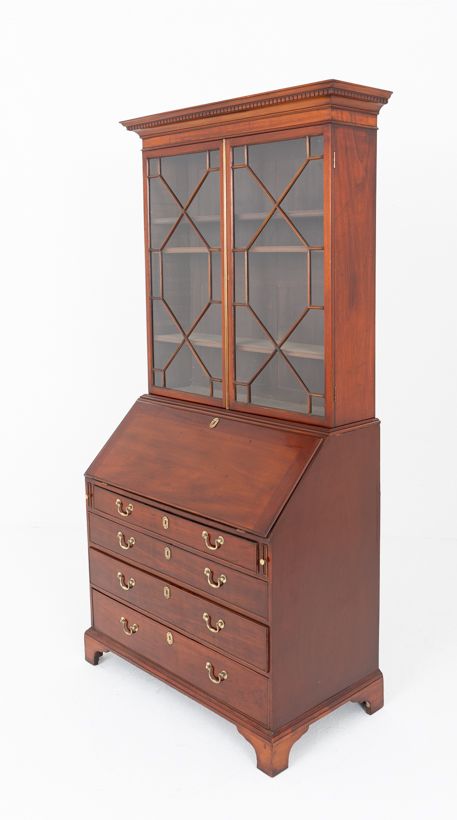
When you search for a georgian mahogany slant front bureau, you encounter writing furniture designed with a hinged writing flap that opens to reveal small drawers and pigeonholes. These pieces span the eighteenth century and the Georgian period, appearing frequently in smaller proportions or as taller bureau bookcases.
The standard form provides a practical surface for correspondence while concealing private documents behind fitted interior compartments. Many examples incorporate bracket feet and drawer configurations that reflect the cabinet maker's attention to domestic utility.
While the core design remains consistent across the Georgian era, variations range from compact desks to grand bureau cabinets fitted with upper shelving. The selection reflects both simple domestic pieces and more ornate iterations featuring inlaid wood and figured grain.
Materials and construction
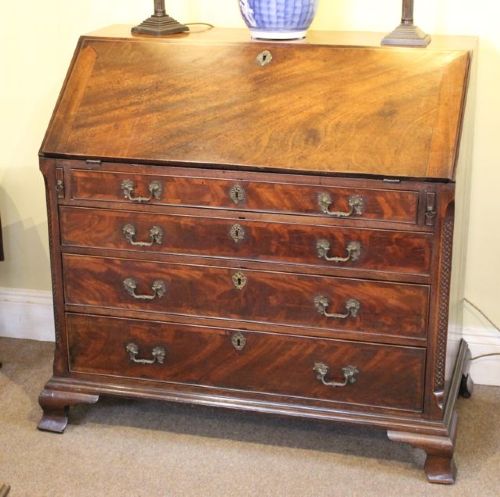
These items rely principally on solid mahogany and figured mahogany veneers, often supported by secondary timbers such as oak for drawer linings. Cabinet makers utilised natural timber figuring, including flame patterns, to create rich visual depth on the fall front and drawer faces.
Inlaid details involving satinwood and other contrasting timbers appear on select pieces, adding linear borders and decorative motifs around the drawers and slant front. Traditional joinery methods, including dovetailing on the drawers, secure the structural integrity of each carcass.
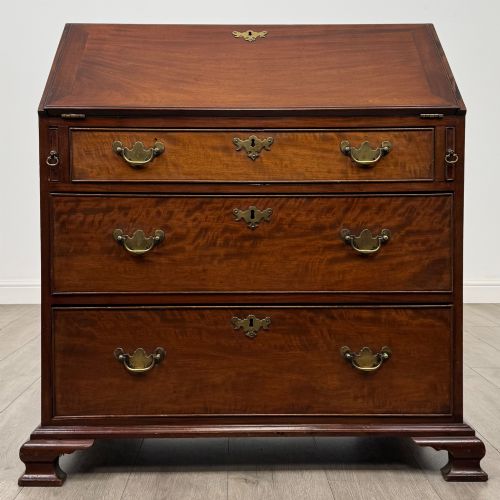
Brass hardware, such as swan neck handles and escutcheons, completes the construction, fastening functional components to the timber housing. The structural weight and grain quality dictate the enduring stability of each bureau.
Listings feature periods spanning from early Georgian and George II through to later Regency, William IV, and twentieth-century revival pieces.
Distinctions in quality
The excellence of a bureau often rests upon the choice of timber and the natural figure of the mahogany used across the main surfaces. Pieces featuring highly figured wood or well-matched flame mahogany veneers demonstrate greater consideration by the original maker.
The intricacy and preservation of the fitted interior also separate standard pieces from superior examples. Elaborate pigeonholes, secret compartments, and finely constructed small drawers indicate a higher tier of craftsmanship.
Proportion and foot design influence the overall harmony of the piece, with diminutive or exceptionally slender examples showing balanced architectural scaling. Untouched surfaces retaining warm natural colour and original hardware hold particular regard.
The Georgian Mahogany Slant Front Bureau Glossary
- Slant front bureau
- A writing desk featuring a hinged sloping flap that drops forward to serve as a writing surface. This panel conceals an internal arrangement of small drawers and pigeonholes.
- Bureau bookcase
- A dual-purpose piece combining a lower slant front desk with an upper shelving or cabinet section enclosed by doors. It provides both workspace and storage for books or display items.
- Bracket feet
- Simple, foot supports that extend outward at the lower corners of the cabinet, characteristic of eighteenth-century case furniture. They elevate the body cleanly from the floor.
- Figured mahogany
- Timber exhibiting attractive, rippled, or flame-like grain patterns caused by irregular growth. Cabinet makers reserved these choice sections for prominent exterior surfaces.
- Escutcheon
- A protective metal plate surrounding a keyhole, usually cast in brass. It prevents the wood surrounding the lock from sustaining wear during daily use.
Georgian Mahogany Slant Front Bureau: Frequently Asked Questions
What is a slant front bureau?
A slant front bureau is a compact writing desk featuring a hinged writing flap that angles downward to provide a flat surface for correspondence. When closed, the sloping lid protects the internal arrangement of small compartments and papers from dust.
These pieces were standard domestic furnishings in the eighteenth century, offering private storage in a footprint smaller than a traditional partners desk.
How do I distinguish George II from George III pieces?
George II pieces often display heavier proportions and dense Cuban mahogany, reflecting the mid-eighteenth-century preference for robust construction and dark timber tones. Hardware and internal drawer arrangements tend to follow earlier, more restrained architectural lines.
George III items frequently introduce lighter woods, satinwood inlay, and more slender bracket feet as cabinet making styles evolved toward neoclassical elegance later in the century.
Were these used primarily for writing?
These desks served as the central household station for managing correspondence, household accounts, and personal records before the widespread adoption of modern office furniture. The fitted interior allowed owners to organise letters, receipts, and writing implements securely.
The drop-down flap provided an instant writing desk that could be locked shut when not in use, keeping private documents out of sight.
How should I care for a mahogany bureau?
Maintain mahogany furniture by keeping it away from direct sunlight and sudden temperature changes, which can cause the timber and veneers to dry out or crack. Regular dusting with a soft, dry cloth preserves the finish without requiring heavy polishes.
Apply a microcrystalline wax occasionally to nourish the wood surface and protect the antique finish from moisture and handling wear.