

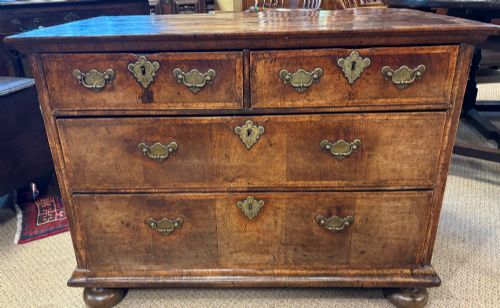
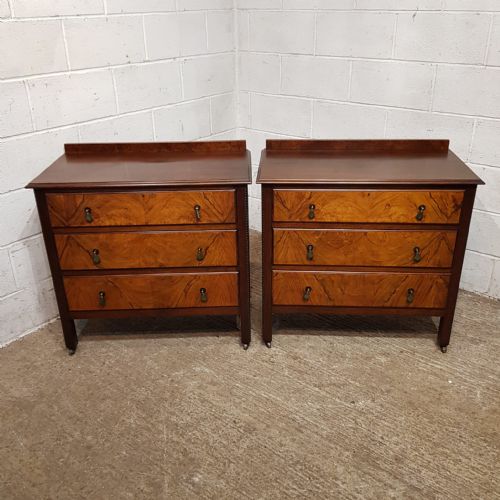
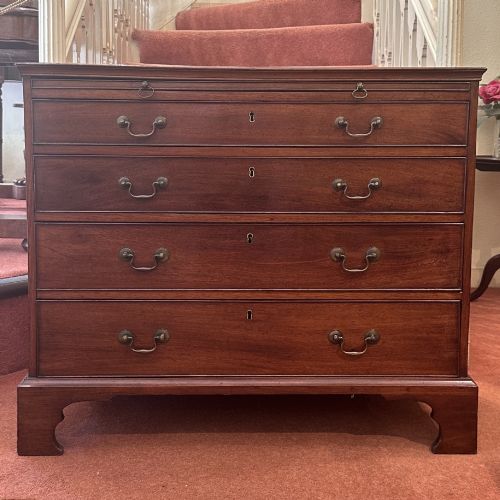

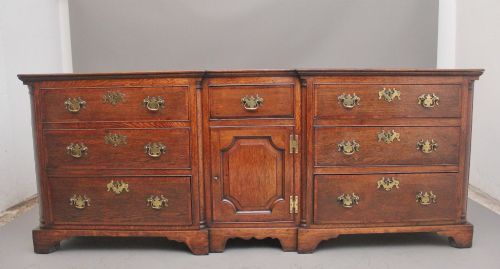


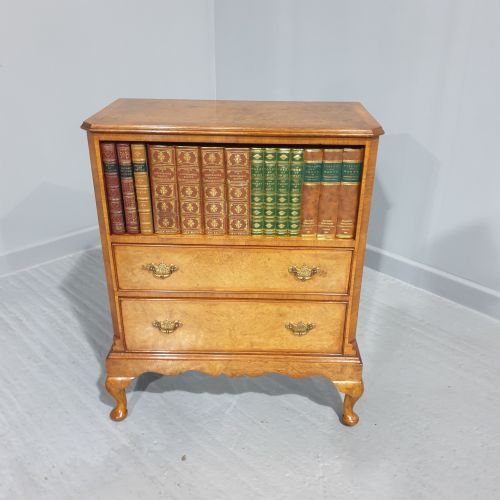
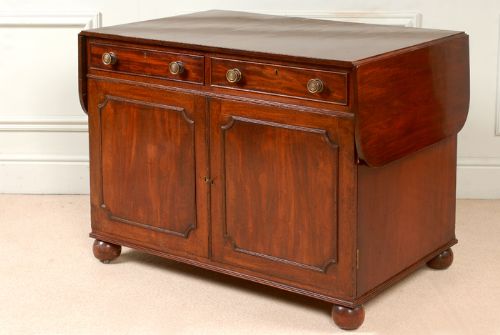
Georgian Low Chest Drawers
When you search for georgian low chest drawers, you are looking for compact, timber-built storage furniture designed with modest proportions and deep surface utility.
Georgian Low Chest Drawers
A georgian low chest drawers sits lower to the floor than standard tallboys and upright chests, offering a comfortable surface height that frequently doubles as a dressing top or side table.
The pieces appearing here span the eighteenth century through to later revival periods, encompassing compact bachelor chests fitted with brushing slides, low mule chests, and lowboy dressing tables.
Makers constructed these examples primarily from native oak and imported mahogany or walnut, incorporating small proportions to suit domestic chambers where vertical space was at a premium.
How they were made
Cabinetmakers constructed carcases using solid mahogany, oak, or walnut, frequently selecting figured burr walnut veneers for decorative drawer fronts and top surfaces.
Joiners utilised traditional dovetail joints to secure drawer corners, pairing these with brass drop handles, ring pulls, and escutcheons fixed to the timber.
Some workshops applied paint directly to pine or incorporated inlaid details, while others left the timber polished to highlight the natural grain of the wood.
Georgian Low Chest Drawers Retail Price Guide 2026
Typical asking prices for georgian low chest drawers among the pieces listed under this phrase on Sellingantiques today, from the lower quarter to the upper quarter. They describe what is for sale here now, not the wider market.
The inventory includes press cupboards, sideboards, dressers, linen presses, side tables, and dressing tables alongside standard drawer chests.
What varies in quality
The standard of a georgian low chest drawers rests on the selection of timber, where tightly figured mahogany or matched burr walnut veneer denotes a finer commission than plain secondary woods.
Construction details distinguish workshop standards, visible in the precision of hand-cut dovetails on drawer linings and the survival of original brass hardware rather than later replacements.
Gillows Of Lancaster
The Georgian Low Chest Drawers Glossary
- Brushing slide
- A pull-out shelf integrated above the top drawer, traditionally utilised for folding linen or writing correspondence.
- Lowboy
- A small dressing table or side table featuring drawers beneath the work surface, supported on slender legs.
- Mule chest
- A storage chest combining a blanket box compartment in the lower section with one or two external drawers beneath.
- Dovetail
- A traditional interlocking joint used by cabinetmakers to fasten drawer corners securely without relying on metal fasteners.
- Escutcheon
- A protective brass plate fitted around a keyhole to prevent the timber from wearing around the lock.
Georgian Low Chest Drawers: Frequently Asked Questions
What is a low chest of drawers?
A low chest of drawers is a compact storage item built with a reduced height, making the top surface easily reachable for daily use.
These pieces typically provide several rows of timber drawers while maintaining a low profile within a bedroom or hallway.
How do I spot a Gillows piece?
Pieces attributed to Gillows often display specific construction hallmarks, such as particular drawer linings, stamped signatures, or distinctive brass hardware.
Archival records and stylistic traits link certain straight-front and painted mahogany pieces directly to their Lancaster workshops.
Where were low chests used?
Original owners placed these low chests in bedchambers and dressing rooms where vertical storage was impractical.
The surface served various daily tasks, from holding washing basins to functioning as a writing space.
What woods were used?
Cabinetmakers utilised native British timbers such as oak alongside imported hardwoods like mahogany and walnut.
Makers also employed pine for secondary framework and applied burr walnut veneers to decorative surfaces.