


Georgian Low Chair
A georgian low chair brings sturdy country craftsmanship and low-slung comfort into a room through traditional English seating forms.
Georgian Low Chair
When you search for a georgian low chair, you encounter a variety of low-slung seating forms rooted in the eighteenth and nineteenth centuries. The evidence shows these pieces span regional country designs, Windsor armchairs, slipper chairs, and low stick-back armchairs originating from periods including the Georgian era, the nineteenth century, and Edwardian revivals.
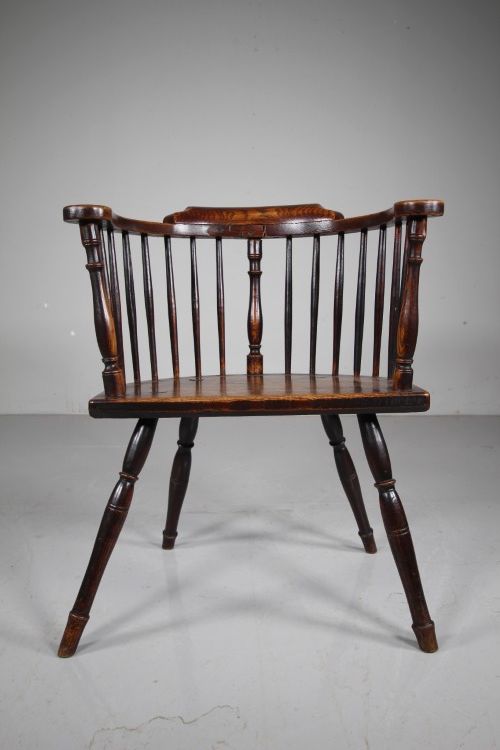
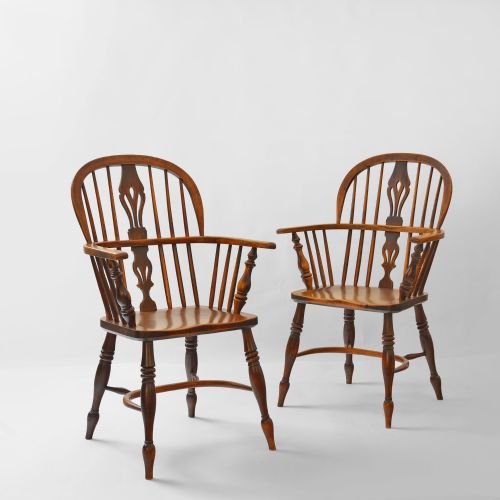
The most frequent pieces met on this page are low-back Windsor armchairs constructed from timber combinations like ash and elm, alongside yew wood variants featuring burr back splats. These sturdy country items sit alongside occasional mahogany slipper chairs and George IV examples.
The styles recorded range from English country and Georgian country to Queen Anne and Regency interpretations. Buyers find both single armchairs and pairs or sets of low chairs suited to fireside or parlour placement.
How they were made
Makers utilised native timbers, predominantly pairing ash for structural spindles or legs with elm for solid, comfortable seat planks. Yew wood also appears frequently, often chosen for its rich grain and utilised in low hoop-back Windsor forms alongside burr walnut and mahogany.
Construction techniques rely on traditional joinery, turning, and stick-back framing where spindles lock into sculpted wooden seats. Brass fittings or upholstery in fabric occasionally complete pieces like slipper chairs and nursery chairs.
Listings show a strong presence of nineteenth-century yew and elm Windsor chairs alongside eighteenth-century Georgian country examples.
What varies in quality
The character of the timber grain and the depth of the natural patina dictate the visual standing of each piece. Yew wood examples with pronounced burr back splats or rich figuring occupy a distinct tier from plainer utilitarian seating.
Design sophistication also separates items, ranging from simple country stick-back forms to refined fiddle backs and pieces displaying careful turning on legs and arm supports.
Rockley·Whytock and Reid·Gillows·Waring and Gillow
The Georgian Low Chair Glossary
- Windsor chair
- A wooden chair constructed with a solid sculpted seat into which the back and legs are dowelled directly. These chairs often incorporate bentwood hoops and turned spindles.
- Low-back
- A chair configuration where the upper rail sits at a reduced height, typical of certain Windsor and country seating designed for warmth near a hearth.
- Slipper chair
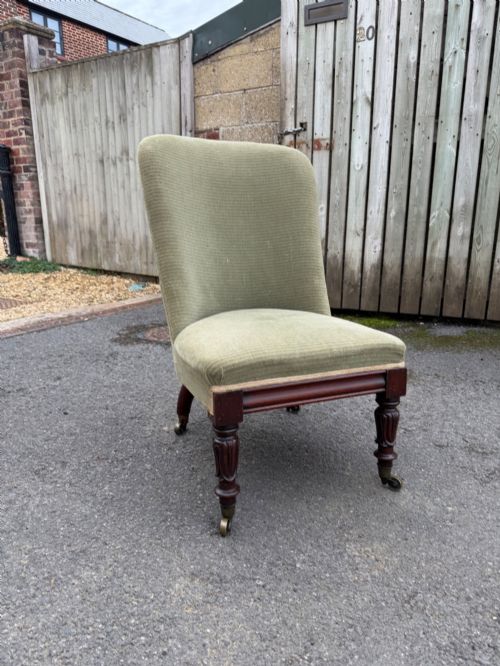
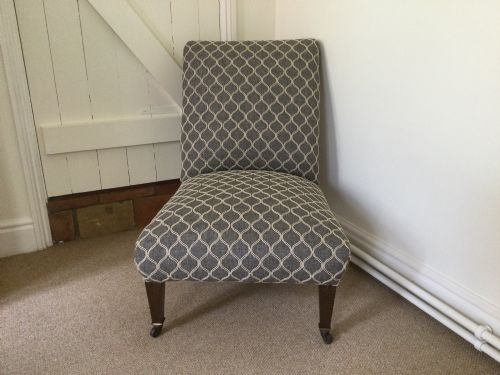
- An upholstered chair with low legs, historically used in bedrooms for changing shoes or attire. The evidence records examples in mahogany and fabric.
- Splat
- A central vertical slat of wood positioned within the back of a chair. Pieces in the archive feature burr back splats and fiddle backs.
- Patina
- The surface sheen and mellowing developed by wood over decades of handling and use. High-grade pieces often highlight this aged quality in their descriptions.
Georgian Low Chair: Frequently Asked Questions
Where were low chairs used originally?
These seating forms served primarily in domestic rooms such as bedrooms, nurseries, and parlours where lower seating heights offered specific functional advantages.
Slipper chairs accommodated dressing routines, while sturdy elm and ash low chairs provided fireside seating in country houses.
How do elm and yew differ in appearance?
Elm presents a pronounced, interlocking grain pattern that provided exceptional strength for solid chair seats without splitting. It typically shows a warm brown tone.
Yew wood displays striking figuring, often featuring rich reddish-brown hues and decorative burr formations that makers highlighted in Windsor chair backs.
Are these chairs strictly eighteenth century?
The listings demonstrate that while eighteenth-century originals exist, many examples date from the nineteenth century or reflect later Edwardian revivals of earlier styles.
Makers continued producing traditional country Windsor and low-back chair forms long after the initial Georgian period concluded.