


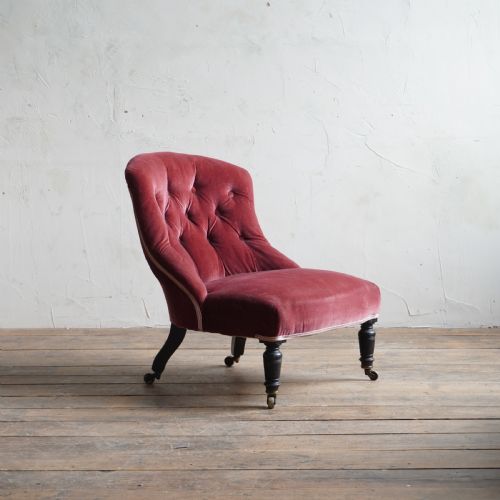

Brass Castor Slipper Chair
A brass castor slipper chair brings low, compact seating and effortless movement to a room, offering period character alongside practical comfort.
Brass Castor Slipper Chair
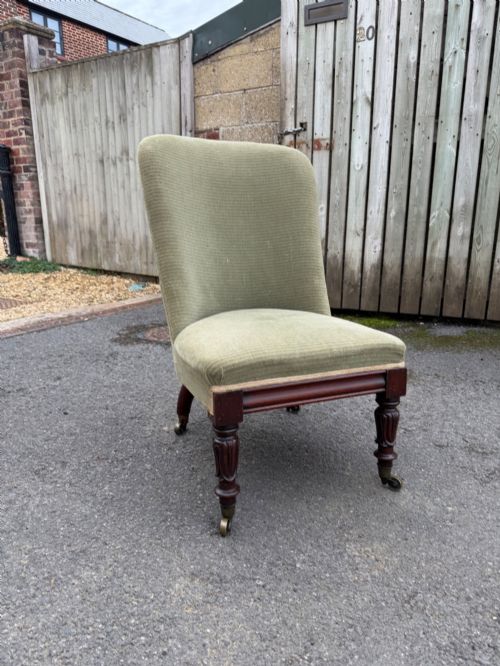
When you search for a brass castor slipper chair, you are looking at low-slung occasional and bedroom seating designed to sit close to the floor without arms, making them easy to move about a room. The examples found here span the Georgian, Regency, Victorian, and Edwardian periods, stretching from early nineteenth-century George IV pieces up to Art Deco designs.
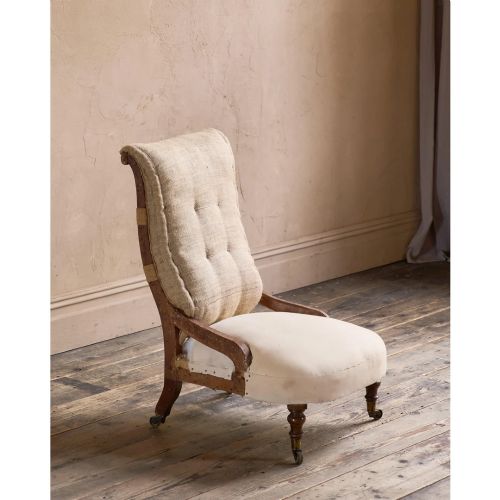
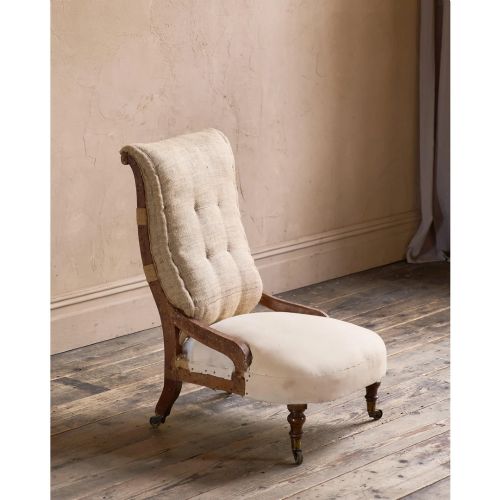
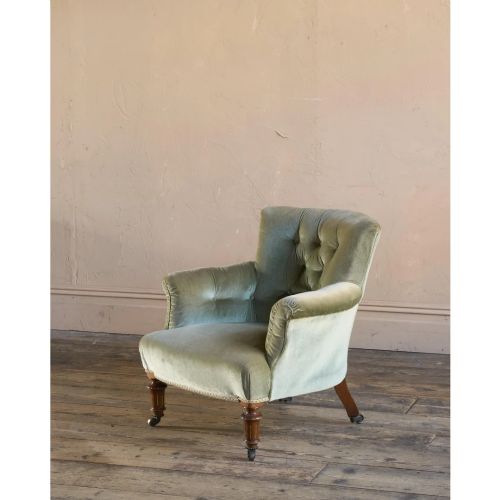
You will most commonly encounter Victorian and nineteenth-century iterations on this page, often upholstered in fabrics such as velvet, calico, or hessian, and supported on low wooden legs finished with brass castors. These seats take various forms including nursing chairs, bedroom chairs, and low salon chairs, all sharing that characteristic low profile.
The frames beneath the upholstery are typically constructed from mahogany, walnut, or other hardwoods, built to endure decades of use while maintaining a slender silhouette. Many retain their original proportions, though several have been newly recovered or updated with modern textiles while preserving their antique framework.
How they were made
The structural framework of a brass castor slipper chair relies upon dense hardwoods such as mahogany and walnut, shaped through traditional joinery to form the low seat rails and carved components. Makers utilised sturdy internal webbing and button backing to provide firm support before applying top layers of fabric.
Small metal wheels attached via sockets to the base of the wooden legs allow the heavy timber frame to glide smoothly across floorboards or carpets. These castors are cast in brass, offering both a durable rolling mechanism and a polished metallic accent against the dark timber.
Some nineteenth-century sitters were evidently fond of bright colour, as seen in the electric blue velvet upholstery on surviving Art Deco models.
What varies in quality
The distinction between ordinary and exceptional examples rests upon the integrity of the timber frame and the refinement of any carved detailing. Pieces attributed to notable makers display superior joinery, crisp carving, and well-balanced proportions that mark them out from standard workshop production.
Upholstery finish and the retention of original brass hardware also influence the character of each piece. While many retain later textiles, the quality of the underlying spring work and the solidity of the castor mountings determine how well the chair functions in daily use.
Howard and Sons·Gillows·Hindley and Sons
The Brass Castor Slipper Chair Glossary
- Castor
- A small wheel mounted on a swivel attached to the bottom of a furniture leg to allow easy movement. They are typically cast from brass on these pieces.
- Button back
- An upholstery style where depressions are formed in the padding by pulling twine tightly through the fabric and securing it with buttons. This creates a diamond pattern that keeps the internal stuffing evenly distributed.
- Slipper chair
- A low-seated upholstered chair originally designed for bedrooms to allow women assistance with footwear. They lack arms to accommodate bulky Victorian garments.
- Nursing chair
- A low armchair designed for feeding infants, closely related to the slipper chair in its short stature and absence of high armrests.
- Hessian
- A coarse woven fabric made from jute fibres, traditionally utilised as a hidden foundation layer beneath the decorative top upholstery.
Brass Castor Slipper Chair: Frequently Asked Questions
What is a brass castor slipper chair?
A low-seated piece of furniture designed without arms to sit close to the floor, mounted on small metal wheels for easy movement.
These chairs were traditionally used in bedrooms and dressing rooms, offering a compact and portable seating option across the nineteenth and early twentieth centuries.
How do I date a brass castor slipper chair?
Dating relies upon examining the timber species, leg turning, and overall silhouette against known historical styles such as Regency, Victorian, or Art Deco.
Makers' stamps or specific upholstery techniques can also narrow down the decade of production.
Were these chairs always used in bedrooms?
While many low chairs originated in bedrooms or dressing quarters for dressing and nursing, their compact proportions made them versatile enough for drawing rooms and parlours.
Today they function equally well as occasional seating in living spaces or studies.
Why do some chairs have castors while others do not?
Castors were added to make heavy hardwood frames easier to glide across thick carpets and heavy floor coverings without damaging the floorboards.
On low slipper chairs, the castors also slightly elevated the frame to a comfortable height for sitting and standing.