
Georgian Linen Cupboard
A georgian linen cupboard brings generous storage and rich timber grain to an interior, functioning as a practical wardrobe or press.
Georgian Linen Cupboard
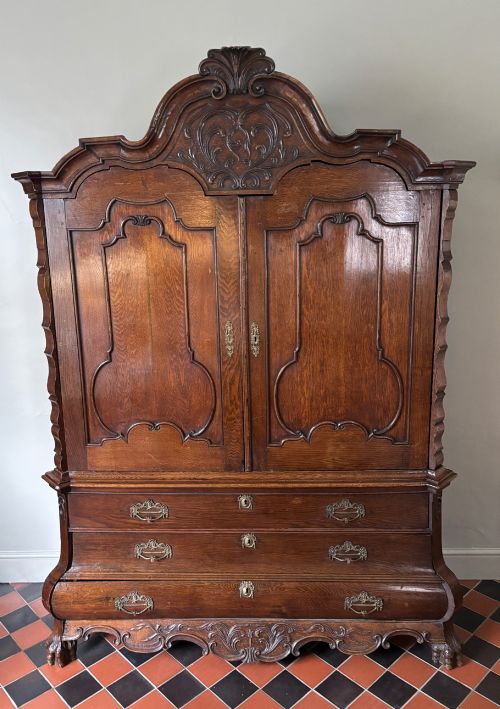
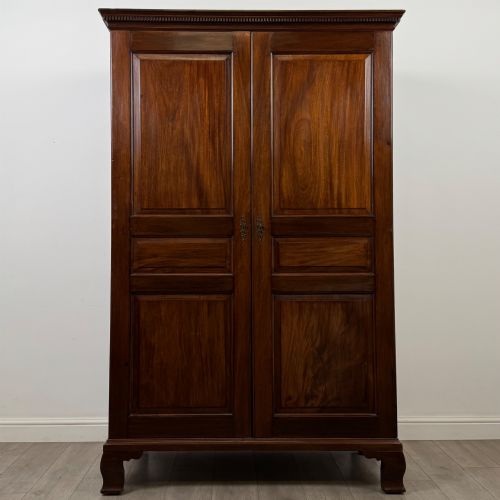
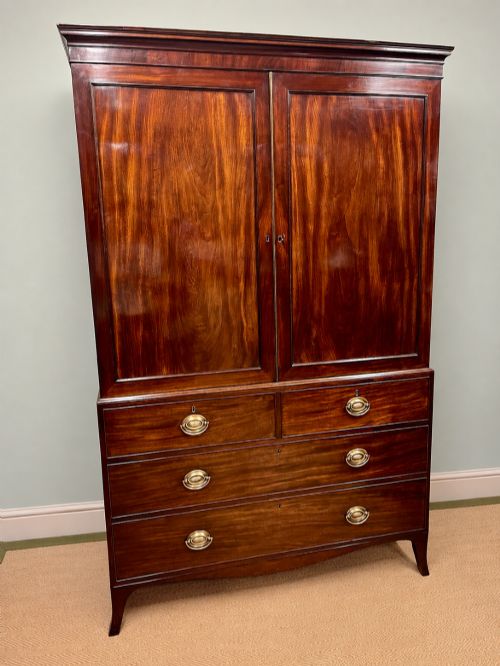
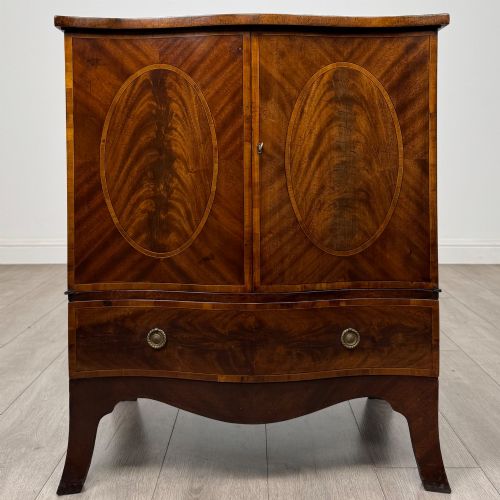
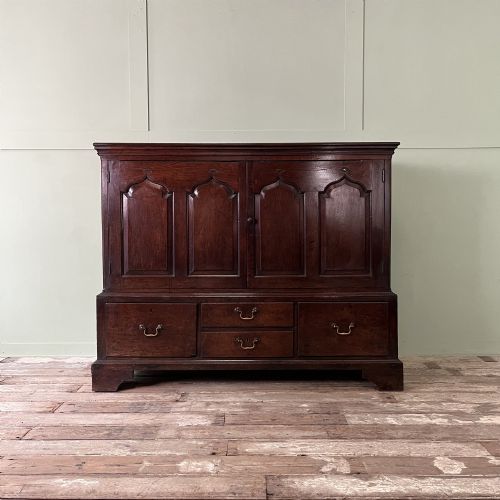
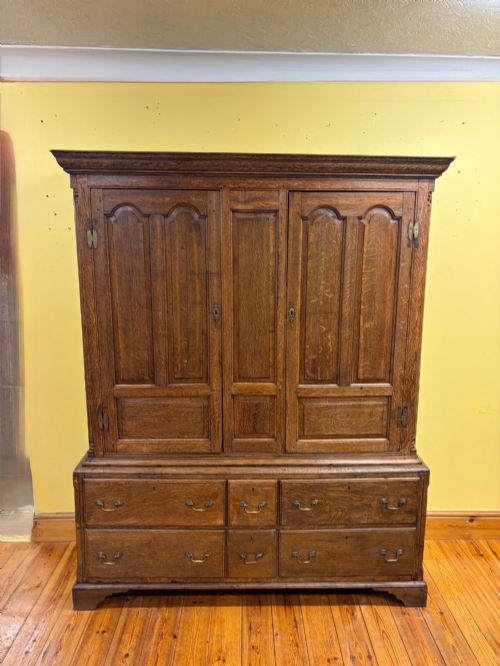
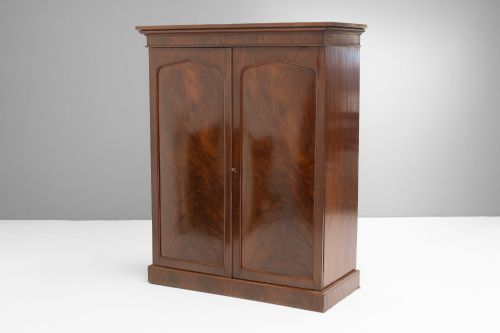
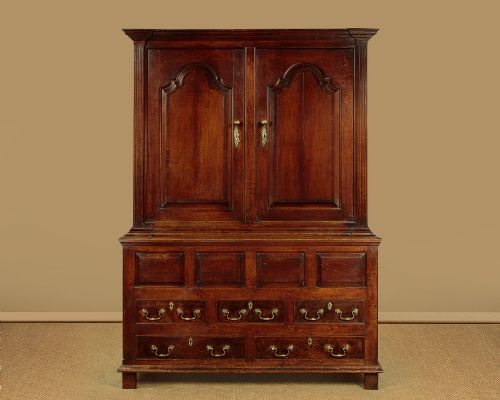
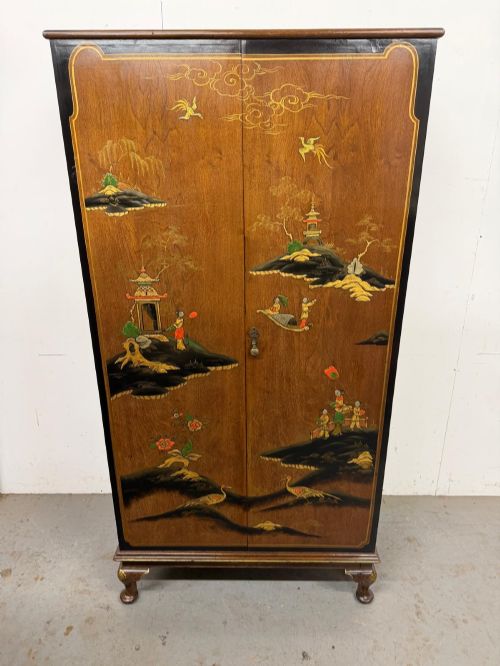
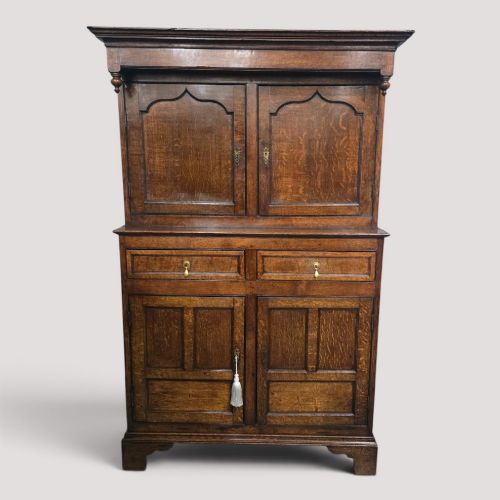
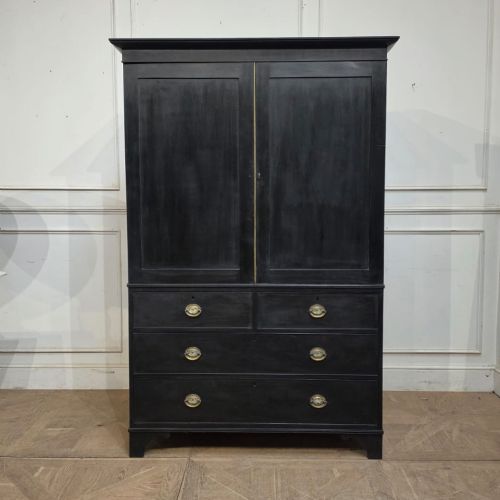
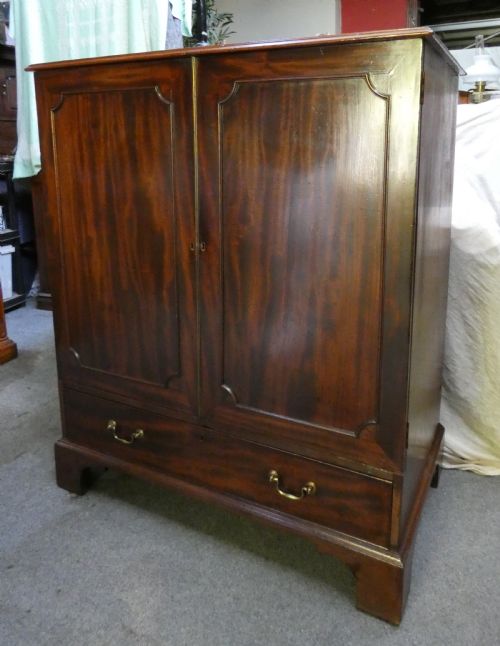
When searching for a georgian linen cupboard, a buyer encounters substantial timber furniture designed to store garments, household linens, and domestic provisions. These pieces span the eighteenth and nineteenth centuries, appearing in forms such as housekeepers' cupboards, press cupboards, and compactum wardrobes.
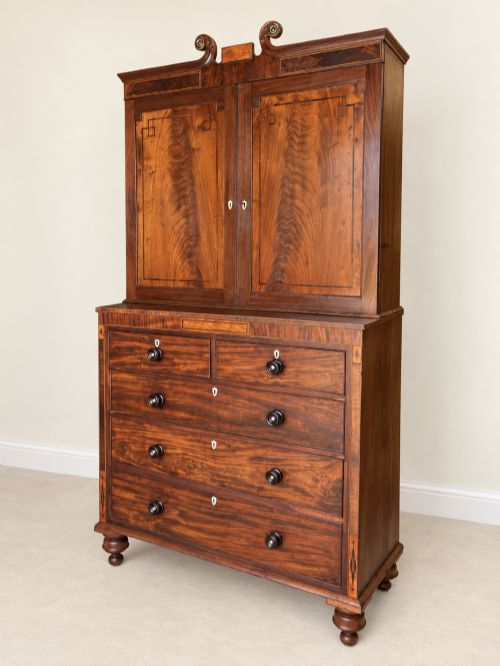
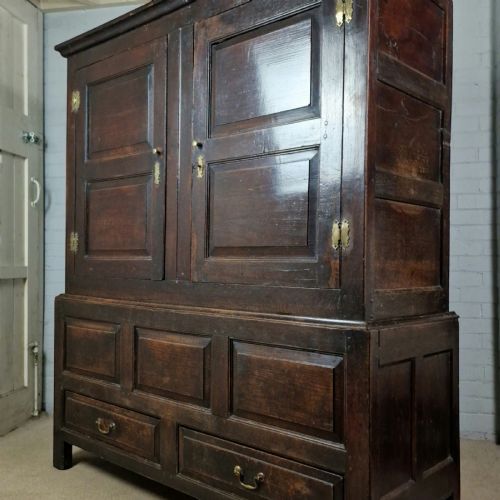
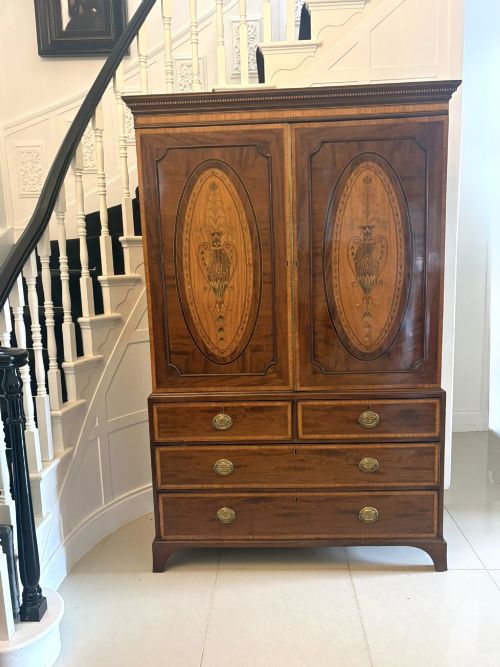
The version most commonly met on this page is constructed from figured mahogany or sturdy oak. Many examples combine upper storage enclosed by panelled doors with lower drawer sections, creating a commanding architectural presence within a room.
How they were made
Cabinet makers utilised solid timbers alongside finely cut veneers, applying flame mahogany and satinwood inlay to create decorative surfaces on primary display areas. Oak and pine served as structural and secondary woods, chosen for their durability in internal framing and drawer construction.
Joinery techniques included pegged mortise and tenon joints for early vernacular pieces, while later urban workshops employed precise dovetailing for drawers and hand-carved mouldings such as blind fretwork cornices.
Listings feature woods such as mahogany, oak, pine, and satinwood, alongside painted finishes and brass hardware.
What varies in quality
The calibre of a piece rests upon the selection of timber figures and the retention of original surface finishes, whether polished mahogany or period paint. Superior examples exhibit balanced proportions and crisp architectural detailing rather than heavy or clumsy alterations.
Internal configuration also distinguishes standard furniture from finer workshops, particularly where internal sliding trays, original brass hardware, and well-executed secondary drawer divisions remain intact.
Gillows
The Georgian Linen Cupboard Glossary
- Linen press
- A tall cabinet featuring upper doors enclosing sliding trays or shelves above a chest of base drawers, originally intended for storing folded textiles.
- Compactum
- A multi-functional wardrobe offering a combination of hanging space, shelves, and internal drawer sections within a single carcass.
- Blind fretwork
- Carved decorative patterning applied flat to a wooden surface, often seen along the cornices of eighteenth-century mahogany presses.
- Flame mahogany
- A veneer cut from the fork of the mahogany tree, displaying a distinctive undulating fire-like grain pattern prized by cabinet makers.
Georgian Linen Cupboard: Frequently Asked Questions
What is the difference between a linen press and a wardrobe?
A linen press traditionally contains interior sliding shelves or trays behind its upper doors for flat textiles, whereas a wardrobe provides vertical hanging space for garments.
Over time, many presses were converted into wardrobes by removing the internal trays to accommodate modern coat hangers.
Where were these cupboards placed in a home?
These large storage pieces were historically housed in bedrooms, dressing rooms, and upper hallways to store household linens and seasonal clothing.
In larger country houses, robust oak housekeepers' cupboards stood in service wings for domestic administration.
How do I distinguish oak pieces from mahogany examples?
Oak furniture tends to display a golden-brown tone with visible medullary rays, and is frequently associated with regional vernacular workshops and earlier eighteenth-century dates.
Mahogany and flame mahogany pieces exhibit deeper reddish-brown hues with smooth, dense grain patterns typical of refined urban cabinet making.
Are painted finishes period original?
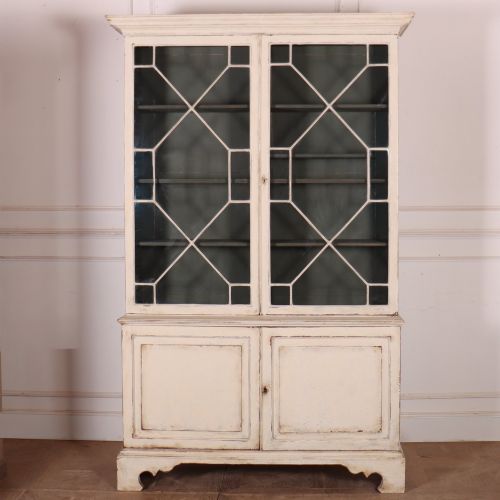
Some regional pine and softwood cupboards retain early or original paint finishes, particularly examples originating from Wales and northern English counties.
These painted surfaces provide a softer aesthetic compared to polished hardwoods and were often applied to protect simpler timbers.