


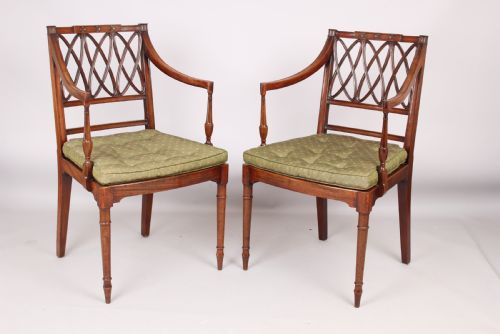


Georgian Lattice Back
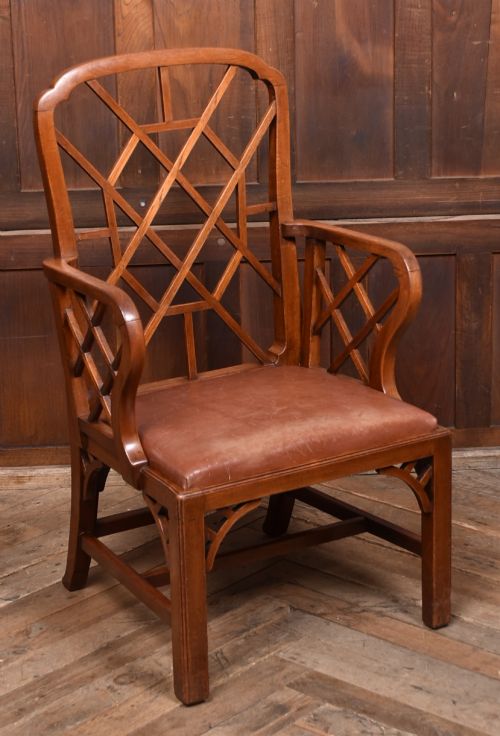
These georgian lattice back dining chairs and armchairs offer classic architectural timber work for the modern dining room.
Georgian Lattice Back
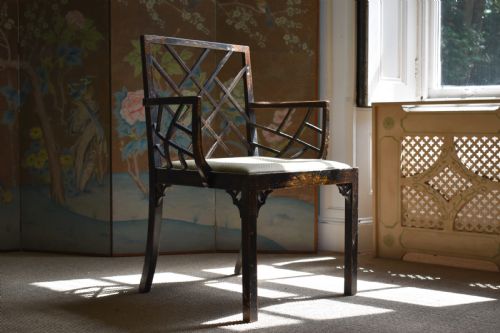
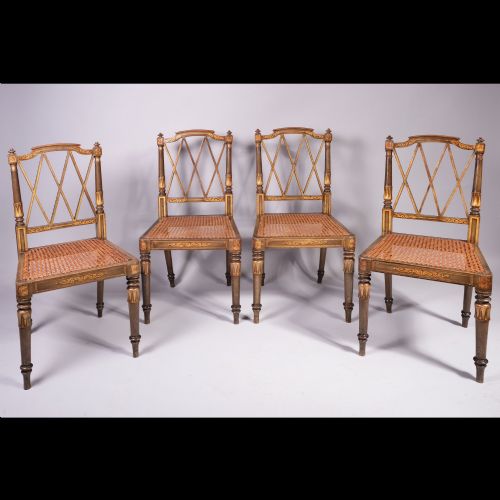
When you search for georgian lattice back, you find timber seating featuring open fretwork splats inspired by Chinese and Gothic designs. These dining chairs and armchairs range from authentic eighteenth-century examples to later revival pieces.
The version most commonly met on this page is the mahogany dining chair, often part of a larger set designed for formal dining rooms. Armchairs with matching open lattice designs frequently accompany these dining chair groups.
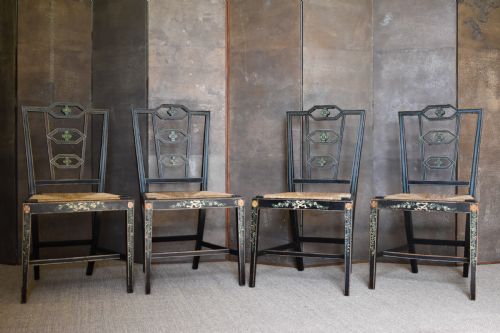
Makers from the Georgian era onwards adapted the lattice pattern across various styles, including Chippendale and Regency interpretations. Elm kitchen chairs and painted finishes also appear among these seating forms.
How they were made
Cabinetmakers worked primarily in solid mahogany, alongside elm and ebonised wood, shaping the timber to form interlocking geometric rails for the splats. Carpenters constructed the intricate open fretwork by hand, ensuring stability within the slender frame.
Finishers applied paint, gold leaf, and lacquer to specific decorative pieces, while standard dining chairs retained polished timber surfaces. Drop-in seats or fixed pads received upholstery in fabric, textile, or leather.
Some chairs carry the name Cockpen, borrowing a Scottish estate title for a distinctly Chinese pattern.
What varies in quality
The precision of the fretwork defines the standard of the piece, as sharp, clean intersections in the lattice require advanced joinery skills. Earlier periods display finer hand-carved detailing compared to later revival interpretations.
Timber selection and grain continuity across the splat and frame indicate the care taken during construction. Complete sets maintain higher consistency in proportion and timber choice than assembled groups.
Thomas Chippendale·Brights of Nettlebed
The Georgian Lattice Back Glossary
- Lattice
- An openwork structure of crisscrossed strips forming geometric patterns. This design creates the characteristic back splat of these chairs.
- Fretwork
- Ornamental perforated carving executed in wood. This technique produces the intricate fret designs seen on Chinese Chippendale chairs.
- Splat
- The vertical central strip down the back of a chair. Lattice versions use pierced woodwork rather than a solid board.
- Elm
- A durable hardwood with an interlocked grain used for traditional seating. This timber provides strength in country dining chairs.
- Ebonised
- Wood finished to resemble ebony through staining or painting. This dark surface appears on specific decorative seating forms.
- Cockpen
- A Chinese-inspired lattice design featuring intersecting diagonal wooden members. This pattern appears frequently on armchairs from the period.
Georgian Lattice Back: Frequently Asked Questions
Are these chairs comfortable for dining?
These dining chairs and armchairs provide upright support suited for formal dining tables. The open back design supports the posture while remaining visually light in the room.
Upholstered drop-in seats add cushioning to the wooden frames, using materials such as leather, fabric, or textile.
How do I date a lattice back chair?
Dating relies on examining the timber species, joinery techniques, and stylistic markers such as leg shapes and stretcher arrangements. Georgian originals exhibit hand-carved details and period timbers.
Revival pieces from the nineteenth and twentieth centuries often show standardised machine cutting and different construction methods beneath the seat frame.
How do I care for antique mahogany chairs?
Maintain antique mahogany chairs by keeping them away from direct heat sources and strong sunlight to prevent timber shrinkage. Regular dusting with a dry cloth preserves the polished surface.
Leather and fabric upholstery requires appropriate specialist cleaning according to the specific textile material used on the drop-in pad.