



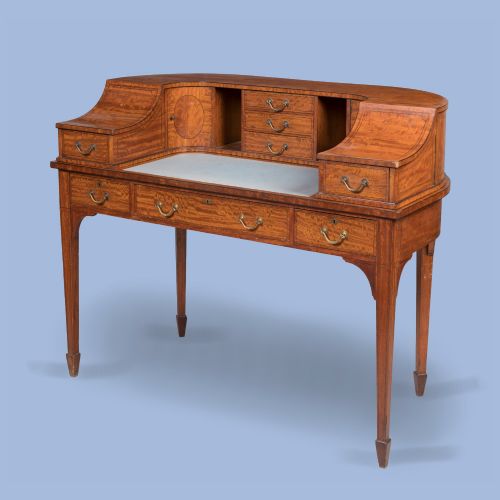


Georgian Ladies Bureau
A georgian ladies bureau offers refined compact writing space, combining elegant cabinetwork with fitted compartments designed for personal correspondence.
Georgian Ladies Bureau
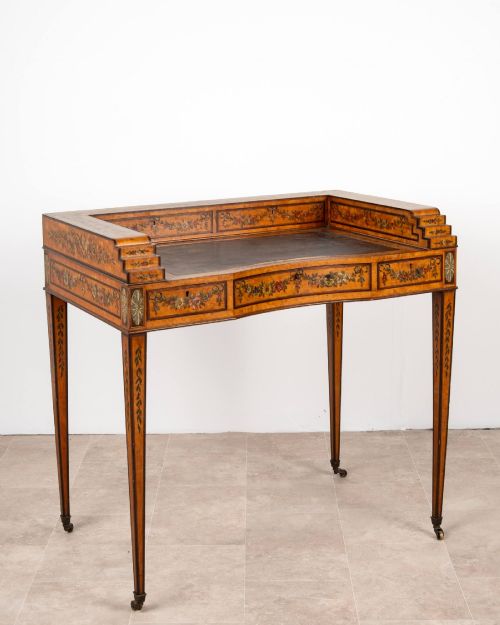
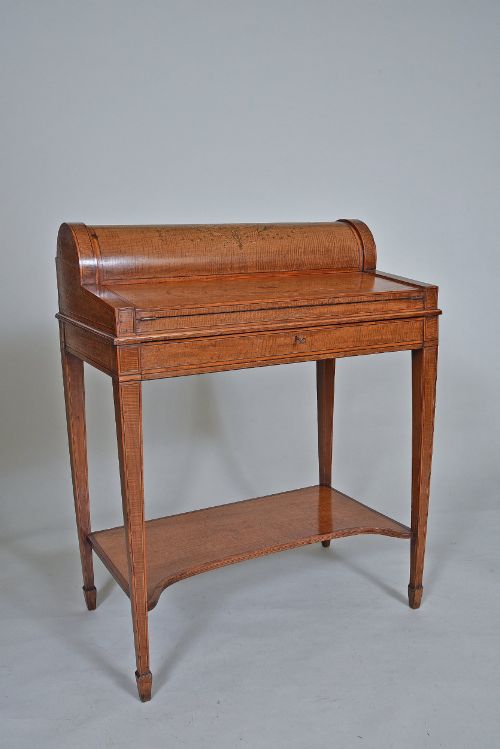
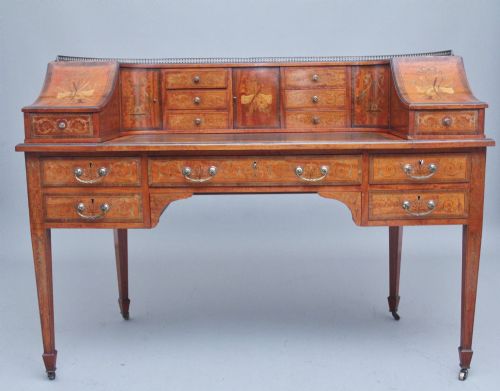
The georgian ladies bureau encompasses a diverse group of refined writing furniture, including delicately proportioned bonheur du jour pieces, compact bureau desks on stands, and sophisticated Carlton House desks. These sophisticated items provide private storage alongside writing surfaces tailored for personal correspondence.
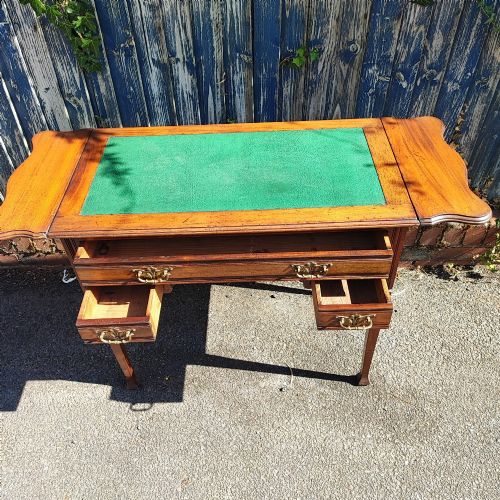
Pieces originating from the eighteenth century appear alongside later nineteenth-century revivals, particularly Sheraton Revival interpretations that mirror earlier Georgian elegance. Buyers encounter various forms such as kidney-shaped writing tables and tambour desks alongside traditional drop-front bureaux.
Mahogany and satinwood dominate the selection, frequently enhanced by intricate marquetry inlay, rosewood, burr walnut, and contrasting kingwood. Brass hardware and fitted leather writing surfaces complete the composition of these diminutive writing cabinets.
How they were made
Cabinetmakers utilised dense timbers like mahogany, rosewood, and walnut as structural bases, often applying fine satinwood veneers to exterior surfaces. Marquetry inlay added geometric or floral ornamentation across the writing slopes and cabinet doors.
Interior compartments required precise joinery to construct small drawers, pigeonholes, and sliding panels within confined spaces. Leather inserts were carefully trimmed and inset into writing surfaces to provide a durable medium for penmanship.
Georgian Ladies Bureau Retail Price Guide 2026
Typical asking prices for georgian ladies bureau among the pieces listed under this phrase on Sellingantiques today, from the lower quarter to the upper quarter. They describe what is for sale here now, not the wider market.
Listings feature eighteenth-century pieces alongside nineteenth-century Sheraton Revival examples, constructed in mahogany, satinwood, rosewood, and burr walnut.
What varies in quality
The sophistication of the timber selection dictates the visual hierarchy of these desks, where figured mahogany and meticulously matched satinwood veneers distinguish finer examples. The crispness of marquetry inlay and the subtlety of contrasting stringing separate standard production from master craftsmanship.
Internal complexity reflects the maker's dedication, evident in smoothly operating tambour slides, well-fitted miniature drawers, and original brass hardware. Structural integrity relies upon traditional joinery that maintains rigid stability despite the delicate proportions of these writing cabinets.
The Georgian Ladies Bureau Glossary
- Bonheur du jour
- A small, light ladies writing desk featuring a tiered cabinet superstructure with drawers and pigeonholes above the main writing surface. This French form gained popularity in England during the late eighteenth century.
- Carlton House desk
- A U-shaped ladies writing desk featuring a stepped superstructure fitted with small drawers, cupboards, and pigeonholes curving around the back of the writing surface. The configuration offers exceptional compartment storage within a compact footprint.
- Tambour
- A flexible shutter formed of narrow vertical strips of wood glued to a canvas backing, allowing it to slide smoothly in tracks to conceal desk interiors. This mechanism provides secure closure for fitted compartments without requiring heavy doors.
- Marquetry inlay
- Decorative patterns created by fitting contrasting veneers into cut-outs within a solid wood base to form floral or geometric motifs. Craftsmen utilised diverse exotic timbers to achieve tonal shading across the design.
- Bureau on stand
- A writing cabinet featuring a drop-front writing flap positioned above an open or drawer-fitted supporting frame. This elevated form lightened the visual weight of heavy storage furniture.
Georgian Ladies Bureau: Frequently Asked Questions
What is a bonheur du jour?
A bonheur du jour is a small, light ladies desk featuring a raised cabinet superstructure above the writing surface. These pieces provide compact storage for writing materials while maintaining an elegant, decorative presence in a room.
Cabinetmakers designed them specifically for personal correspondence, incorporating numerous small drawers and pigeonholes within the upper tier. Their diminutive scale allows them to function effectively as occasional furniture rather than primary office desks.
Where were these desks used?
These writing desks were typically housed in private withdrawing rooms, boudoirs, or intimate drawing rooms rather than formal libraries. They served as private spaces where women managed personal correspondence, kept journals, and stored valuable papers.
Because of their decorative qualities and compact dimensions, they functioned as prominent display pieces as well as practical writing furniture. Their placement reflected the refined domestic routines of the period.
How do I distinguish eighteenth-century pieces from later revivals?
Distinguishing period pieces from later revivals requires careful examination of timber ageing, construction techniques, and secondary woods used in internal framing. Eighteenth-century examples display hand-cut joinery and natural patination developed through extended use.
Sheraton Revival pieces from the nineteenth and early twentieth centuries often utilise machine-assisted construction methods and standardised hardware alongside revived classical motifs. Comparing the execution of marquetry and veneer matching helps clarify the era of manufacture.