
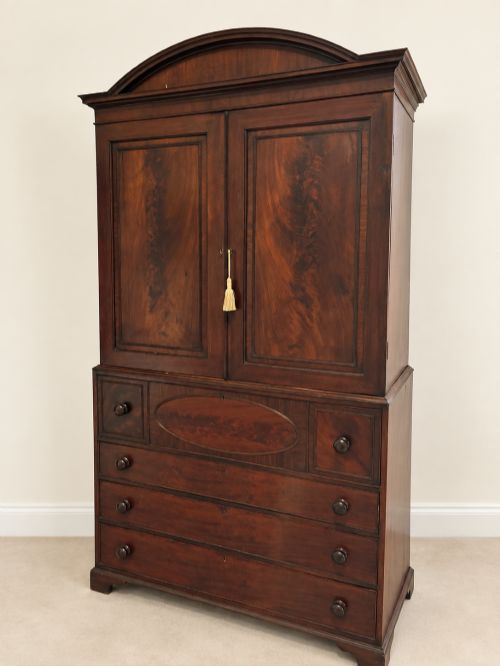
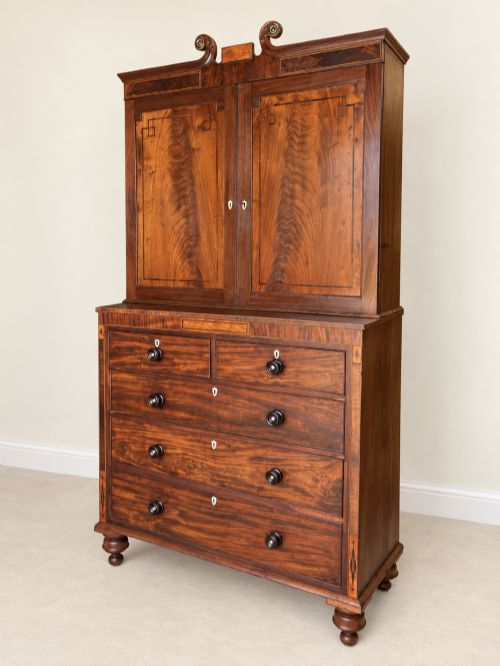
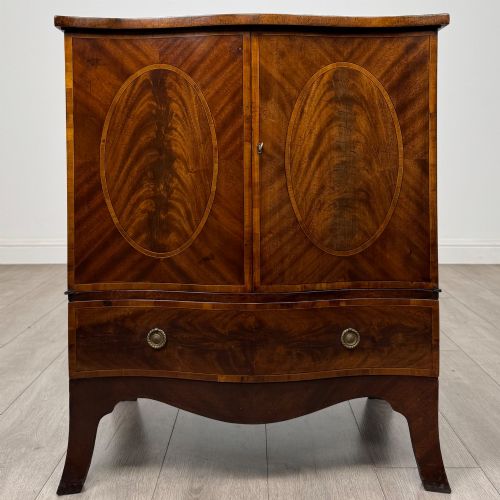
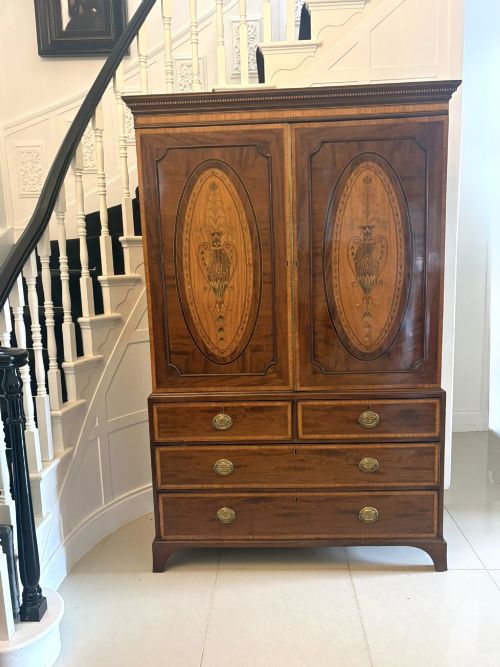


Georgian Inlaid Linen Press
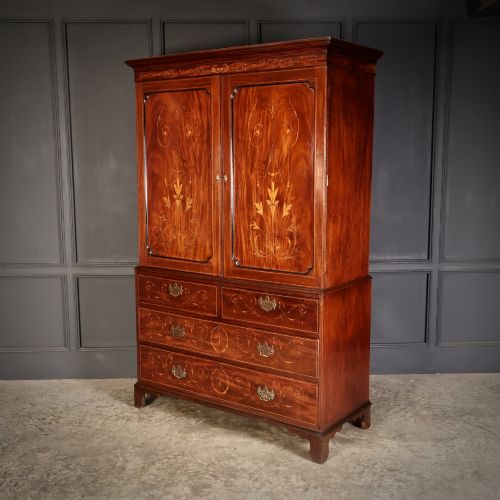
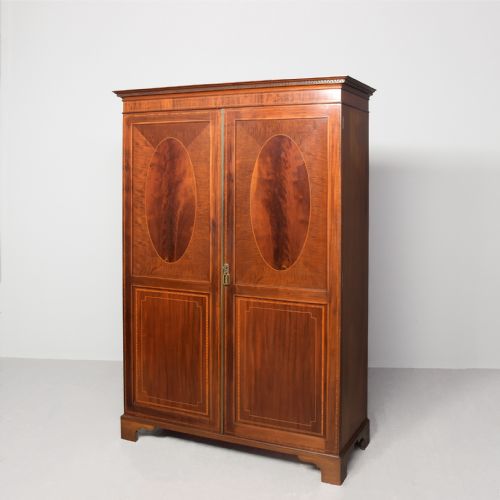
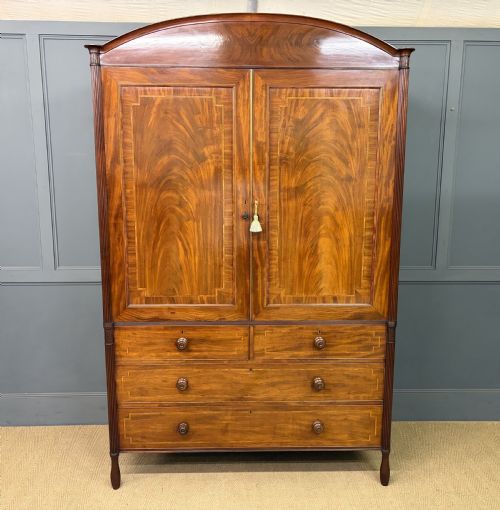
A georgian inlaid linen press brings monumental presence and rich timber figure into a bedroom.
Georgian Inlaid Linen Press
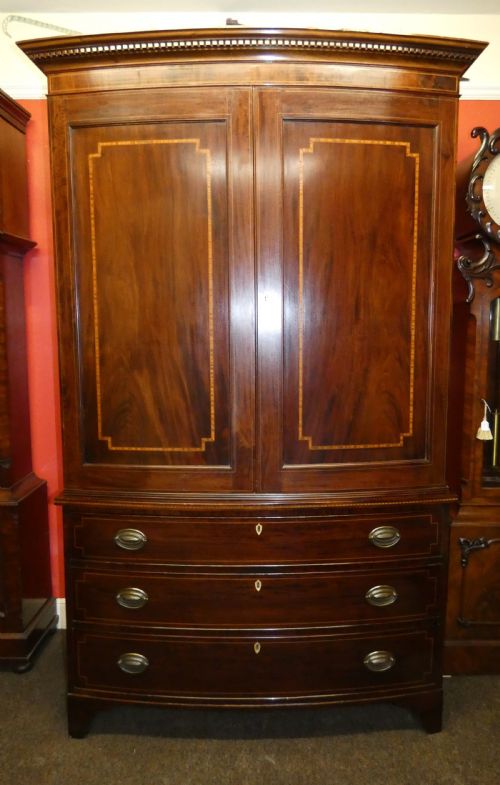
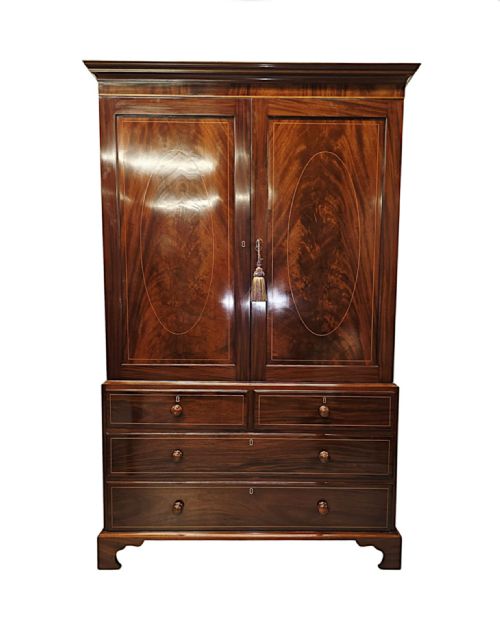
A georgian inlaid linen press is a substantial two-part storage piece, combining sliding shelves or trays enclosed by upper doors above a chest of drawers. You will most frequently meet mahogany examples from the eighteenth and nineteenth centuries, often banded with contrasting timbers.
The form developed to store folded household linens and garments before fitted wardrobes became standard. Surviving pieces range from formal George III constructions with classical stringing to later revival interpretations and Regency variations.
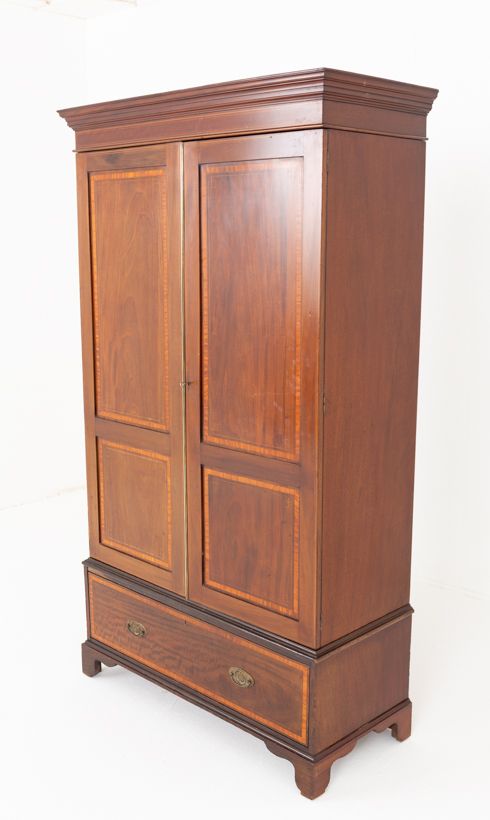
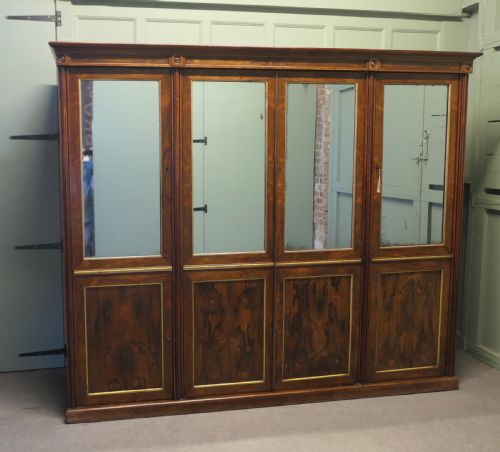
Many items in this category also appear under alternative descriptions such as gentleman's wardrobes, compactums or housekeepers' cupboards. Despite these overlapping names, the defining architectural characteristic remains the upper linen section sitting squarely atop a drawer base.
How they were made
Cabinet makers built these pieces using solid timbers and carefully selected veneers over supportive secondary woods. Flame mahogany and figured Cuban mahogany provide the primary visual expanses, chosen for their rippled grain patterns and rich depth of colour.
Decorative surfaces rely on precise inlay and banding techniques utilising satinwood, boxwood, ebony and walnut. Craftsmen set these contrasting woods into geometric lines, oval paterae or delicate fan motifs around the door panels and drawer fronts.
Brass hardware, including escutcheons, drop handles and working locks, secures the doors and drawers. Upper cupboard interiors commonly contain sliding timber trays designed to keep textiles organised.
Listings feature pieces from the Georgian, Regency, and Edwardian periods, constructed primarily in mahogany, satinwood, and walnut.
What varies in quality
The primary distinction lies in the choice and matching of timber veneers across the main faces. Superior examples display symmetrical flame mahogany figures carefully balanced across double doors, while lesser pieces utilise plain timber boards.
The complexity and execution of the inlay separate standard cabinet work from exceptional production. Finely cut boxwood stringing, crisp satinwood banding and detailed marquetry require advanced joinery skill compared to simple painted lines or basic edge borders.
Proportion and architectural detailing dictate the visual success of the piece. Well-balanced cornices, elegant bracket or plinth feet, and original brass fittings elevate the stature of the cabinetry.
James Shoolbred
The Georgian Inlaid Linen Press Glossary
- Linen press
- A tall storage cabinet featuring sliding interior trays for textiles in the upper section and drawers below. This form evolved specifically for household linens before modern wardrobe hanging space became common.
- Flame mahogany
- A highly figured wood veneer displaying characteristic flickering, flame-like patterns caused by intersecting grain growth. Cabinet makers reserved this premium material for prominent exterior door and drawer faces.
- Stringing
- A narrow strip of contrasting light or dark wood inlaid into grooves on a cabinet surface. This linear detail defines panel borders and outlines geometric shapes.
- Compendium
- A multi-purpose storage piece combining hanging space, drawers and shelving within one carcass. These versatile items share lineage with traditional press cupboards.
- Patera
- A circular decorative motif carved or inlaid into furniture surfaces, often resembling a classical medallion or flowerhead. Craftsmen placed these elements centrally on friezes or corner panels.
Georgian Inlaid Linen Press: Frequently Asked Questions
What fits inside a linen press?
The upper section contains pull-out wooden trays originally designed for folded table linen, sheets and folded garments. The lower chest section provides deep drawer storage for bulky items and clothing.
Modern owners often remove selected upper trays to convert the top cavity into hanging space for longer garments. Alternatively, the internal depth accommodates folded knitwear, bedding and personal accessories.
How do I date a linen press?
Dating relies on architectural proportions, timber choice, and construction methods visible in the drawer linings and backboards. Earlier eighteenth-century pieces often feature oak linings and hand-cut dovetails, alongside classical bracket feet and architectural cornices.
Nineteenth-century examples frequently introduce wider proportions, flame mahogany veneers with satinwood banding, or plinth bases. Revival pieces from the late Victorian and Edwardian eras emulate these earlier Georgian forms while using machine-cut elements.
Are linen presses difficult to move?
These pieces are exceptionally heavy and almost universally constructed in two distinct sections. The upper cupboard lifts off the lower chest of drawers to make transport and room placement manageable.
Two people are essential for safe handling during relocation. Securing or removing internal sliding trays prevents shifting while the cabinet is tilted.
Where should I place a linen press?
A bedroom or dressing room provides the most natural setting, functioning effectively as a primary wardrobe for folded clothing and linens. High ceilings suit the impressive height and deep cornices of these tall cabinets.
Avoid positioning the timber against direct heat sources or in areas of extreme humidity to protect the antique veneers and prevent wood movement. Allow adequate clearance for the large doors to open fully.