




Georgian Hop Engraved Glass
Georgian hop engraved glass drinking vessels carry the rich texture of eighteenth-century brewing history straight into your hand.
Georgian Hop Engraved Glass
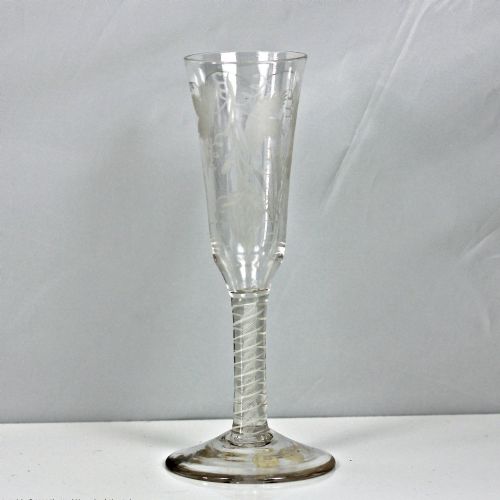
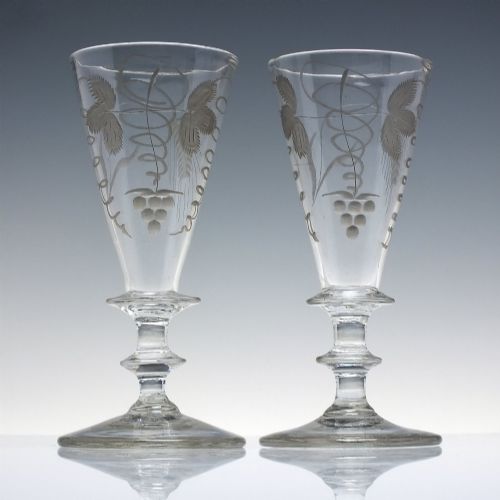
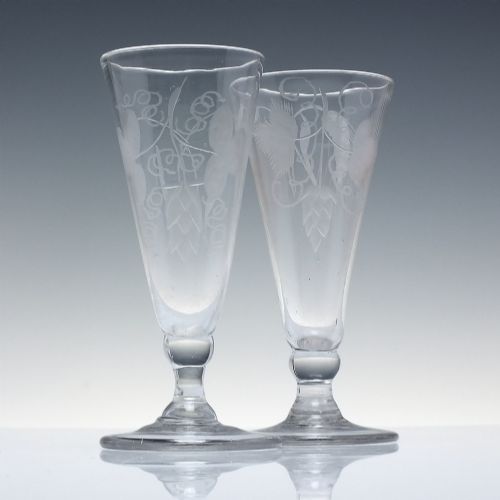
When you search for Georgian hop engraved glass, you find drinking vessels designed for ale, beer, and barley wine from the eighteenth century and the early nineteenth century. These drinking glasses and rummers often display delicate wheel-engraved motifs of hops and barley that reflect the agricultural pursuits of the period.
You are most likely to meet ale glasses, flutes, and large crystal serving rummers featuring plain stems, air twists, or facet cut stems. The evidence shows pieces spanning from the mid-eighteenth century up to later revivals, maintaining traditional English forms throughout.
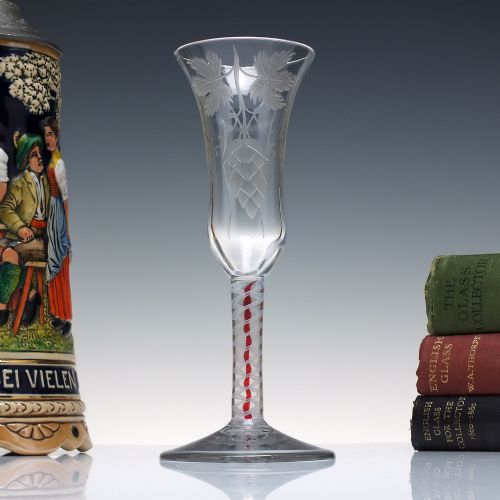
The objects vary from slender dwarf ale glasses to robust rummer vessels intended for heavy tavern or domestic use. Collectors encounter these drinking vessels in clear lead glass, flint glass, and occasionally with coloured twists or enamel details.
Materials and construction
These drinking vessels are fashioned from heavy lead glass, lead crystal, and clear flint glass that provide the necessary weight and clarity for detailed wheel engraving. Makers formed the stems using various techniques, producing plain stems alongside complex air twists and double series opaque twists.
Engravers applied the hop and barley motifs directly onto the surface using small copper wheels charged with abrasive grit, creating fine matte lines that contrast with the polished body of the glass. Facet cutting was also employed on stems and bowls to catch the light.
Georgian Hop Engraved Glass Retail Price Guide 2026
Typical asking prices for georgian hop engraved glass among the pieces listed under this phrase on Sellingantiques today, from the lower quarter to the upper quarter. They describe what is for sale here now, not the wider market.
Every engraved hop reminds us that eighteenth-century drinkers took their beer pairing as seriously as modern wine lovers.
Evaluating the standard
Quality rests upon the crispness of the wheel engraving and the proportional balance of the glass bowl, stem, and foot. A sharply defined hop and barley motif demonstrates superior craftsmanship from the glass cutter.
The optical purity of the lead crystal and the complexity of internal stem formations, such as multi-spiral air twists or coloured twists, elevate the piece. Greater skill in forming the vessel and finishing the rim marks out the finer examples.
The Georgian Hop Engraved Glass Glossary
- Rummer
- A large, sturdy drinking glass popular in the eighteenth and nineteenth centuries, often used for ale or wine. These vessels usually feature a short stem and a capacious bowl.
- Air Twist
- A decorative stem formation containing elongated threads of trapped air spiralling down the glass. Makers produced these by drawing out bubbles within the molten metal during shaping.
- Opaque Twist
- A stem enclosing fine white or coloured enamel glass threads twisted into spiral patterns. This technique required immense precision from the glassblower.
- Facet Cut
- Geometric planes ground and polished onto the surface of the glass. This treatment enhances sparkle and provides a tactile grip.
- Barley Wine
- A strong English ale traditionally served in specialised tall glasses. The hop and barley engraving directly references the ingredients of the beverage.
Georgian Hop Engraved Glass: Frequently Asked Questions
What is a rummer glass?
A rummer is a capacious drinking vessel with a short stem and a rounded bowl built for everyday toast and tavern use.
These heavy glass pieces often display the characteristic hop and barley wheel engraving found on ale flutes.
How do air twist stems differ?
Air twist stems contain spiralling threads of trapped air created inside the molten glass during the blowing process.
Makers manipulated these internal bubbles to form single, double, or multi-spiral patterns within the stem.
Why are hops and barley engraved?
The hop and barley motif celebrates the primary agricultural ingredients used in brewing traditional English ale and beer.
Engravers applied these natural symbols to drinking vessels to denote the specific contents intended for the glass.