





Georgian Ho Ho Bird Mirror
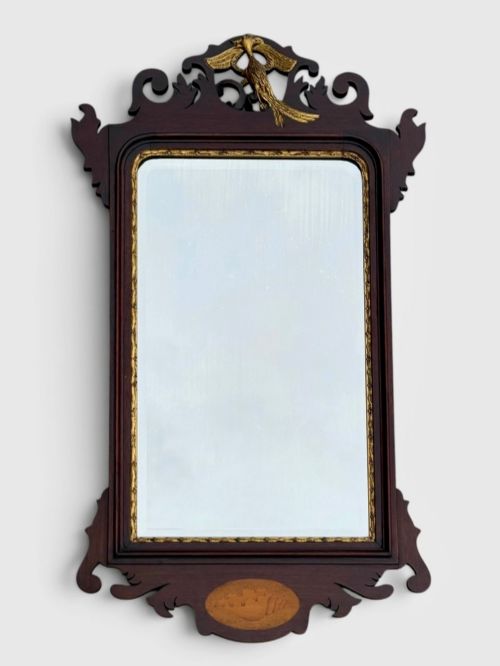
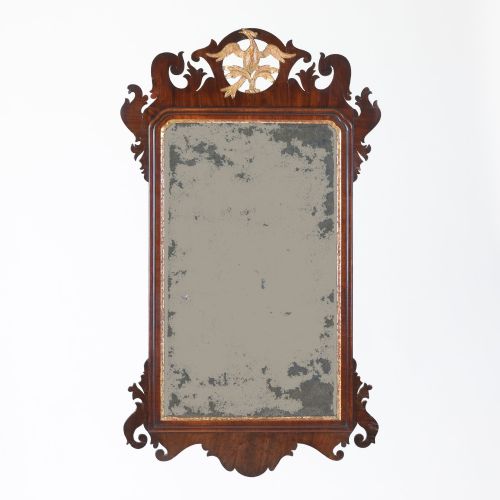
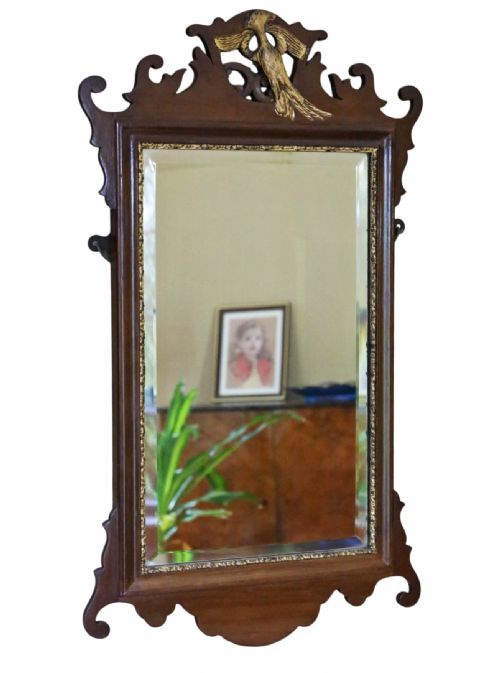
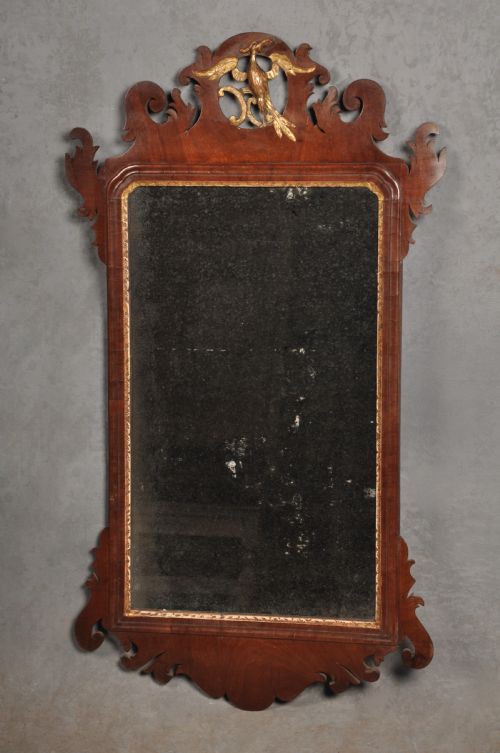
A georgian ho ho bird mirror brings the whimsy of the mid-eighteenth century into a room with its signature carved cresting.
Georgian Ho Ho Bird Mirror
When you look for a georgian ho ho bird mirror, you are searching for wall-hanging and pier glasses defined by a mythical Chinese-inspired bird perched at the top of the carved wooden frame. These pieces span authentic eighteenth-century examples from the Georgian and George III periods alongside later revivals from the nineteenth century and around nineteen hundred.
The form typically pairs a fret-cut silhouette with mahogany, walnut, or gilded surfaces, sometimes incorporating intricate side scrolls or additional animal details like squirrels. You will encounter both vertical wall mirrors and larger landscape formats, including Irish Rococo and Chippendale designs that showcase the bird within the cresting.
How they were made
Cabinetmakers constructed these frames using timber such as mahogany and walnut, employing fret-saws to cut intricate symmetrical patterns through the wood. Many pieces then received applications of gold leaf and gesso, or parcel-gilt highlights to accent the carved foliage and the distinctive ho ho bird crest.
The reflective plates themselves utilise traditional glass, ranging from early hand-finished mirror plates to later bevel-edged glass found in nineteenth-century and revival pieces. Joinery relied on pinned and glued corners to support the fretwork panels that frame the glass.
Listings feature pieces spanning the eighteenth century, the Georgian period, and nineteen hundred, utilising mahogany, giltwood, and gesso.
What varies in quality
The distinction between ordinary and exceptional examples lies in the crispness and depth of the carving on the ho ho bird and the surrounding foliage. Fretwork that retains sharp edges and fine relief work demonstrates superior craftsmanship compared to softer, more rounded cuts.
Materials and gilding also set pieces apart, with genuine gold leaf over gesso offering a warmer lustre than later metallic paints. The harmony of the proportions, particularly the balance between the cresting and the main glass plate, marks the work of a master workshop.
The Georgian Ho Ho Bird Mirror Glossary
- Ho ho bird
- A mythical Chinese phoenix-style creature adapted by European designers during the eighteenth century. It typically crowns the cresting of these mirrors with outstretched wings.
- Fret-cut
- A technique of piercing thin wood with a saw to create flat decorative patterns. It forms the distinctive pierced silhouette around the edge of the frame.
- Parcel-gilt
- A method where only specific raised portions of a wooden object are gilded with gold leaf, leaving the dark timber grain visible elsewhere. This highlights carved details against the wood.
- Pier glass
- A tall mirror designed specifically to hang on the wall between windows, often placed above a pier table. Many surviving examples follow this vertical format.
- Gesso
- A plaster-like mixture applied to wood surfaces as a smooth base for gilding. It allows craftsmen to model fine relief details before applying gold leaf.
- Rococo
- An ornate artistic style popular in the mid-eighteenth century characterised by asymmetrical scrolls, C-curves, and natural motifs. It heavily influenced Chippendale mirror designs.
Georgian Ho Ho Bird Mirror: Frequently Asked Questions
What is a ho ho bird?
A ho ho bird is a European eighteenth-century interpretation of a Chinese phoenix, used widely in decorative arts and furniture carving.
It typically sits atop the cresting of these mirrors with stylized plumage and wings.
How do I date a mirror?
Dating relies on examining the timber species, the construction of the backboards, and the manufacturing method of the glass plate.
Eighteenth-century examples often show hand-cut fretwork and period joinery, while revival pieces from nineteen hundred use later hardware and sharper machine cutting.
Where should I hang one?
These mirrors suit principal reception rooms, hallways, or above a fireplace mantel where their vertical proportions command attention.
They pair well with antique sideboards or console tables to reflect natural light across the space.
Are eighteenth and nineteenth-century pieces different?
Authentic eighteenth-century mirrors carry the tool marks and timber ageing consistent with the Georgian and George III eras.
Nineteenth-century and revival pieces often feature heavier timber preparation or later glass plates while copying the classic Chippendale aesthetic.