


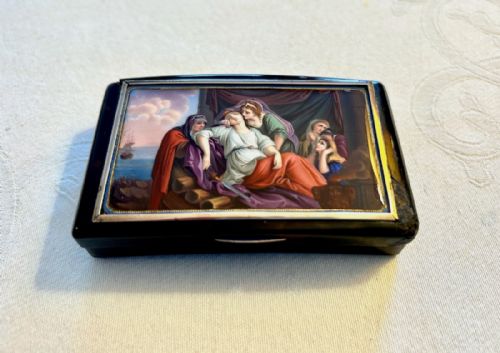


Georgian Gold Snuff Box
A georgian gold snuff box is a pocket-sized marvel of precious metal and miniature artistry designed to hold powdered tobacco.
Georgian Gold Snuff Box
The selections here span the Georgian era through to the early nineteenth century, featuring formats such as rectangular book shapes, oval desk containers, and tiny pocket pieces. Alongside solid gold examples, you will find variants in tortoiseshell inlaid with gold pique, silver gilt, and agate mounted in gold.
Makers utilised high-karat gold, often in two or three distinct colour variations, alongside organic materials like horn and tortoiseshell. The survival of these containers demonstrates the high regard in which they were held by their original owners.
Materials and construction
Goldsmiths worked with 18ct gold, often employing vari-coloured alloys of yellow, white, and red gold to build up intricate chased and engraved motifs. Surfaces frequently display engine-turned geometric patterns or pictorial scenes created with specialist gravers.
Many containers combine precious metals with natural materials such as tortoiseshell, horn, and agate. Gold pique inlay involves tiny pins of gold pressed into warm tortoiseshell to form delicate patterns.
Internal hinged grilles appear in vinaigrette variants to hold a sponge soaked in aromatic vinegar. These hinged components require precise engineering to ensure a flush, secure closure.
The inventory combines functional snuff boxes with specialised vinaigrettes and decorative containers spanning the eighteenth and nineteenth centuries.
Assessing quality and execution
The distinction between standard production and masterwork lies in the crispness of the chasing and the precision of the hinge work. Superior boxes close with a sharp, secure click, showing no lateral play in the pin.
The quality of engraved pictorial scenes and the integration of natural stone panels dictate the upper tier of the market. Boxes featuring named goldsmith marks and clear provincial or London assay office stamps command greater attention.
Giles Loyer·Alexander James Strachan·Alexander J Strachan·Charles Rawlings·Edward Farrell·William Parker
The Georgian Gold Snuff Box Glossary
- Vinaigrette
- A small hinged container fitted with an internal pierced grille for aromatic vinegar. These pieces resemble snuff boxes but served a different restorative purpose.
- Engine turning
- A mechanical technique for producing intricate geometric patterns on metal surfaces using a lathe. This process creates a textured background that catches the light.
- Pique
- A method of decorating tortoiseshell or horn by inlaying tiny gold or silver pins and strips. Artisans pressed these elements into the warmed organic material.
- Silver gilt
- Sterling silver that has been coated with a thin layer of gold. This treatment provides the rich appearance of solid gold while utilising a silver base.
- Assay mark
- Official stamps struck into precious metal to guarantee the purity of the alloy. These marks often identify the city and year of manufacture.
Georgian Gold Snuff Box: Frequently Asked Questions
What is a georgian gold snuff box?
These pieces are small, hinged receptacles fashioned from gold or gold-mounted materials created during the Georgian period. They served polite society as portable containers for dry tobacco snuff.
Craftsmen produced them in various geometric and figural forms, often incorporating precious stones or intricate engravings on the lid.
How were vinaigrettes used?
Vinaigrettes held a small sponge soaked in perfumed vinegar rather than dry tobacco. Owners opened the pierced internal grille to inhale the reviving scents when confronted with unpleasant odours.
They functioned as personal accessories carried in pockets or reticules by both men and women.
How do I identify the date?
Dating relies on stylistic clues, historical materials, and official hallmarks struck directly into the metal. Specialist assay marks reveal the exact year and city of manufacture for many British pieces.
Unmarked Continental or organic pieces require comparison of form, hinge construction, and decorative motifs with dated examples.
How should I care for my box?
Protect these delicate items from sharp impacts, moisture, and extreme temperature shifts, particularly pieces made from tortoiseshell or horn. Gentle dusting with a soft, dry cloth is sufficient for maintenance.
Avoid chemical polishes that can wear away thin gilding or damage vulnerable organic inlays.