

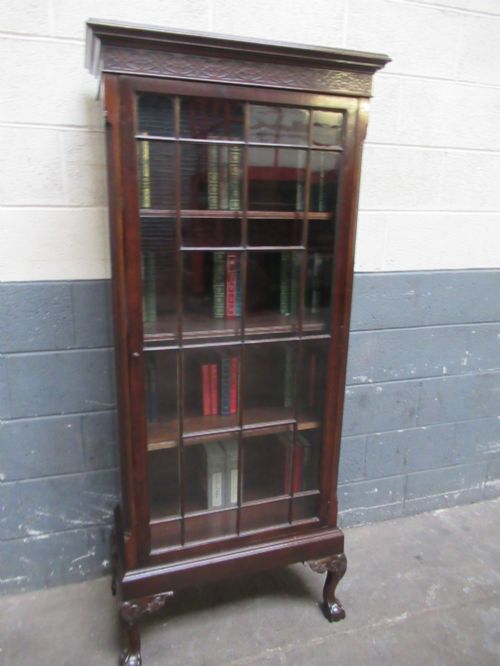
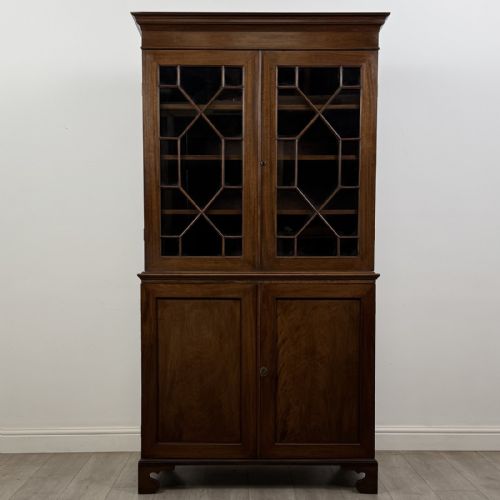

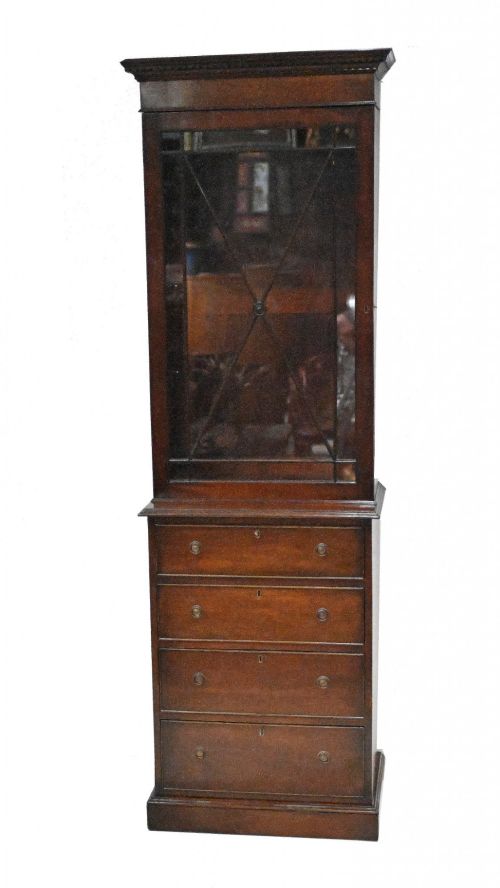
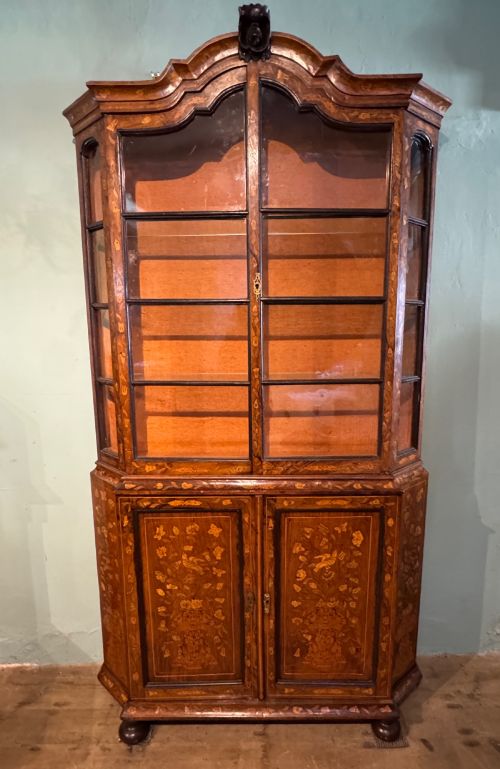
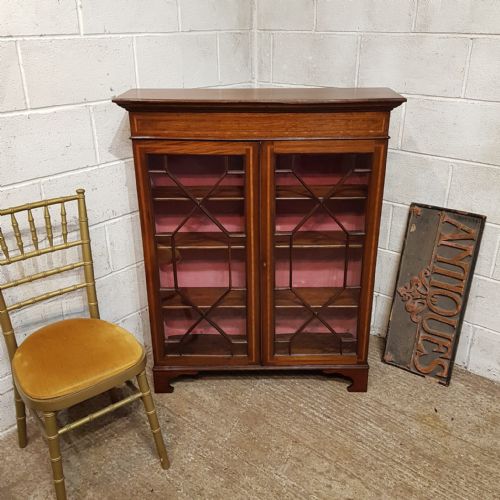


Georgian Glass Front Cabinet
A georgian glass front cabinet offers timber framing and clear panes to hold books or porcelain.
Georgian Glass Front Cabinet
A georgian glass front cabinet brings together upright timber carcases and glazed doors designed to display books, china or collections. When searching this phrase, buyers encounter upright display cabinets, corner cupboards and tall bookcase combinations spanning the eighteenth century and later revival periods.
The pieces on this page range from compact corner cupboards in mahogany and walnut to substantial breakfront library bookcases. Most examples rely on upright timber construction with glazed upper sections, paired with lower cupboards or secretaire drawers depending on the form.
Materials and construction
Cabinet makers utilised dense timber stocks including mahogany, walnut and satinwood, frequently selecting figured veneers and marquetry for decorative surfaces. Glazing bars of wood or brass hold individual glass panes within the door frames.
Joinery methods involved traditional carcase construction, often pairing solid timber frames with veneered panels and inlaid details in satinwood or brass. Corner units and freestanding bookcases utilise shaped plinths, cornices and fitted interior shelving.
Georgian Glass Front Cabinet Retail Price Guide 2026
Typical asking prices for georgian glass front cabinet among the pieces listed under this phrase on Sellingantiques today, from the lower quarter to the upper quarter. They describe what is for sale here now, not the wider market.
Secret drawers hidden inside secretaire bookcases waited behind drop-down desks for private letters and small treasures.
Quality differences
The distinction between standard items and finer examples rests on the selection of timber figure, such as flame mahogany or burr walnut, and the precision of inlaid marquetry. Finer pieces demonstrate careful proportion in the glazing bars and crisp execution of carved details.
Internal fitting and secondary timbers also signal standard versus superior production. Superior cabinets maintain original glass panes, sound structural joints and balanced proportions across the breakfront or bow front forms.
Edwards & Roberts
The Georgian Glass Front Cabinet Glossary
- Astragal glazed
- A method of dividing glass panes within a door using thin timber mouldings, typical of eighteenth-century and revival bookcases.
- Secretaire
- A cabinet or bookcase incorporating a fitted writing drawer with a drop-down front.
- Breakfront
- A large cabinet design where the central section projects forward from the flanking wings.
- Marquetry
- Decorative patterns formed by fitting contrasting veneer slices into a prepared timber ground.
- Bow front
- A cabinet front curved in a convex sweep across the doors or drawers.
Georgian Glass Front Cabinet: Frequently Asked Questions
Where do I put a corner cabinet?
A corner cabinet fits directly into room angles to utilise empty wall space without blocking walking paths.
Smaller mahogany or walnut corner cupboards suit dining rooms and hallways where standard rectangular furniture dominates.
How do I clean the glass safely?
Use a soft cloth and a gentle glass cleaning solution applied to the cloth rather than sprayed directly onto the timber. This prevents moisture from damaging antique wood finishes and delicate glazing bars.
Take care around older glass panes, which may feature historical bubbles or uneven thickness.
Can I adjust the shelves?
Many older bookcases and display cabinets feature fixed timber shelving rather than modern adjustable pins. Check the interior construction before planning to store oversized books or large porcelain items.
Custom spacing is sometimes possible on later revival pieces, but Georgian originals typically retain their original fixed arrangement.
How do I identify a revival piece?
Revival pieces from the Edwardian era or the twentieth century often adopt earlier styles like Chippendale or Sheraton. They use machine-prepared timbers and standardised hardware alongside traditional mahogany or satinwood.
Compare the timber grain, secondary woods inside drawers, and construction marks against eighteenth-century standards to determine the exact period.