




Georgian Gallery Desk
A georgian gallery desk brings functional elegance to any study, offering refined proportions and enclosed surfaces for daily correspondence.
Georgian Gallery Desk
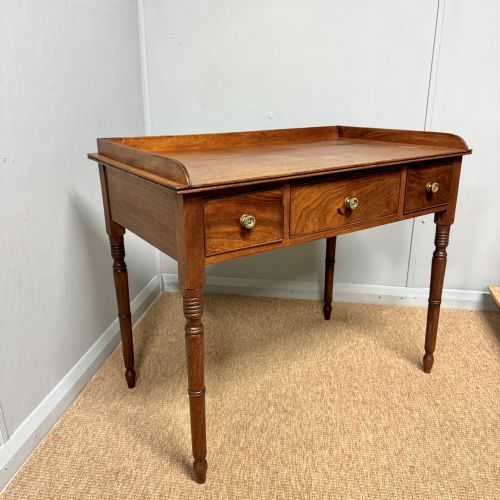
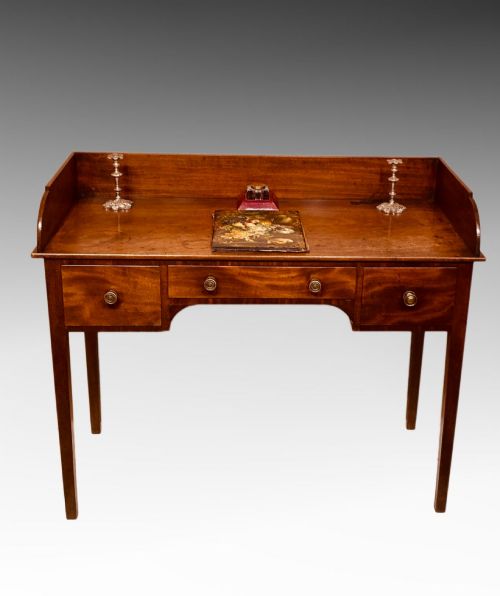
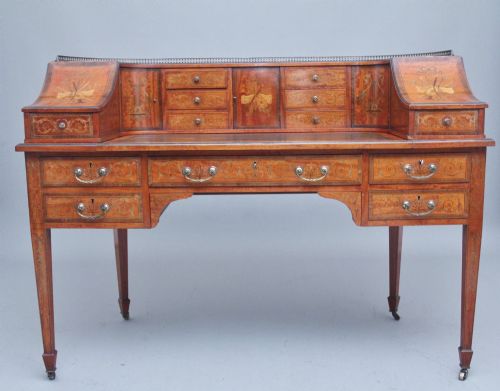
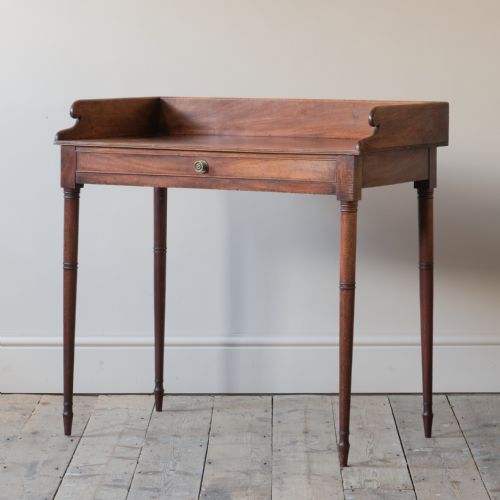
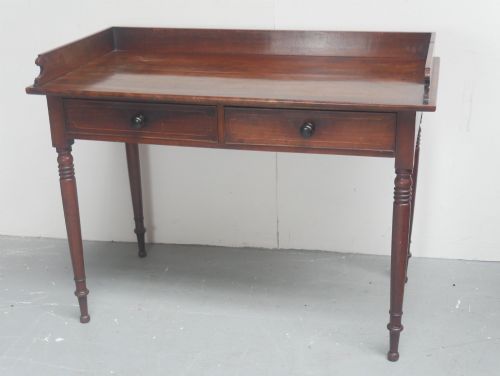
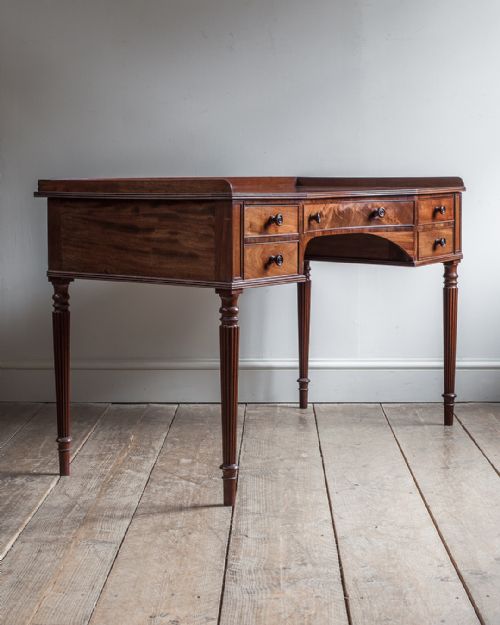
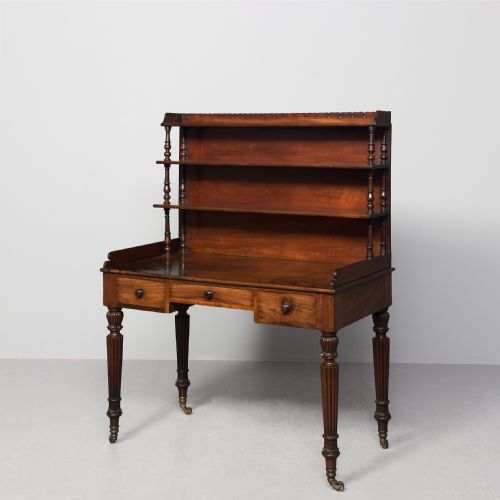
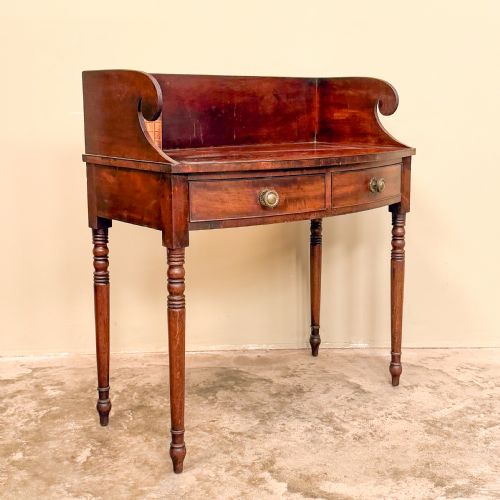
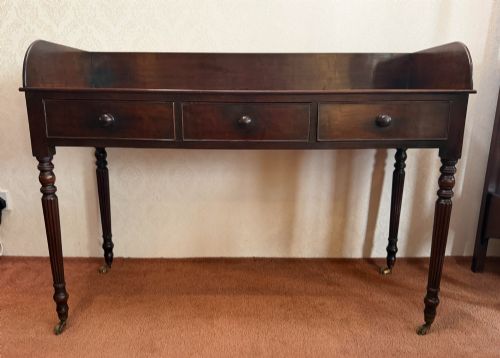
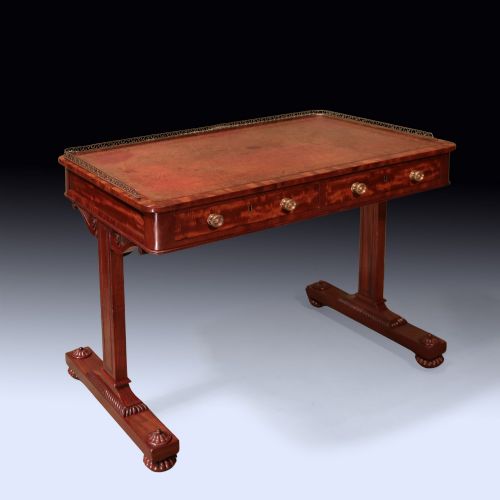
A georgian gallery desk encompasses a variety of writing surfaces, side tables, and dressing tables featuring raised upstands or brass galleries. These pieces emerge predominantly from the Georgian, Regency, and Edwardian periods, utilising forms like the Carlton House desk, Davenport, and pedestal desk.
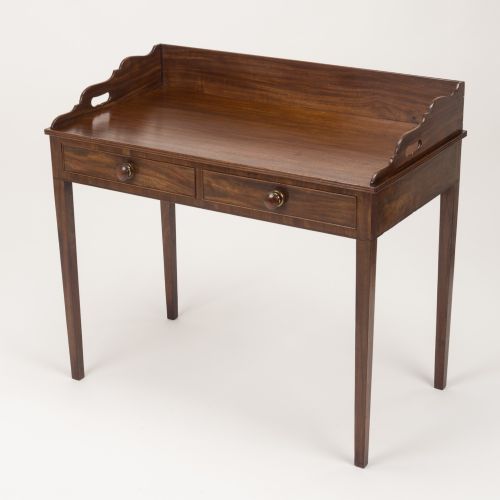
The version most commonly encountered on this page is the mahogany writing table or side table, often fitted with drawers and a raised three-quarter gallery surround. Makers and designers of these periods adapted forms to suit domestic writing and toilette needs with restrained ornamentation.
Materials and construction
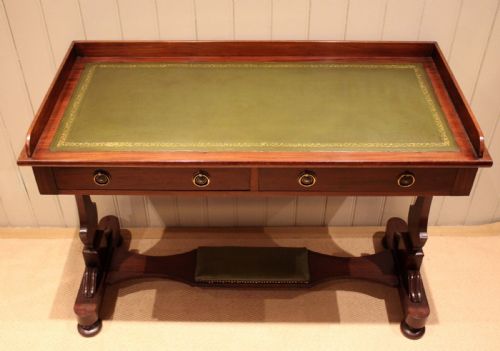
Makers constructed these pieces primarily from solid and veneered mahogany, frequently accented with contrasting woods such as satinwood, boxwood, and oak. Brass details, including gallery rails and hardware, appear alongside leather writing inserts.
Cabinetmakers employed fine joinery techniques to create multi-drawer configurations, slide-and-turn mechanisms, and delicate inlaid borders. Tray-tops and gallery surrounds were fitted directly to the upper surfaces to secure papers and objects.
Some desks arrive with hidden compartments that refuse to open until you press a secret spring.
Judging quality
Quality rests in the crispness of the timber grain, the subtlety of inlay work, and the integration of the gallery surround. Superior examples display thoughtful proportions, balanced drawer placement, and uncompromised structural integrity.
Workshop origin and timber selection elevate certain pieces above standard production. The integration of brass galleries and secondary woods reflects the tier of craftsmanship invested by the maker.
James Mein of Kelso·Gillows·George Hepplewhite·John McLean
The Georgian Gallery Desk Glossary
- Gallery
- A raised railing or border around the edge of a desk top, designed to prevent items from rolling off. These can be fashioned from brass or carved directly from the timber.
- Carlton House desk
- A distinctive desk form featuring a curved superstructure of small drawers and compartments enclosing the rear of the writing surface. This layout provides compartmentalised storage for stationery.
- Davenport
- A compact pedestal desk with a sloping writing lid and drawers opening to the side. It offers an enclosed writing slope while maintaining a small footprint.
- Tray-top
- A surface finished with a raised moulded edge or lip on three or four sides. This detail secures papers or toilet accessories during use.
- Inlay
- A decorative technique where contrasting woods or materials are fitted into recessions flush with the surface. Common examples utilise satinwood and boxwood on mahogany carcases.
Georgian Gallery Desk: Frequently Asked Questions
How do I identify a Georgian desk?
Georgian desks are typically identified through their use of dense mahogany, classical proportions, and understated decorative elements like cockbeaded drawer edges.
They often incorporate structural details such as bracket feet or tapered legs rather than heavier Victorian forms.
Where were these desks used?
These pieces were housed in domestic libraries, drawing rooms, and private studies for correspondence, record-keeping, and estate management.
Smaller variants also found placement in bedrooms as dressing tables or combined writing surfaces.
What is a Carlton House desk?
A Carlton House desk is a specialised writing desk featuring a U-shaped tiered superstructure lined with small drawers and pigeonholes.
First appearing in the late eighteenth century, this form provides extensive organisation for letters and stationery within a refined piece.