


Georgian Framed Oil Landscape
A georgian framed oil landscape brings the rolling pastures, classical ruins and bustling river scenes of past centuries directly onto the wall.
Georgian Framed Oil Landscape
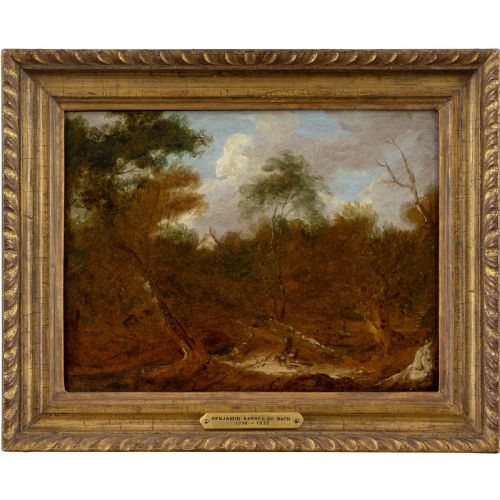
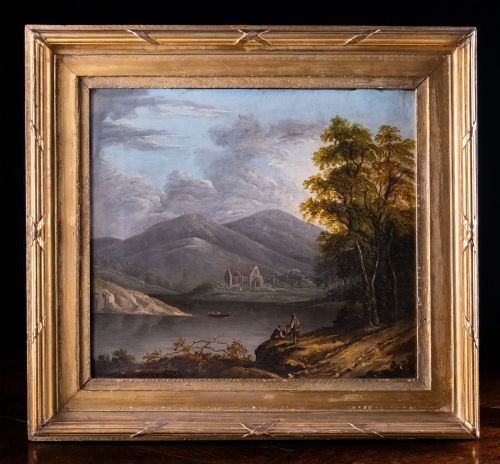
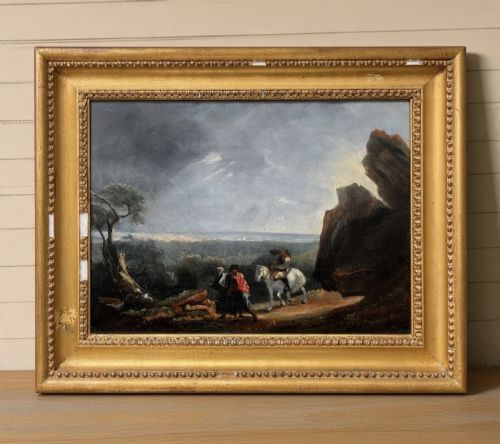
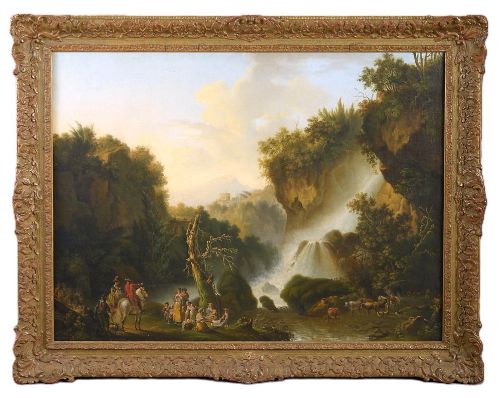
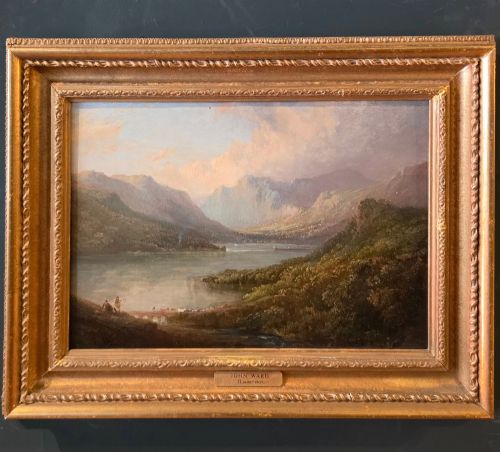
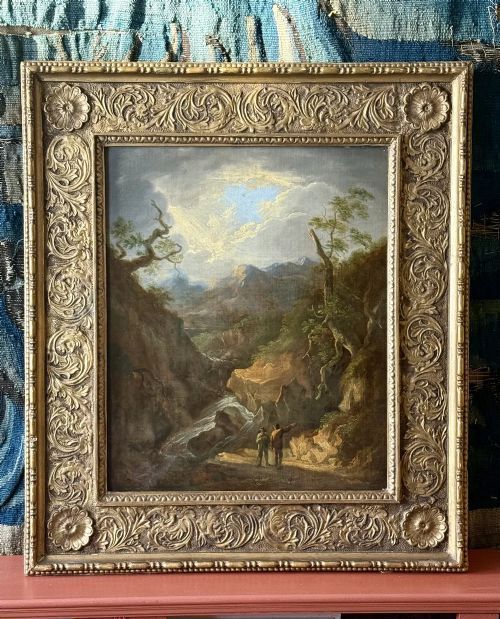
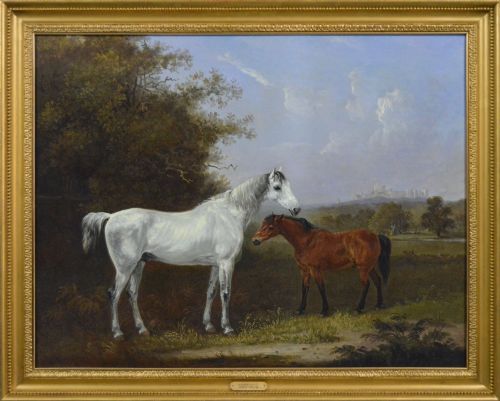
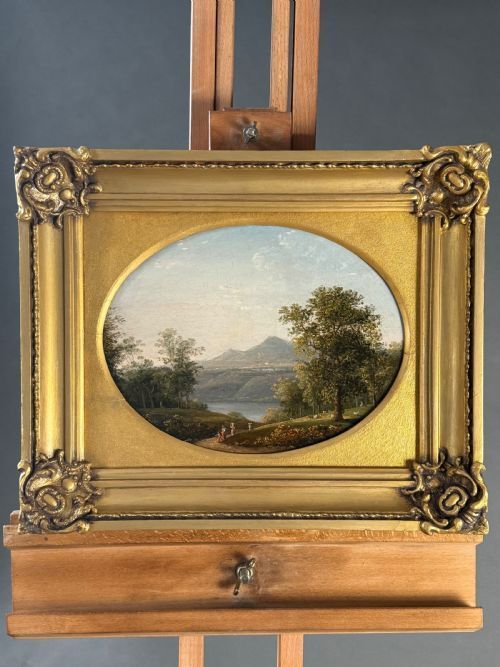
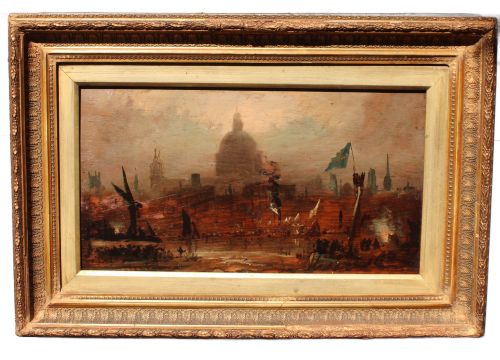
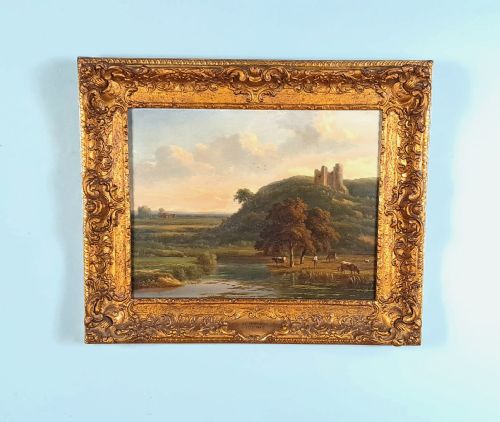
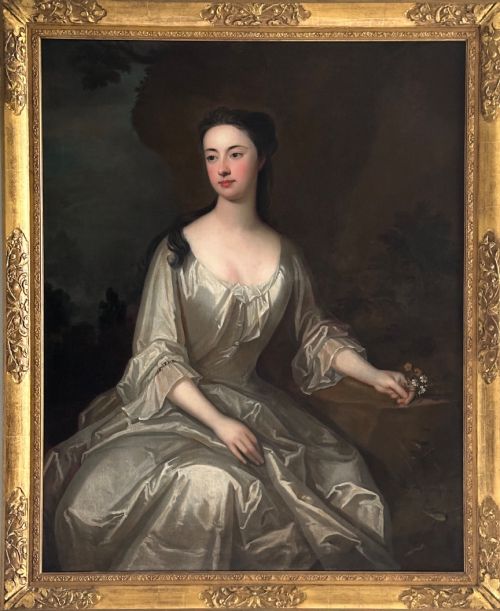
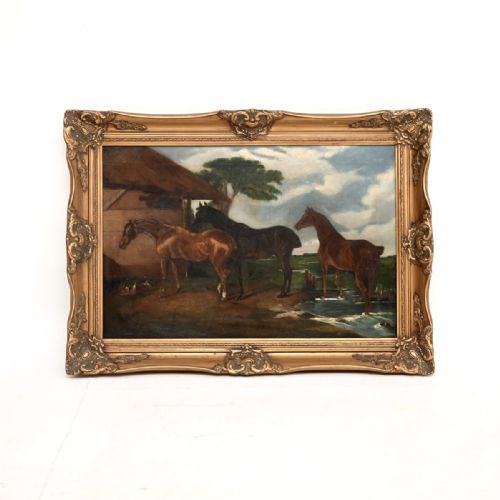
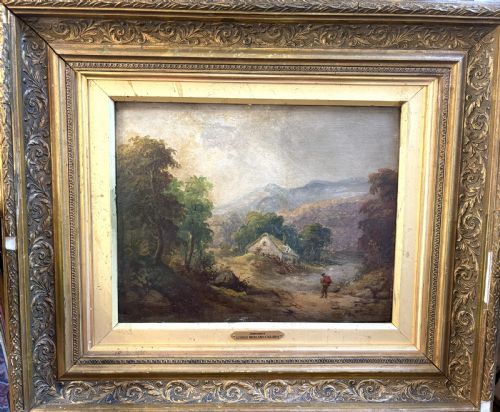
A georgian framed oil landscape encompasses topographical views, sporting scenes, and pastoral compositions originating predominantly from the eighteenth and nineteenth centuries. These works frequently depict coastal harbours, rural cottages, and mountainous vistas influenced by British, Scottish, and Italianate traditions.
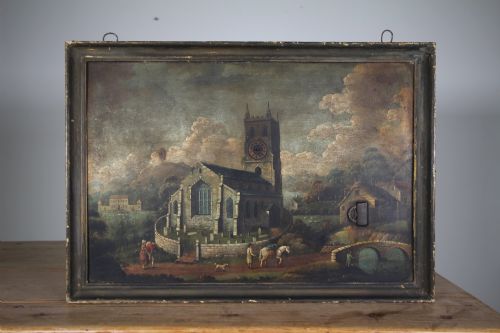
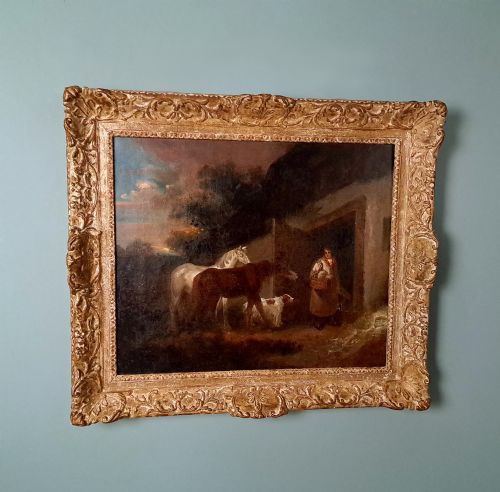
Buyers regularly encounter canvases produced by regional schools, followers of prominent masters, and vernacular folk art creators. The subjects range from grand architectural capriccios to quiet rustic moments featuring horses, livestock, and figures beside rivers.
Framing forms an integral part of these pieces, often utilising period surrounds of giltwood, gesso, and gold leaf that complement the painted canvas or wood panel within.
Materials and technique
Artists painted primarily with oil paint upon stretched canvas or prepared wood panels, sometimes employing tin as a rigid support for smaller cabinet works. These grounds received layers of pigment that built depth in skies, foliage, and water.
Moulded gesso applied to timber foundations created ornamental surrounds finished in gold leaf or giltwood, framing the composition with classical motifs and relief details.
Georgian Framed Oil Landscape Retail Price Guide 2026
Typical asking prices for georgian framed oil landscape among the pieces listed under this phrase on Sellingantiques today, from the lower quarter to the upper quarter. They describe what is for sale here now, not the wider market.
Listings feature works spanning the seventeenth through the nineteenth centuries, executed in oil on canvas, wood panel, and tin.
Evaluating craftsmanship
Quality rests upon the handling of light, atmospheric perspective, and the anatomical precision of figures and animals integrated into the scenery. Superior examples demonstrate confident brushwork and balanced composition, whether executed by a named academic painter or a skilled member of the provincial British school.
The integrity of the physical structure also determines standing, seen in the preservation of the original support, the stability of the paint layer, and the retention of a period-appropriate frame.
Johann Philipp Hackert·Edmund Bristow·Benjamin Barker of Bath·William Joseph Shayer Senior·T C Hofland·George Morland·Giovanni Paolo Panini·Francesco Zuccarelli·Joseph Farrington·Samuel Henry Alken·Frank Moss Bennett
The Georgian Framed Oil Landscape Glossary
- Oil on Canvas
- Pigment mixed with drying oil applied to a woven fabric support. This combination allowed artists to achieve rich textures and subtle tonal gradations.
- Giltwood
- Timber carved and coated with gold leaf or metallic powder. It provided decorative weight and brilliance to traditional picture frames.
- Gesso
- A paint mixture consisting of a neutral binder mixed with chalk, gypsum, or pigment. It served as a smooth preparation layer for gilding on wooden frames.
- Italianate
- A stylistic approach inspired by the landscape and architecture of Italy. Popularized during the Grand Tour, it frequently incorporated classical ruins and warm light.
- Topographical
- Pertaining to the accurate depiction of specific places and local geography. These works recorded identifiable towns, country houses, and natural landmarks.
Georgian Framed Oil Landscape: Frequently Asked Questions
How do I care for an antique oil painting?
Keep the artwork away from direct sunlight and dramatic shifts in temperature or humidity. Dust the surface gently with a soft, dry brush without applying pressure to the canvas.
Avoid using liquid cleaners or damp cloths on the paint or the gilt frame. Professional conservators should handle any structural repairs or cleaning of darkened varnish layers.
Were these paintings always framed in wood?
Most works of this period utilised wooden frames finished with gesso and gold leaf or painted surfaces. These enclosures protected the edges of the canvas and completed the visual presentation.
Some frames survived alongside their original paintings for centuries, while others were matched to the artwork during a later restoration period.
How can I tell a regional school from a master?
Academic painters often signed their work and received formal training through institutions like the Royal Academy. Their compositions display sophisticated mastery of perspective and narrative detail.
Regional and naïve works often reflect the hand of local practitioners or amateurs who focused on direct observation of familiar countryside rather than classical rules.
Where should I hang a landscape painting?
Select a wall with stable ambient conditions away from heat sources and damp external masonry. Hang the piece securely using appropriate fixings suited to the weight of the timber frame.
Positioning the artwork at eye level allows the viewer to appreciate the finer brushwork and atmospheric depth of the pastoral scene.