


Georgian Four Poster Bed
A georgian four poster bed offers grand timber proportions and dramatic fabric tester frames, providing timeless centrepieces for principal bedrooms.
Georgian Four Poster Bed
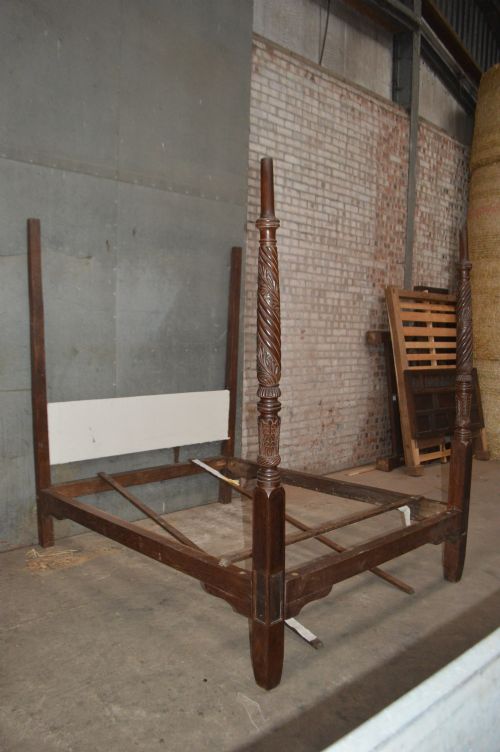
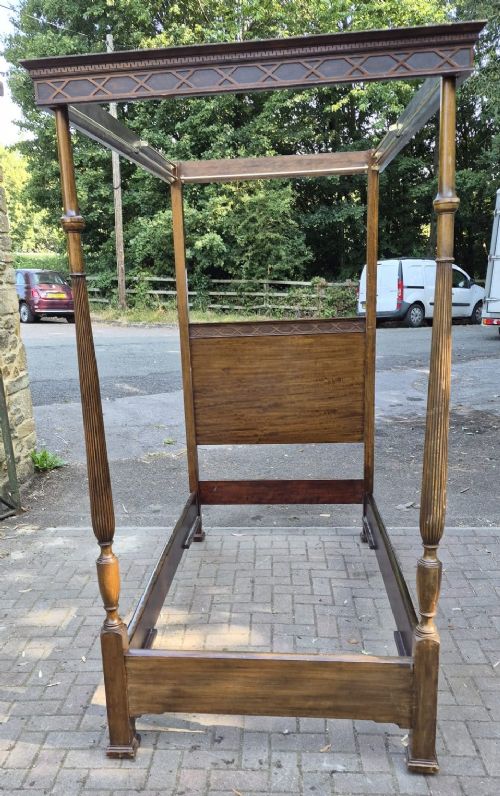
A georgian four poster bed represents the architectural ambition of eighteenth and early nineteenth-century bedroom furniture, designed to project status through substantial timber posts and overhead testers. When you search for a georgian four poster bed, you encounter framework spanning the George III, Regency, and William IV eras, alongside later revival interpretations.
The versions most commonly met combine rich mahogany timber with classical column work, frequently incorporating carved details upon the foot posts. Pieces range from grand super king sizes down to narrower proportions, occasionally appearing as separate bed posts or architectural salvage fragments.
Construction and materials
Makers utilised dense timbers such as mahogany and rosewood for the structural framework and visible posts, relying on pine for concealed interior rails. Turning and hand carving shaped the solid wood posts, while textile components like upholstered fabric formed the traditional tester canopy and drapery.
Surface finishes involved traditional polishing techniques that brought out the natural grain of the timber, alongside occasional painted decoration seen on specific Regency examples.
Historical bed testers occasionally concealed hidden storage compartments for midnight snacks or clandestine love letters.
Judging quality in the range
Quality separates through the depth and crispness of the hand carving on the front posts, where finer examples display sharply defined acanthus leaves or spiral fluting. Proportion and timber selection dictate the visual weight of the frame, distinguishing master cabinetmaker output from standard provincial workshop production.
The integrity of the original timber structure and the presence of period-matched components rather than later assembled elements determine the overall authenticity of the piece.
Howard & Sons
The Georgian Four Poster Bed Glossary
- Tester
- The wooden or fabric canopy frame positioned above the bedposts. It historically supported drapery designed to retain heat and block drafts.
- Bedposts
- The vertical wooden pillars supporting the tester frame. In finer examples, the lower sections receive detailed carving whilst upper portions remain plain.
- Chippendale
- A style designation originating from the mid-eighteenth century design books of Thomas Chippendale. It frequently denotes robust mahogany construction with classical carved motifs.
- Regency
- A style period spanning the early nineteenth century defined by classical restraint and archaeological influence. Furniture from this era often incorporates cleaner architectural lines.
- Architectural salvage
- Building elements or furniture fragments rescued from historic structures. In this context, it includes separated bed posts adapted for decorative use.
Georgian Four Poster Bed: Frequently Asked Questions
How do I fit modern mattresses?
Most historic bed frames require custom mattress dimensions or internal modern slatted bases to accommodate standard contemporary sizes.
Consulting a specialist restorer ensures the antique framework remains structurally secure while supporting modern sleeping comfort.
How tall are these beds?
Height varies considerably depending on the specific period and the presence of an elevated wooden tester canopy.
Checking ceiling clearance before purchase prevents installation issues in rooms with standard or low plaster heights.
Were these beds dismantled?
These large pieces were constructed with knock-down wooden joints and bed bolts to allow transport between historic houses.
Modern assembly follows the same traditional wedge and bolt methods utilised by original eighteenth-century cabinetmakers.
How do I date the posts?
Dating relies upon stylistic shifts in turning patterns, timber choice, and the specific carving motifs applied to the wood.
George III examples often feature dense mahogany with classical drapery carvings, whereas Regency pieces favour cleaner reeded columns.