

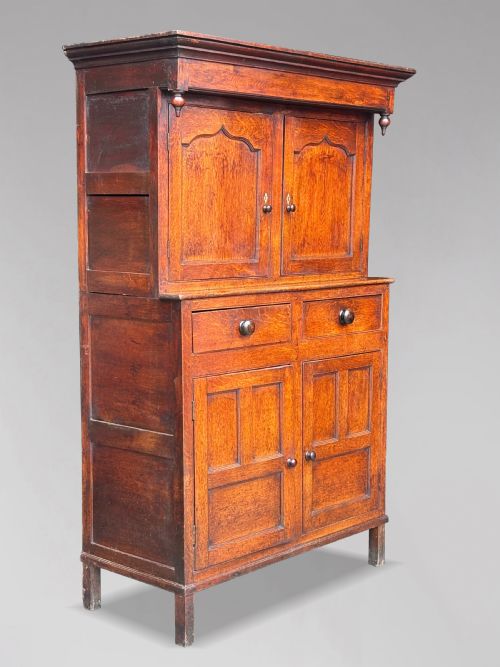


Georgian Food Press Cupboard
These georgian food press cupboard examples are substantial country storage pieces built for domestic provisions, offering a direct link to early rural domestic life.
Georgian Food Press Cupboard
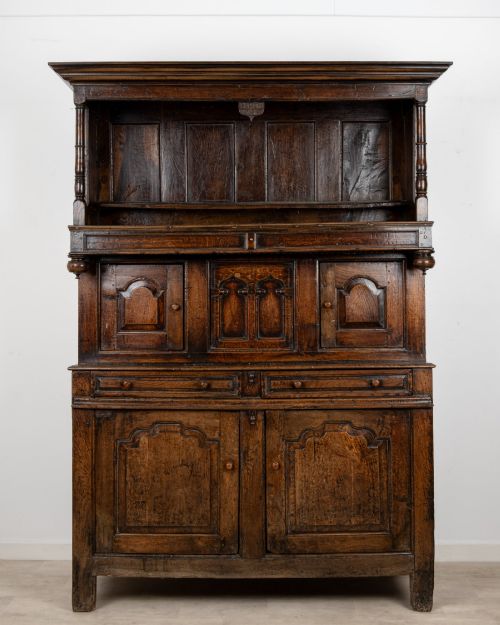
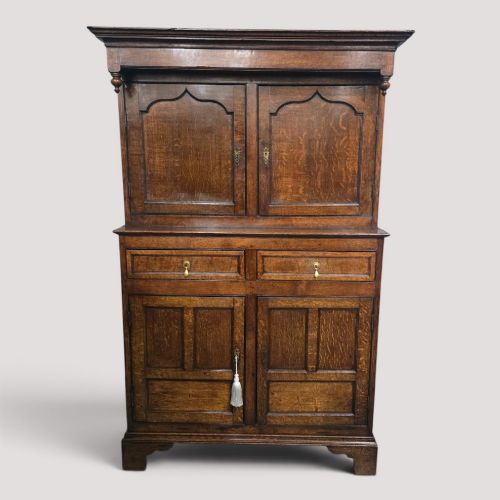
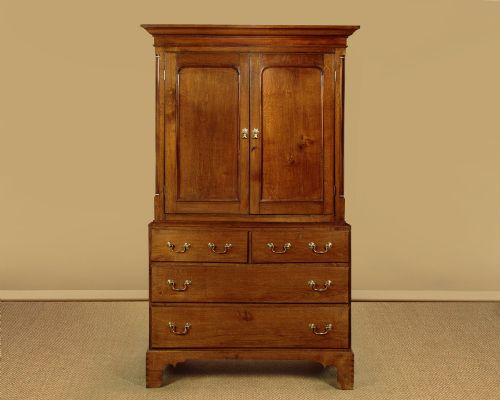
A georgian food press cupboard is a utilitarian storage piece encountered primarily in oak, pine, and elm across country and vernacular styles. Buyers hunting for a georgian food press cupboard will find substantial two-part forms, court cupboards, and regional Welsh variations designed for household provisions.
The pieces on offer span the seventeenth to the nineteenth centuries, with the eighteenth century providing the core of the selection. Surviving examples frequently display regional identities, including Welsh vernacular forms such as the cwpwrdd tridarn and deuddarn.
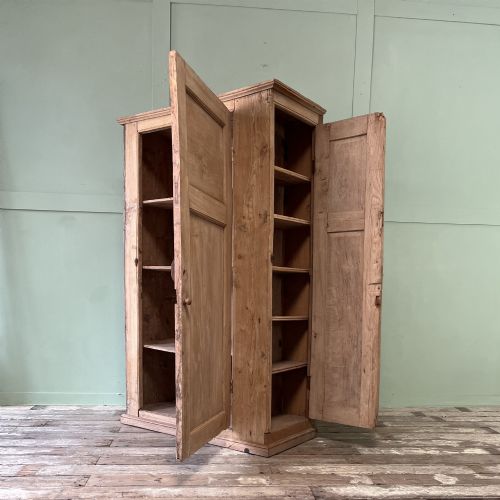
Most entries function as heavy storage cupboards or kitchen units, reflecting their original domestic purpose. The timber grain and visible construction methods define their character in a modern interior.
Materials and construction
Makers relied heavily on native hardwoods and softwoods, predominantly oak, elm, and pine, selected for local availability and structural strength. Timbers were hand-prepared and joined to withstand daily domestic use in farmhouse kitchens.
Metalwork played a crucial structural and functional role, utilising brass, iron, and wrought iron for hinges, locks, and handles. Original blacksmith-made hardware remains a primary indicator of period assembly methods.
An original blacksmith lock guards one historic oak cupboard, keeping long-forgotten pantry secrets firmly shut behind sturdy panels.
Assessing quality and authenticity
Quality rests in the integrity of the timber and the survival of original surfaces, whether unpainted oak or early paint applications. Better examples retain their original two-part configuration and period ironwork without extensive modern replacement.
Proportion and regional detailing separate standard utility pieces from finer vernacular items. Superior items demonstrate careful panel construction and well-balanced architectural proportions within their local style.
The Georgian Food Press Cupboard Glossary
- Court cupboard
- A traditional English or Welsh two-stage cupboard, often featuring an upper recessed section supported by turned posts. They served as prominent display and storage furniture in wealthier rural homes.
- Deuddarn
- A traditional Welsh two-part cupboard featuring enclosed cabinetry on both levels. This regional form provides deep interior storage for provisions and textiles.
- Cwpwrdd tridarn
- A traditional Welsh three-tier press cupboard incorporating an open middle section or canopy stage. It represents one of the most ambitious vernacular storage forms of the period.
- Vernacular
- Architecture and furniture built by local craftsmen using regional materials and traditional methods rather than high-style metropolitan designs. These pieces reflect the specific domestic needs and aesthetic preferences of their local communities.
- Pine
- A softwood commonly utilised for painted kitchen and housekeeper's cupboards throughout the Georgian period and later. It offered a lighter alternative to oak for domestic furniture.
Georgian Food Press Cupboard: Frequently Asked Questions
What is a georgian food press cupboard used for?
These pieces were originally built to store household provisions, dry foods, and linens in domestic kitchens and farmhouses. Their deep shelving and robust construction kept perishables secure and organised.
Today, they function well as standalone kitchen larders, dining room storage, or living space cabinetry. Their substantial capacity accommodates modern tableware and household goods easily.
How do I tell an 18th-century piece apart?
Eighteenth-century examples typically display hand-riven or hand-sawn timber boards with pegged joints and visible tool marks. The presence of original blacksmith-made iron hinges and locks points firmly to this period.
Construction details such as raised and fielded panels and regional vernacular traits like those found on Welsh pieces further confirm the era. Later nineteenth-century versions often incorporate machine-cut elements and softer pine timbers.
Where were these cupboards made?
Many surviving examples originate from rural workshops across Wales and English regional centres. Local cabinetmakers utilised native timbers such as oak, elm, and pine available in their immediate surroundings.
This regional independence resulted in distinct stylistic variations, such as the Welsh deuddarn and tridarn forms. Makers adapted metropolitan trends to suit local domestic requirements.
How do I care for antique oak?
Maintain stable humidity and temperature levels in your room to prevent the historic timber from drying out or splitting. Avoid placing the furniture in direct sunlight or near active heat sources.
Feed the wood periodically with traditional beeswax to nourish the dry surface and enhance the grain. Avoid modern silicone polishes that can build up and damage the historic patina.