
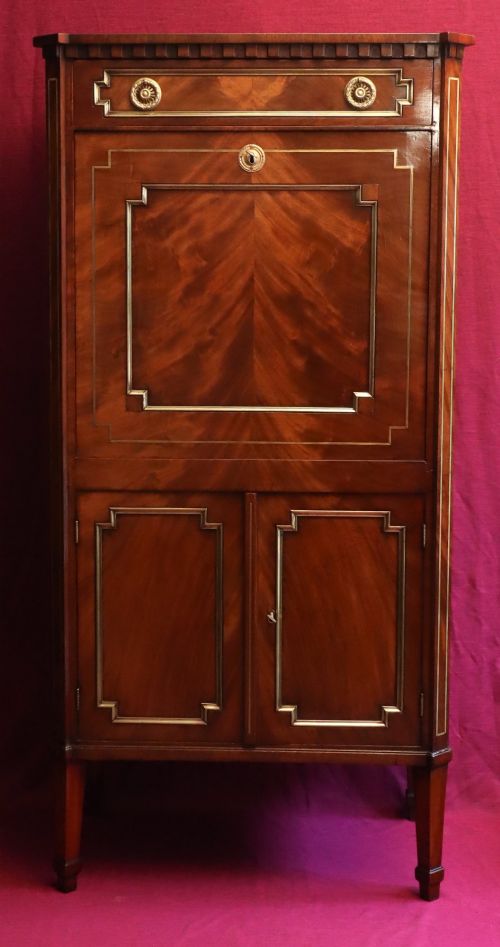


Georgian Escritoire
A georgian escritoire is a fitted writing cabinet of considerable presence, combining a drop-front writing surface with concealed drawers, built to last centuries.
Georgian Escritoire
A georgian escritoire is a dedicated writing cabinet designed to keep correspondence and valuables secure behind a fitted drop-front flap. The pieces on this page span the eighteenth and nineteenth centuries, taking the form of tall cabinets, compact escritoire bureaux, and bureau bookcases.
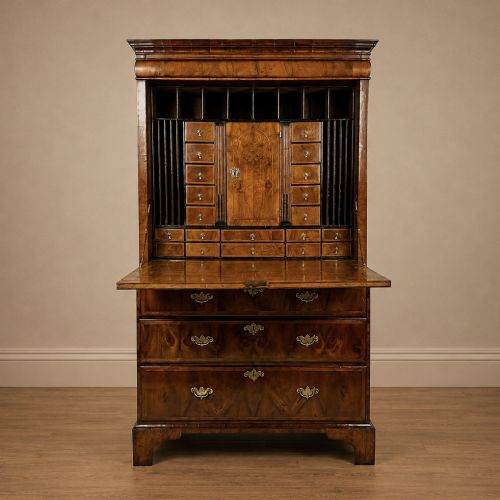
Most examples you encounter date from the eighteenth century, frequently rendered in walnut or mahogany. Makers built these cabinets with internal compartments and small drawers surrounding a central cupboard door.
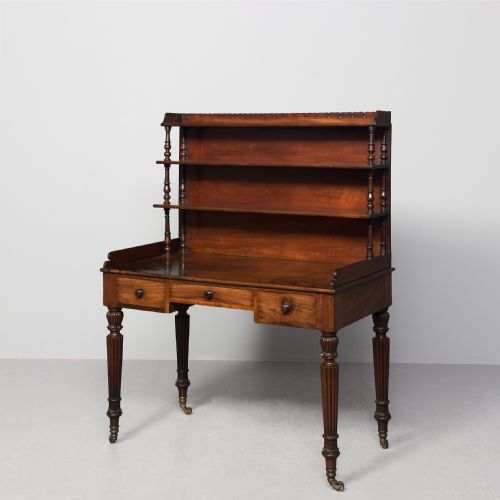
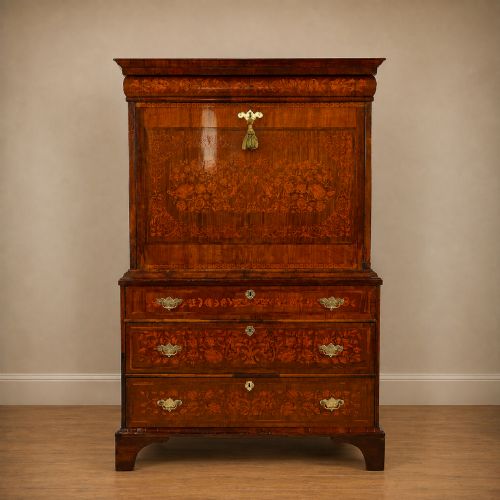
Forms vary from Queen Anne and early Georgian walnut cabinets with floral marquetry to later Regency rosewood desks with brass inlay and mahogany cylinder desks. The overarching design prioritises vertical storage combined with a practical writing surface.
Materials and Construction
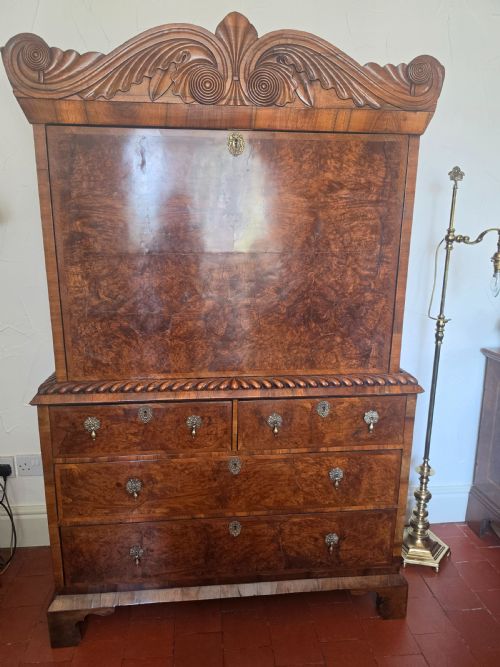
Makers constructed these cabinets using dense timbers such as walnut, burr walnut, mahogany, oak, and rosewood. Veneers were applied over sturdy secondary woods to create rich figured surfaces on the primary facades.
Decorative techniques recorded in the evidence include floral marquetry and precision brass inlay. Interior sections frequently incorporate satinwood details alongside leather writing inserts.
Hardware such as brass handles and escutcheons secured the heavy doors and internal drawers, reflecting the functional requirements of writing furniture.
Listings for a georgian escritoire span the eighteenth and nineteenth centuries, encompassing Queen Anne, George II, and Regency styles.
Variations in Quality
Quality rests upon the selection of timber and the precision of the cabinetmaker's joinery. Figured walnut and burr walnut veneers demonstrate superior material choice compared to plainer grain.
The complexity of the interior arrangement dictates execution standards, particularly the intricacy of secret compartments and small drawers. Floral marquetry and brass inlay demand high levels of artisanal skill to remain flush over time.
James Mein of Kelso
The Georgian Escritoire Glossary
- Escritoire
- A writing cabinet featuring a drop-front flap that conceals a series of small internal drawers and pigeonholes. It serves both as a secure storage chest and a functional desk.
- Marquetry
- The art of applying pieces of veneer to a structure to form decorative patterns or pictures. Floral examples utilise contrasting timbers to create botanical motifs.
- Secretaire
- An alternative term for a writing cabinet or desk containing concealed drawers. It often appears interchangeably with escritoire in period descriptions.
- Burl
- A wood growth resulting in intricate, swirling grain patterns highly prized for cabinet veneers. Burr walnut surfaces exemplify this decorative choice.
- Satinwood
- A durable, yellowish timber utilised for fine cabinetwork and contrasting stringing details. It provides a bright visual accent within darker primary woods.
Georgian Escritoire: Frequently Asked Questions
How do I use an escritoire?
Lower the drop-front flap to reveal the writing surface and internal compartment drawers. Store correspondence and stationery within the fitted pigeonholes.
Close and lock the fall-front when not in use to keep documents secure and out of sight.
What is the difference between an escritoire and a bureau?
An escritoire typically presents as a taller cabinet with a vertical door or fall-front enclosing internal drawers at a comfortable height. A traditional bureau often slopes downwards from the back to the front.
Both serve writing functions, but the escritoire emphasises vertical architectural presence.
Where should I place an escritoire at home?
Position the cabinet against a stable wall away from direct sunlight and heat sources to protect the antique wood and veneers. Ensure adequate floor space in front of the piece for the drop-front to open fully.
These pieces suit studies, libraries, or living rooms where their fitted interiors remain accessible.
How do I identify a Queen Anne piece?
Look for characteristic walnut timbers and refined proportions typical of the early eighteenth century. Floral marquetry details often distinguish cabinets from this specific design period.
Interior layouts on these examples feature arranged small drawers surrounding central locking compartments.